What Size Rotary Cutter Do You Need? HP, Cutting Width, and Brush Density Decision Guide
HP and acreage notes — one email
When a new implement-sizing note ships, it goes to this list. Tractor HP or acres in the subject if you want; the only field required is email. Spec-grounded, no hype.
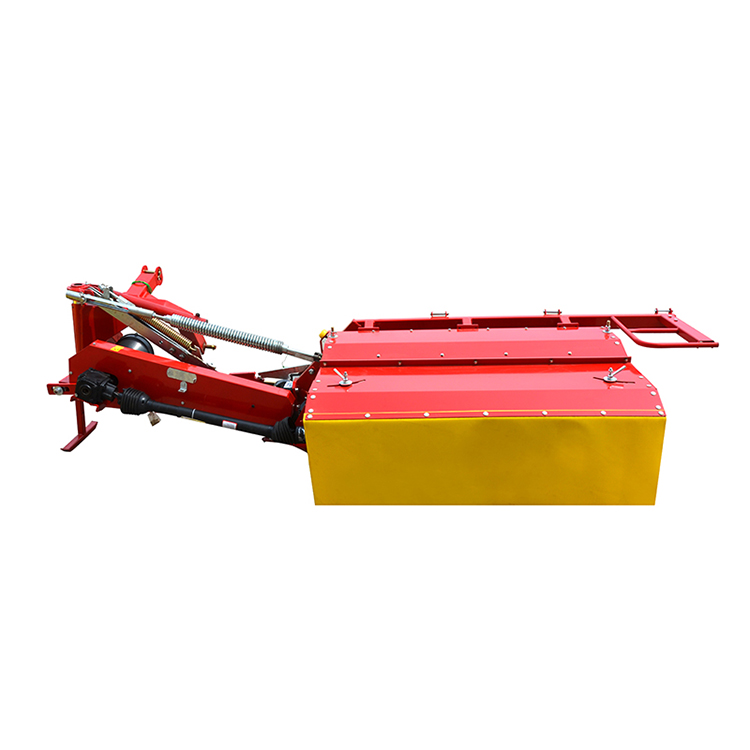
A rotary cutter — commonly called a brush hog — is the workhorse implement for pasture maintenance, brushy fence lines, and overgrown acreage. It is also one of the most commonly mis-matched implements in the compact tractor market. The standard mistake is selecting cutting width by what looks proportional to the tractor, or by what is on sale. The result is a burnt-out gearbox, a sheared PTO shaft, or an implement that bogs the tractor in conditions that should be manageable.
The right rotary cutter is not the widest one in the budget. It is the one matched to the tractor’s PTO horsepower, gearbox load rating, target cutting width, and the brush density it will encounter.
Compact-class 48–60” cutters show up as King Kutter retail and as used iron. Confirm gearbox rating against the tractor’s PTO HP; inspect the gearbox and PTO shielding on used listings.
King Kutter 48–60” rotary cutter on Amazon → Used listings (inspect gearbox / PTO shielding) →
This guide provides constraint-based sizing logic grounded in manufacturer specifications and operator’s manual data. For specific product comparisons, see Best Tractor Implements for Small Farms. For constraint logic applied to other 3-point implements, see What Size Box Blade Do You Need?. Match PTO HP and hitch class before shopping SKUs: the Tractor Implement Finder maps horsepower and tasks to implement types without a product pitch.
The Four Constraints That Determine Rotary Cutter Size
Before consulting any size chart, establish four values from the tractor’s operator’s manual and the implement’s specification sheet:
1. PTO Horsepower — Not Engine HP
Rotary cutters are powered through the PTO shaft, not by drawbar force. The relevant horsepower figure is PTO HP, which is always lower than engine HP. Per ASABE EP496.3 and published Kubota and John Deere operator’s manual data, PTO output is typically 75–85% of rated engine HP (gross) at full throttle under load. A tractor labeled “40 HP” delivers approximately 30–34 HP at the PTO. The gap matters: sizing a cutter to engine HP instead of PTO HP overstates available cutting power by 15–25%. Note: the exact ratio varies by tractor model, drivetrain type (gear vs. hydrostatic), and whether engine HP is quoted as gross or net — always verify the actual PTO HP figure from the operator’s manual rather than estimating.
Per Kubota’s operator’s manuals for the B, L, and M series, PTO HP is listed in a separate specification table from engine HP. If the manual is unavailable, a working planning estimate is 80% of gross engine HP — but this is a rough approximation. Published compact tractor data shows the actual ratio ranges from approximately 75–87% depending on model and transmission type (hydrostatic transmissions typically show slightly lower PTO efficiency than gear-drive models). Always verify the actual PTO HP figure from the operator’s manual before purchase.
2. Cutting Width
Measured in inches across the blade arc. Common widths are 36, 42, 48, 54, 60, and 72 inches. Width directly determines PTO load: a wider cutter sweeps more area per revolution, increasing blade resistance and heat load on the gearbox. Per Land Pride’s RCR series operator’s manual, each step up in cutting width at the same brush density increases PTO demand by approximately 8–15%.
Cutting width also affects operator visibility. Per manufacturer notes in the Brush King product documentation, a cutter wider than the tractor’s cab visibility requires the operator to slow ground speed in hilly or irregular terrain to avoid striking obstacles outside the visible arc.
3. Gearbox Load Rating
The PTO shaft spins the cutter’s main gearbox at 540 or 1000 RPM. The gearbox transmits that rotation to the blade. Under load — denser brush, faster ground speed, wetter vegetation — the torque demand on the gearbox increases. Per Schlagel and Brush King product documentation, undersizing the gearbox load rating is the primary mechanical failure mode in rotary cutters: seal failure from overheating, internal gear fracture from torque spike, and bearing damage from sustained overload.
Gearbox ratings are specified in horsepower capacity (e.g., “rated for 25 HP continuous”) or in torque (Nm). Verify the implement’s gearbox rating matches or exceeds the tractor’s continuous PTO output in the intended cutting conditions. Per manufacturer specifications, a gearbox rated for 35 HP continuous is appropriate for a tractor delivering 28–30 PTO HP in light growth; it is undersized for the same tractor running full-depth in woody brush, where demand spikes are higher.
4. Blade and Flail Count, Engagement Depth
A rotary cutter with 4 blades at shallow engagement cuts annual herbaceous growth. A cutter with 6–8 flails at full depth engagement cuts woody stems 2–4 inches thick. Per Land Pride’s RC series specifications, engagement depth adjustability determines whether the implement is configured for maintenance mowing (shallow, low drag) or brush clearing (full depth, high drag).
Engagement depth is a width multiplier for PTO load purposes. A 48-inch cutter at shallow depth in annual growth demands roughly 12–18 PTO HP. The same 48-inch cutter at full depth in 3-year-old woody brush can demand 22–28 PTO HP — a 40–60% increase. Per third-party operator reports, running full depth at full width simultaneously is the highest-load scenario and should be reserved for tractors with significant PTO HP margin above the manufacturer’s minimum recommendation for the implement.
Tractor HP Class to Rotary Cutter Sizing
The following table reflects HP-class-based sizing guidance from Land Pride, Brush King, and King Kutter product documentation, cross-referenced with PTO output data from Kubota and John Deere compact tractor operator’s manuals.
| Tractor Class | Engine HP | PTO HP (est.) | Hitch Category | Recommended Cutting Width | Gearbox Rating | Common Tractor Examples |
|---|---|---|---|---|---|---|
| Subcompact | 15–25 HP | 11–18 HP | Cat 0 / Cat 1 | 36–42 inches | 25–35 HP continuous | Kubota BX2380, JD 1025R, Mahindra eMAX |
| Compact (small) | 25–35 HP | 18–26 HP | Cat 1 | 42–48 inches | 35–50 HP continuous | Kubota B2601, JD 2025R/2032R |
| Compact (large) | 35–50 HP | 26–38 HP | Cat 1 / Cat 2 | 48–60 inches | 50–75 HP continuous | Kubota L3902/L4802, JD 3038E |
| Utility (light) | 50–75 HP | 38–56 HP | Cat 2 | 60–72 inches | 75–100 HP continuous | Kubota M5 series, JD 4052R/4066R |
| Utility (standard) | 75–100+ HP | 56–85 HP | Cat 2 | 72–84 inches | 100–150 HP continuous | Full-frame utility tractors |
Reading the table: Width recommendations represent the upper practical limit for the HP class in average annual growth (light to moderate density). Dense brush and woody growth require stepping down to the lower end of the range or dropping one full width class, as described in the brush-density modifier section below. PTO HP estimates in the table are conservative planning figures (approximately 72–76% of gross engine HP); actual PTO output for specific tractor models typically falls in the 75–87% range. Always verify the actual PTO HP from the tractor’s operator’s manual before finalizing implement selection.
Per Land Pride’s RCR series operator’s manual, the tractor should be able to maintain full ground speed through the target vegetation at the recommended cutting width. If the tractor labors, bogs, or slows under load, the implement is oversized for the conditions — not necessarily for the tractor class. Reduce width or engagement depth before assuming PTO HP is the only variable.
Once cutting width is set, compact-class 48–60” cutters are sold used (inspect the gearbox and PTO shielding) and as King Kutter retail. Compare models in the Implement Finder if the next hitch slot is a grader rather than another cutter — Best Box Blades covers the Cat-1 pairing.
King Kutter 48–60” rotary cutter on Amazon → Used listings (inspect gearbox / belts) →
Brush Density and Condition Modifier
HP-class sizing tables assume average annual growth — herbaceous vegetation that regenerates each season. Real-world cutting conditions vary substantially and require adjustments:
Light Annual Growth (1–2 Years, Soft Herbaceous Vegetation)
Light annual pasture growth or roadside vegetation presents low blade resistance. Per King Kutter product documentation, PTO load in this condition is minimal, and the upper end of the cutting width range for the HP class is appropriate. A 40 HP tractor (approx. 30 PTO HP) can manage a 60-inch cutter at field speed in soft annual growth without gearbox strain.
This is the baseline condition the sizing chart assumes. If all cutting will be in light annual growth, use the upper width range for the tractor class.
Dense Brush (3–5 Year Growth, Woody Stems 1–2 Inches)
Dense multi-year brush increases gearbox load by 30–50% compared to light annual growth, per Schlagel and Brush King product documentation. Per Land Pride operator’s manual guidance for dense conditions, move to the middle of the width range for the HP class and verify gearbox rating covers the upper PTO output of the tractor. Six to eight flails are required; a 4-blade configuration is undersized for stems above 1 inch in diameter.
At this density level, ground speed also matters. Reducing ground speed by 25–33% lowers the blade engagement rate and reduces peak torque demand. Operators in dense brush should not assume full field speed is safe simply because the cutter is the correct width.
Heavy Woody Growth or Saplings (5+ Years, Stems 2–4 Inches)
Heavy woody brush and saplings represent the highest-load cutting condition. Per Brush King and Land Pride specifications, this scenario requires:
- Dropping one full width class compared to the HP-class maximum (e.g., from 60 inches to 48 inches on a 40 HP tractor)
- Using a cutter rated for full-depth flail engagement (6–8 flails)
- Selecting the highest gearbox rating available for the HP class
- Reducing ground speed to 1–2 mph
Per Schlagel operator’s manual documentation, the risk in heavy woody growth is PTO torque spikes from sudden stem engagement. If the tractor’s PTO torque limit is close to the implement’s gearbox rating, a sudden spike from a large-diameter stem can exceed both. This is the failure mode that produces catastrophic gearbox fracture or PTO shaft shear. Margin between PTO HP and gearbox rating is not conservative sizing — it is failure prevention.
Wet or Muddy Conditions
Wet vegetation sticks to blades and clogs the cutter’s discharge chute. Per third-party operator reports and Land Pride guidance, wet-condition cutting requires reducing cutting width by 6 inches relative to dry-condition recommendations and reducing ground speed by 30–40%. The PTO load increase from wet vegetation is secondary to the clogging risk, which can cause blade stall and gearbox thermal overload if not monitored.
Acreage Targets and Width Selection
Per third-party operator reports cross-referenced with manufacturer ground-speed recommendations, estimated acreage coverage at typical field conditions:
- 2–5 acres (annual maintenance): 36–42 inch cutter at 4–6 mph covers the acreage in 2–4 hours with one pass. Appropriate for subcompact and small compact tractors.
- 5–15 acres (biennial, medium-density brush): 48–54 inch cutter at 3–5 mph covers the range in 3–6 hours depending on overlap. Appropriate for compact and large compact tractors.
- 15–30 acres (3-year cycle, dense brush): 60–72 inch cutter at 2–4 mph is required for practical completion. Appropriate for light utility tractors with verified PTO HP margin.
Acreage targets are planning guides only. Dense or woody growth reduces coverage rate substantially; adjust estimates downward by 40–60% for heavy brush conditions.
Who Should NOT Buy This Size
The following combinations are documented failure modes grounded in manufacturer specifications:
Do not run a 60-inch or larger cutter on a subcompact tractor with less than 16 PTO HP. A 60-inch cutter at full depth in dense brush can demand 20–28 PTO HP continuously. Per Kubota BX series operator’s manual data, BX-class tractors produce 11–16 PTO HP at rated speed. Running a 60-inch cutter on a BX-class tractor in anything other than flat annual growth exceeds the PTO output ceiling and approaches the tractor’s PTO shaft torque limit. The failure mode is PTO shaft shear — catastrophic transmission damage. Per Kubota BX documentation, the recommended maximum cutting width for BX-series tractors is 42 inches in light conditions. Subcompact operators should size to 36–42 inches and not attempt woody growth clearance regardless of cutter width.
Do not pair a light-duty gearbox (rated below 35 HP continuous) with dense woody brush. Light-duty rotary cutters are designed for annual mowing; their gearboxes are rated for sustained loads below 35 HP. Pushing a light-duty cutter into 3+ year growth creates gearbox overheating, seal failure, and internal bearing damage. Per Schlagel and Brush King product documentation, the gearbox warning signs are slow blade engagement under load, audible grinding after the cutting run, and abnormal heat at the gearbox housing after the session. If the gearbox rating is below 35 HP and the target vegetation is woody brush, the implement is undersized regardless of whether the tractor has sufficient PTO HP.
Do not assume engine HP equals cutting capacity. A 40 HP (gross) tractor typically delivers approximately 30–34 PTO HP depending on model and transmission type. A 60-inch cutter in dense brush demands 22–28 PTO HP continuously — leaving 2–12 HP of margin depending on actual PTO output. The same 60-inch cutter on a hill, in wet vegetation, or in harder-than-expected stems can eliminate that margin. A 48-inch cutter in the same conditions demands 14–20 PTO HP, leaving a more comfortable buffer for variable conditions. Per Kubota and John Deere operator’s manual PTO specifications, always verify PTO HP from the manual, not the engine HP specification on the tractor’s decal or in marketing materials. The gap between gross engine HP and actual PTO HP is typically 15–25% and directly determines safe implement sizing.
Do not ignore engagement depth as a load multiplier. A 48-inch cutter at shallow depth in annual growth is well within most compact tractor PTO capacity. The same 48-inch cutter at full engagement depth in woody brush increases blade drag by 40–60% per Land Pride operator’s documentation. Operators who set the cutting height correctly for light growth and then encounter unexpectedly dense brush mid-pass without adjusting engagement depth or ground speed are operating in a high-risk scenario. If the implement is depth-adjustable, learn the adjustment procedure before field use and reduce depth when vegetation density increases.
Common Sizing Mistakes
Manufacturer documentation and third-party implement dealer guidance identify these recurring errors:
Sizing to engine HP instead of PTO HP. This is the most common mistake in the market. Engine HP is the figure on the tractor’s hood decal; PTO HP is what drives the implement. The gap between gross engine HP and PTO HP is typically 15–25% depending on tractor model and transmission type. An operator who sees “40 HP” and buys an implement rated for 40 HP continuous has already exceeded the tractor’s safe PTO output before accounting for variable conditions.
Selecting the widest affordable cutter without checking gearbox rating. A wider cutter at a lower price point may use a lighter gearbox. A 60-inch cutter with a 25 HP gearbox rating is not appropriate for a 35 PTO HP tractor regardless of cutting width alone. Verify both dimensions — width and gearbox rating — against the tractor’s PTO HP output.
Buying for future tractor size. Purchasing a 60-inch cutter for the 40 HP tractor that will eventually be replaced by a 60 HP tractor results in sustained overloading of the current PTO. Size to the current tractor; upgrade the implement when the tractor changes.
Ignoring PTO shaft angle limits. Per Land Pride and King Kutter operator’s manual documentation, 3-point hitches must position the PTO shaft within the manufacturer’s specified angle range (typically within 15–20 degrees of horizontal). Operating with an excessively steep PTO shaft angle causes u-joint wear and vibration that accelerates gearbox bearing failure. Verify the 3-point hitch height sets the PTO shaft at the correct angle for the implement.
FAQ
What size brush hog for a Kubota L3902 tractor?
Per Kubota’s L3902 operator’s manual, the L3902 produces approximately 30.7 PTO HP. At this PTO output, a 48–60 inch cutter is appropriate, depending on vegetation density. For light annual growth, a 60-inch cutter is within capacity. For dense brush or woody growth, a 48-inch cutter with a gearbox rated at 50 HP or higher is the safer selection, preserving PTO margin for variable conditions and terrain.
How do I know if my rotary cutter is the right size?
Per Land Pride operator’s manual guidance, the tractor should maintain consistent ground speed through the target vegetation without laboring, stalling, or tripping a PTO overload clutch. If the tractor slows under load, the combination of cutter width, engagement depth, and vegetation density is exceeding PTO capacity. The corrective action is to reduce cutting width, raise the cutting height to reduce engagement depth, or slow ground speed — in that order.
PTO horsepower vs. engine horsepower — which one matters for brush hogs?
PTO horsepower is the only relevant figure for rotary cutter sizing. Engine HP is the gross output of the engine at the crankshaft; PTO HP is what reaches the implement shaft after all drivetrain losses. Per ASABE EP496.3 and published Kubota/John Deere operator’s manual PTO specifications, PTO HP is typically 75–87% of gross engine HP at full throttle, depending on tractor model and transmission type. Always use the PTO HP figure from the operator’s manual, not the engine HP from marketing materials or tractor decals.
Can I run a 60-inch cutter on a 40 HP tractor?
It depends on PTO HP, gearbox rating, and vegetation density. A 40 HP tractor delivers approximately 28–32 PTO HP. A 60-inch cutter in light annual growth typically demands 16–20 PTO HP — within capacity with margin. That same 60-inch cutter in dense woody brush demands 24–30 PTO HP — at or beyond the margin for most 40 HP tractors. The conservative and safer selection for variable or unknown vegetation density on a 40 HP tractor is a 48-inch cutter with a 50 HP-rated gearbox. Verify the specific tractor’s PTO HP from the operator’s manual before sizing.
What is the difference between a brush hog and a rotary cutter?
The terms are used interchangeably in common usage. “Brush hog” originates as a brand name (Bush Hog, Inc.) that became a genericized term for any PTO-driven rotary cutter. Technically, all brush hogs are rotary cutters, but not all rotary cutters are “brush hogs” in the original branded sense. For sizing purposes, the terms refer to the same implement category: a PTO-driven cutter with rotating blades or flails suspended on a gearbox-driven shaft, mounted on the tractor’s 3-point hitch. Per Schlagel and Land Pride product documentation, flail-style variants differ from traditional swing-blade rotary cutters in blade action but are governed by the same PTO HP and gearbox rating constraints.
How deep should the cutting blades engage?
Per Land Pride’s RCR series operator’s manual, cutting height should be set at 3–6 inches above the ground for most pasture maintenance conditions. Cutting too low (scalping) increases blade-to-ground contact, elevates PTO load, and risks blade damage on rocks or debris. Cutting too high misses the base of woody stems and requires multiple passes. For woody brush, a lower cutting height is appropriate only when the operator has cleared surface debris and knows the ground is free of embedded rock. Per King Kutter product documentation, a good field rule is to set the cutting height so the blades just clear visible surface debris, then lower incrementally if the growth requires cutting lower to the root.
What to Read Next
Once cutting width and PTO HP are set, the next decision is usually a second implement — and whether the same tractor can carry it. These pages compare specific models, not just sizing charts:
- Best Box Blades for Compact Tractors — Cat 1 blades by cutting-edge thickness, scarifier design, and lift budget; the usual pairing after a rotary cutter
- Best Front-End Loaders for Compact Tractors — front ballast when a rear cutter lifts the nose, plus loader lift specs by tractor class
- Best Tractor Implements for Small Farms — rotary cutter models (Land Pride RCR1260, Rhino SE5) plus the first-implement stack
- Best Post Hole Diggers for Small Farms — PTO augers sized to the same compact-class PTO and hitch
- Best Hay Rakes for Small Farms — wheel vs rotary rakes if the same tractor is also making hay
- Best Round Balers for Small Farms — min PTO HP for 4x5 vs mini chambers; a 15–25 HP subcompact cannot pull a 40 HP baler
- Best Log Splitters for Small Farms — ram force and cycle time when winter wood is the job, not pasture
- What Size Box Blade Do You Need? — the same constraint logic applied to a passive (non-PTO) implement
- Best Subcompact Tractors — PTO HP and hitch ratings if the tractor itself is still being selected
- Compact tractor buying guide — 5–20 acre HP class and PTO HP before matching cutter width
Buying new vs. used: Land Pride and Rhino rotary cutters are sold through authorized dealers. Compact-class King Kutter 48–60 inch cutters often appear in online retail as well as at dealers; new pricing in that class runs $900–$1,600. The used market is well-supplied — used 48–60 inch cutters in good condition typically trade at 50–65% of new pricing. Inspect the gearbox for oil leaks, the blade carrier for straightening or bending, and the PTO driveline for missing shielding before purchase. Confirm gearbox rating against the tractor’s PTO HP before treating a listing as a match.
King Kutter rotary cutter / brush hog on Amazon → Search used rotary cutters on eBay →
Matching more than one implement to your tractor? The full constraint framework — PTO HP, hitch category, lift capacity, and geometry — is covered in Match Implements to a Compact Tractor.
Sources
- Kubota BX/B/L/M series operator’s manuals — PTO horsepower and torque rating specifications (kubota.com)
- John Deere 1 Family/2 Family/3 Family/4 Family tractor operator’s manuals — PTO output specifications (deere.com)
- Brush King rotary cutter product documentation — gearbox load ratings and cutting capacity by HP class (brushking.com)
- Schlagel Inc. rotary cutter operator’s manuals — gearbox temperature, torque limits, and cutting recommendations (schlagel.com)
- Land Pride RCR/RC series rotary cutter operator’s manuals — HP requirements, gearbox ratings, blade engagement specifications (landpride.com)
- King Kutter II rotary cutter product documentation — cutting width and HP pairing charts (kingkutter.com)
- ASABE EP496.3 — Agricultural Machinery Management Data (PTO power and drawbar standards)
- NRCS Conservation Practice Standard 644 — Brush Management (vegetation growth stage classifications)