Best Compact Tractors for Small Farms in 2026
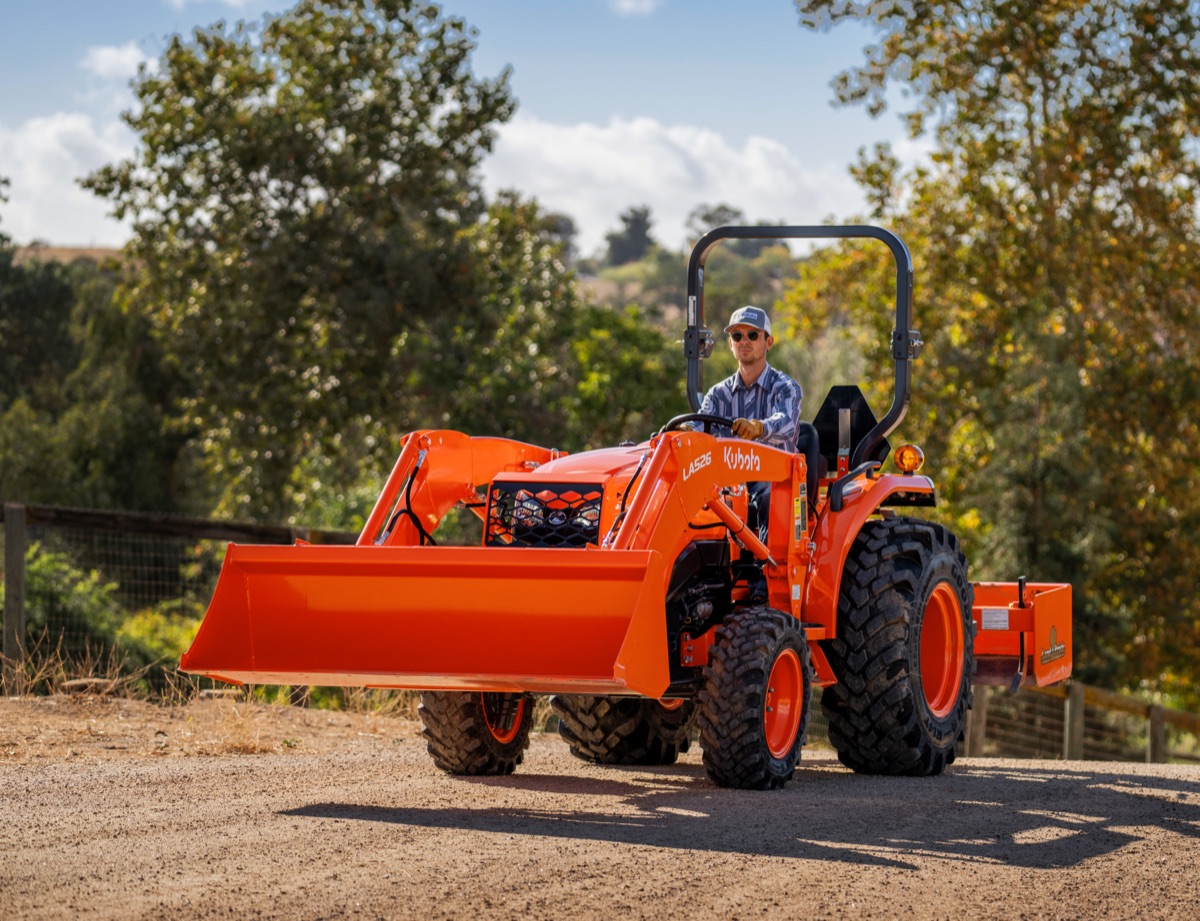
Compact tractors (typically 25-60 HP according to ASABE standards) are the workhorses of small farms, handling everything from mowing and tilling to loader work and snow removal — each of which depends on pairing the tractor with the right 3-point and PTO implements. This guide compares leading models based on manufacturer specifications to help you find the right tractor for your acreage.
How to Size a Compact Tractor
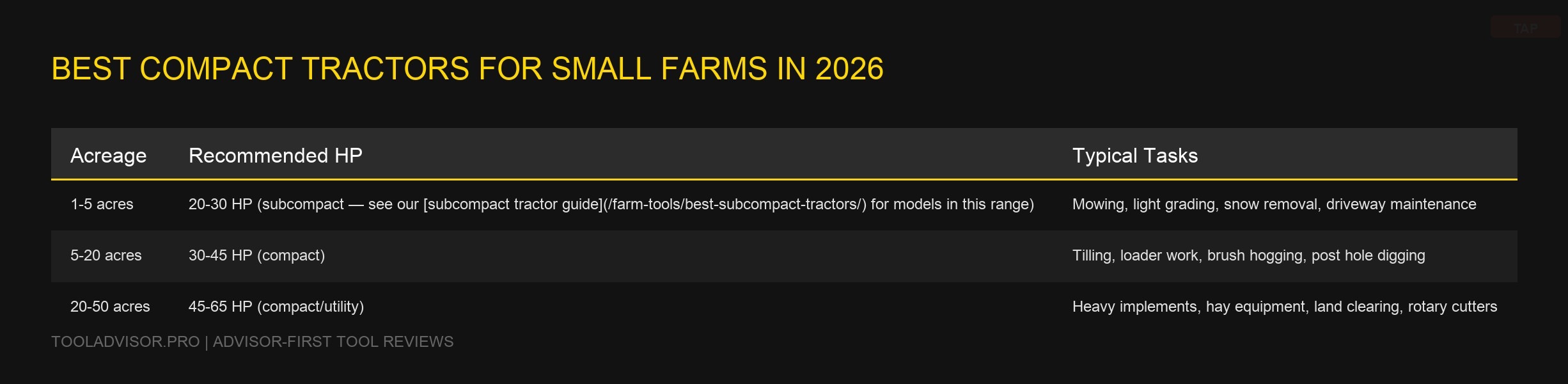
Choosing the wrong horsepower class is the most common and most expensive mistake small farm buyers make. Industry guidelines from equipment dealers suggest matching HP to acreage and task weight:
| Acreage | Recommended HP | Typical Tasks |
|---|---|---|
| 1-5 acres | 20-30 HP (subcompact — see our subcompact tractor guide for models in this range) | Mowing, light grading, snow removal, driveway maintenance |
| 5-20 acres | 30-45 HP (compact) | Tilling, loader work, brush hogging, post hole digging |
| 20-50 acres | 45-65 HP (compact/utility) | Heavy implements, hay equipment, land clearing, rotary cutters |
Understanding Gross HP vs. PTO HP
Manufacturer brochures typically advertise gross engine horsepower, but the number that matters for implement work is PTO horsepower. Per ASABE standards, PTO HP is measured at the power take-off shaft after drivetrain losses. The difference is significant: a tractor rated at 37.5 gross HP may deliver only 31 PTO HP — a roughly 17% reduction. When spec sheets list a rotary cutter requiring “25 PTO HP minimum,” that figure refers to PTO output, not the number on the hood decal. For the full framework on matching an implement’s PTO and lift requirements to a specific tractor, see how to match implements to your compact tractor.
Loader Capacity: The Spec That Gets Overlooked
Loader lift capacity is measured two ways in manufacturer documentation: maximum lift capacity (at ground level) and lift capacity at full height. The full-height number is what determines how high you can lift a loaded bucket, a round bale, or a pallet of fence posts. According to equipment dealer guidance, a practical minimum for small farm loader work is 1,000 lbs at full height. Below that threshold, common tasks like moving round bales (which weigh 800-1,200 lbs depending on size and moisture content) become marginal or impossible. For a detailed breakdown of loader options by tractor brand, see the front-end loader comparison.
Breakout force — the upward force the loader can exert when curling the bucket — also matters for digging into gravel piles and hard-packed material. This spec is often buried in loader-specific documentation rather than the main tractor spec sheet.
Key specifications to compare:
- Engine horsepower (gross vs PTO HP — always check both)
- Loader lift capacity at full height (not just max capacity)
- 3-point hitch lift capacity (Category 1 is standard for compacts)
- Transmission type (gear, hydrostatic, CVT)
- Hydraulic flow (GPM — determines how fast implements respond)
- Operating weight (heavier tractors provide better traction but compact soil more)
Top Compact Tractors by Category
Kubota L3901 - Best Overall for Small Farms
| Specification | Value |
|---|---|
| Engine HP | 37.5 HP (gross) |
| PTO HP | 31.2 HP |
| Loader Lift Capacity | 1,654 lbs at full height (LA525 loader) |
| Loader Breakout Force | 2,756 lbs |
| 3-Point Lift | 2,646 lbs |
| Hitch Category | Category 1 |
| Transmission | 8F/8R gear or HST |
| Hydraulic Flow | 10.9 GPM |
| Base Weight | 3,373 lbs |
| Fuel Capacity | 10.6 gallons |
| MSRP Range | $28,000-35,000 (with loader) |
According to Kubota’s specifications, the L3901 features a Kubota-built diesel engine with a Tier 4 Final emission system that does not require a diesel particulate filter (DPF) or selective catalytic reduction (SCR). This is a meaningful operational advantage: per Kubota’s documentation, no DPF regeneration cycles means no unexpected downtime during heavy work sessions.
The LA525 front loader provides 1,654 lbs lift capacity at full height — among the highest in its class per manufacturer data. The 10.9 GPM hydraulic flow rate is also notably higher than competitors in this price range, which translates to faster loader cycle times and smoother implement operation.
The gear transmission option (8F/8R) provides better efficiency for field work and towing, while the hydrostatic option is better suited for loader-intensive tasks where frequent direction changes are needed. Both versions share the same engine and hydraulic specs.
Best for: 5-20 acre farms needing versatile loader work and implement power. The combination of PTO HP, loader capacity, and hydraulic flow makes this the strongest all-around performer in the 35-40 HP class based on published specifications.
John Deere 3025E - Best Value Package
| Specification | Value |
|---|---|
| Engine HP | 24.7 HP |
| PTO HP | 18 HP |
| Loader Lift Capacity | 1,126 lbs at full height (300E loader) |
| Loader Breakout Force | 1,860 lbs |
| 3-Point Lift | 1,356 lbs |
| Hitch Category | Category 1 |
| Transmission | Hydrostatic (Twin Touch pedals) |
| Hydraulic Flow | 5.3 GPM |
| Base Weight | 2,459 lbs |
| Fuel Capacity | 6.3 gallons |
| MSRP Range | $18,000-22,000 (with loader) |
John Deere’s 3E Series is frequently bundled in promotional packages that include loader, mower deck, and warranty extensions. Per John Deere’s documentation, the hydrostatic transmission with Twin Touch pedals provides intuitive forward/reverse control — one pedal for forward, one for reverse — which simplifies operation for first-time tractor owners.
The trade-off is output: at 18 PTO HP, the 3025E is limited in the implements it can run. According to manufacturer guidelines, a 5-foot rotary cutter typically requires 20-25 PTO HP, which puts the 3025E at the margin. For mowing, snow blowing, and light grading, the power is sufficient.
The 5.3 GPM hydraulic flow is the lowest in this comparison, which means slower loader response and limited ability to run hydraulic-driven implements. Buyers who plan to add a hydraulic auger or log splitter should factor this constraint into their decision.
Best for: 1-5 acre properties where mowing is the primary task and loader work is occasional.
Mahindra 2638 - Best Heavy-Duty Value
| Specification | Value |
|---|---|
| Engine HP | 37.4 HP |
| PTO HP | 30.4 HP |
| Loader Lift Capacity | 2,434 lbs at full height |
| Loader Breakout Force | 3,527 lbs |
| 3-Point Lift | 2,976 lbs |
| Hitch Category | Category 1 |
| Transmission | 8F/8R gear or shuttle shift |
| Hydraulic Flow | 9.2 GPM |
| Base Weight | 4,012 lbs |
| Fuel Capacity | 10.6 gallons |
| MSRP Range | $22,000-28,000 (with loader) |
Mahindra tractors consistently offer more lift capacity per dollar than competitors at similar HP ratings. The 2638’s 2,434 lb loader capacity exceeds many 50+ HP tractors according to specification comparisons across manufacturers. Mahindra provides a 5-year powertrain warranty — longest in the compact tractor segment per their warranty documentation.
The 4,012 lb operating weight is the heaviest in this comparison. Per industry guidance, added weight improves traction for loader work and pulling implements through heavy soil, but it also increases soil compaction risk. Buyers working wet clay soils should weigh this trade-off carefully.
The shuttle-shift transmission option allows forward/reverse switching without clutching, which bridges the gap between a full hydrostatic and a manual gear box. It costs less than HST but offers a loader-friendlier experience than a standard clutch-operated gear transmission.
Best for: Budget-conscious buyers who need maximum lifting capacity and are comfortable with a thinner dealer network in exchange for significant cost savings.
Kubota BX2380 - Best Subcompact
| Specification | Value |
|---|---|
| Engine HP | 21.6 HP |
| PTO HP | 16.6 HP |
| Loader Lift Capacity | 656 lbs at full height (LA344 loader) |
| Loader Breakout Force | 1,056 lbs |
| 3-Point Lift | 680 lbs |
| Hitch Category | Category 1 (limited) |
| Transmission | Hydrostatic |
| Hydraulic Flow | 5.3 GPM |
| Base Weight | 1,533 lbs |
| Fuel Capacity | 6.6 gallons |
| MSRP Range | $16,000-20,000 (with loader) |
The BX Series represents Kubota’s residential/light commercial subcompact line. Per Kubota’s specifications, the BX2380 can mount a 54” or 60” mid-mount mower deck while simultaneously maintaining loader functionality — a capability that makes it a viable replacement for both a zero-turn mower and a small utility loader.
At 1,533 lbs, the BX2380 is light enough to operate on established lawns without severe rutting in most soil conditions. The trade-off is the 656 lb loader capacity, which limits it to topsoil, mulch, and light gravel work. Round bales, pallets of lumber, and other heavy loads are beyond its rated capacity.
Best for: Large residential properties (1-5 acres) and light-duty farm tasks where a mowing deck and small loader cover 80% of the workload.
Full Comparison Table
| Spec | Kubota L3901 | John Deere 3025E | Mahindra 2638 | Kubota BX2380 |
|---|---|---|---|---|
| Engine HP | 37.5 | 24.7 | 37.4 | 21.6 |
| PTO HP | 31.2 | 18 | 30.4 | 16.6 |
| Loader Capacity (full height) | 1,654 lbs | 1,126 lbs | 2,434 lbs | 656 lbs |
| 3-Pt Lift Capacity | 2,646 lbs | 1,356 lbs | 2,976 lbs | 680 lbs |
| Hydraulic Flow | 10.9 GPM | 5.3 GPM | 9.2 GPM | 5.3 GPM |
| Operating Weight | 3,373 lbs | 2,459 lbs | 4,012 lbs | 1,533 lbs |
| Transmission Options | Gear / HST | HST only | Gear / Shuttle | HST only |
| Powertrain Warranty | 2 years | 6 years (limited) | 5 years | 2 years |
| Price Range (with loader) | $28-35K | $18-22K | $22-28K | $16-20K |
Who This Is NOT For
Not every small farm buyer needs a new compact tractor. Consider alternatives if:
-
Your property is under 2 acres with mostly flat terrain. A commercial-grade zero-turn mower ($3,000-6,000) handles mowing more efficiently than any tractor, and a rented skid steer covers the occasional heavy lifting. Buying a compact tractor for light residential use leaves significant capability unused.
-
You need to clear heavy timber or move boulders. Compact tractors in the 25-40 HP range are not rated for forestry work. Per manufacturer guidelines, tasks like stump removal, land clearing of trees over 6” diameter, and boulder extraction require utility-class tractors (60+ HP) or dedicated machinery like excavators and skid steers.
-
Your budget is under $15,000 for a new machine. No new compact tractor with a loader from a major manufacturer falls below this threshold at current pricing. A 5-10 year old used tractor from Kubota, John Deere, or New Holland often delivers better value at this budget. Used compact tractors from these brands hold their value well, which means the inverse is also true: buying used costs only 30-40% less than new, but eliminates warranty coverage.
-
You plan to run large hay equipment. Square balers, disc mowers, and tedders designed for operations above 10 acres typically require 50+ PTO HP. None of the tractors in this guide deliver that. Buyers with 20+ acres of hay production should look at utility-class tractors in the 55-75 HP range. For smaller hay operations, see our guide to round balers for small farms to match baler PTO requirements to tractor output.
-
You will only use a tractor a few times per year. Renting a compact tractor from an equipment dealer typically costs $200-400 per day. If total annual use is under 15-20 days, renting is more cost-effective than ownership when accounting for insurance, maintenance, and depreciation.
Key Considerations
Transmission Types Explained
| Type | Pros | Cons | Best For |
|---|---|---|---|
| Gear (manual) | Most efficient, lowest maintenance, best for steady field work | Requires clutching to change speed/direction, steeper learning curve | Towing, PTO implement work, hay operations |
| Hydrostatic (HST) | No clutch, infinitely variable speed, easiest to operate | Higher cost, less efficient under heavy load, fluid changes needed | Loader work, mowing, snow removal, beginners |
| Shuttle Shift | Forward/reverse without clutching, lower cost than HST | Still requires gear selection, limited speed range per gear | Loader work on a budget, mixed-use operations |
Per manufacturer documentation, hydrostatic transmissions are the most popular choice for compact tractors sold to first-time buyers. However, gear transmissions remain the standard for buyers who primarily run PTO-driven implements, where constant speed matters more than directional agility.
Dealer Network and Parts Availability
According to industry reports, dealer proximity matters significantly for compact tractors. Unlike passenger vehicles, tractor repairs often require specialized tooling and diagnostic software that independent shops may not carry.
- Kubota and John Deere maintain the most extensive dealer networks in North America. Per their dealer locator tools, most rural areas have a dealer within 30-50 miles.
- Mahindra has expanded its dealer footprint significantly since 2020, but coverage remains thinner in the northern plains and mountain west states. Checking dealer proximity before purchase is strongly advised.
- Parts availability varies by brand. Kubota and John Deere parts are widely stocked. Mahindra parts may require ordering with lead times of 3-7 business days for less common components, per dealer reports.
Resale Value
Historical resale data from used equipment listings suggests:
- Kubota and John Deere compact tractors retain approximately 60-70% of their purchase price after 5 years and 500-800 hours of use.
- Mahindra resale values are improving as brand recognition grows, but they currently trail Japanese and American brands by 10-15 percentage points at comparable age and hours.
- Low-hour machines (under 300 hours) from any major brand hold value disproportionately well, which makes the first 2-3 years of ownership the most expensive on a per-hour basis.
Maintenance Costs to Expect
Per manufacturer maintenance schedules, compact tractor annual maintenance typically includes:
| Service Item | Interval | Estimated Cost |
|---|---|---|
| Engine oil and filter | Every 100-200 hours | $40-60 |
| Hydraulic fluid check/top-off | Every 200 hours | $20-40 |
| Air filter replacement | Every 200-300 hours | $15-30 |
| Fuel filter replacement | Every 300-500 hours | $15-25 |
| Coolant flush | Every 2 years / 1,000 hours | $30-50 |
| Transmission fluid (HST) | Every 600-800 hours | $80-150 |
These figures are based on published maintenance schedules from Kubota, John Deere, and Mahindra. Actual costs vary by dealer labor rates, which range from $75-120 per hour according to industry surveys. Many small farm owners perform routine maintenance themselves, which reduces annual costs to parts only.
What You’ll Also Need
Compact tractors themselves are dealer purchases, but the maintenance consumables and implements that go on them are bought constantly — often on Amazon by owners who do their own service and implement work.
- Kubota UDT hydraulic-transmission fluid — 1 gallon — the most-searched tractor fluid for Kubota L-series and BX-series owners. Used for both hydraulic system and transmission in HST models; Kubota specifies UDT or SUDT2 in most compact tractor applications. Search: “Kubota UDT hydraulic fluid gallon,” “Kubota SUDT2 transmission fluid.” Check price on Amazon →
- John Deere Hy-Gard transmission fluid — the equivalent for 3E and 4M series owners; non-dealer sources are significantly cheaper. Search: “John Deere Hy-Gard transmission fluid,” “JD Hy-Gard gallon.” Check price on Amazon →
- Tractor engine oil — 15W-40 diesel, 1 gallon — most compact tractor diesel engines call for 15W-40 CD/CF-4 rated oil at 100-hour oil change intervals. Search: “15W-40 diesel engine oil tractor,” “Rotella T4 15W-40 gallon.” Check price on Amazon →
- PTO shear bolt kit — the most common breakdown part on any tractor with a PTO-driven implement. Shear bolts are designed to fail before the gearbox does; always carry extras in the tractor. Size is implement-specific (typically 3/8” or 7/16” grade 5). Search: “PTO shear bolt kit,” “tractor PTO shear bolt replacement.” Check price on Amazon →
- 3-point hitch top link — category 1 — top links are frequently adjusted, lost, or damaged. A spare category 1 adjustable top link fits most compact tractors and light implements. Search: “3 point hitch top link category 1,” “tractor top link adjustable cat 1.” Check price on Amazon →
- Tractor air filter — radial seal style — air filters on compact tractors should be replaced every 200–300 hours or annually; aftermarket filters fit most Kubota, John Deere, and Mahindra models at lower cost than dealer parts. Search your model: “Kubota L3901 air filter,” “John Deere 3025E air filter replacement.” Check price on Amazon →
- Front-end loader bucket edge replacement — loader bucket edges wear through on gravel and rock; a bolt-on reversible cutting edge extends bucket life. Universal and model-specific versions are available. Search: “tractor loader bucket cutting edge replacement,” “front loader bucket edge bolt-on.” Check price on Amazon →
Sources
- Kubota Tractor Corporation, L3901 and BX2380 product specification sheets
- John Deere, 3E Series compact tractor technical documentation
- Mahindra USA, 2638 tractor specifications and warranty documentation
- ASABE (American Society of Agricultural and Biological Engineers), tractor classification standards
- Manufacturer dealer locator tools (Kubota, John Deere, Mahindra)
- Published manufacturer maintenance schedules