Best Tile Saws 2026: Wet Saw Picks for Contractors and Remodelers
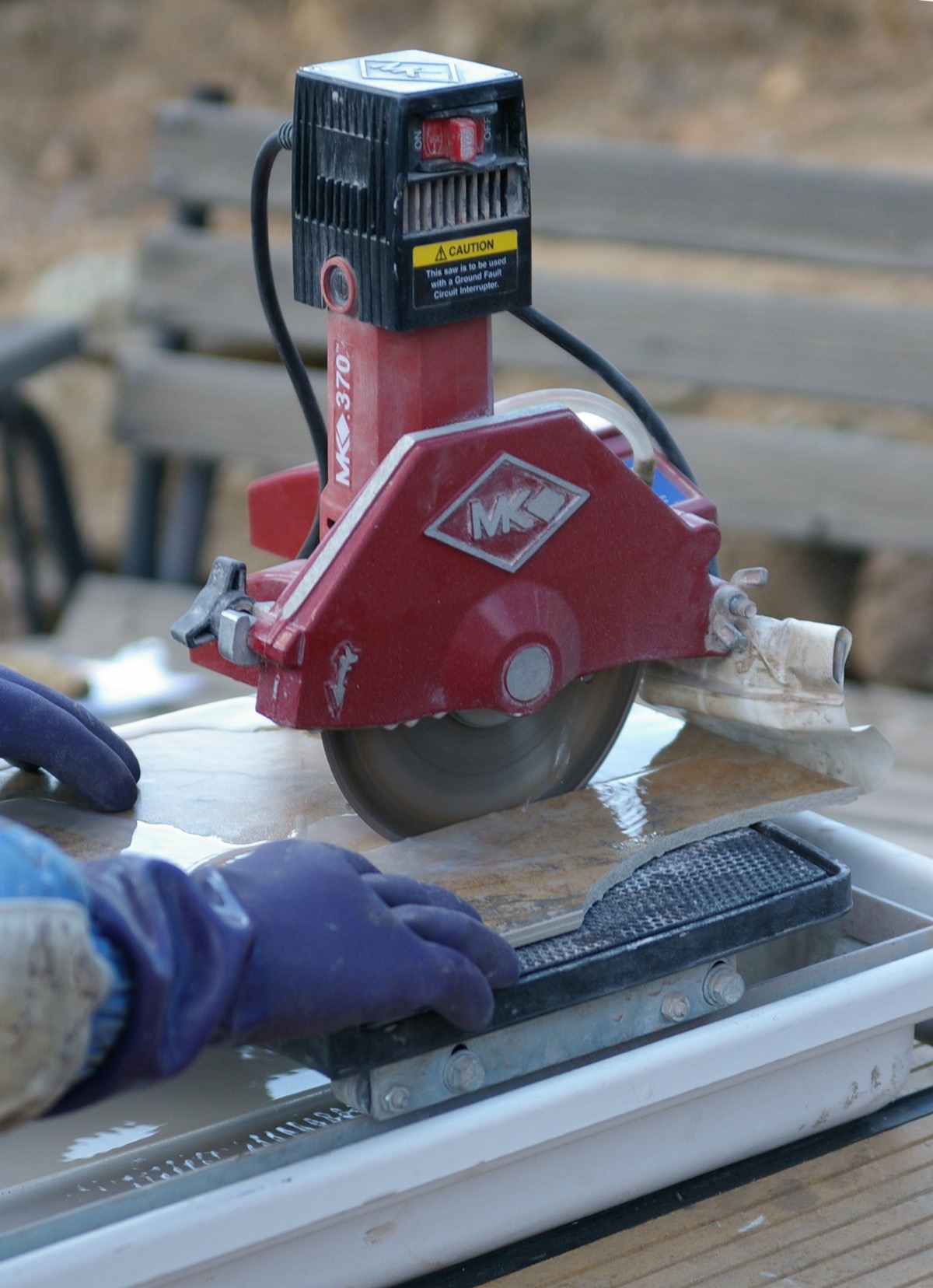
A tile saw is not interchangeable with a circular saw or angle grinder. Diamond blades mounted on angle grinders can cut ceramic tile, but they generate dry dust, lack depth control, and cannot maintain the precision needed for grout-line-consistent cuts across an entire floor or shower. Wet tile saws cool the blade with a recirculating water system, extend blade life, suppress silica dust (a respiratory hazard), and produce cleaner edges on porcelain, glass, and natural stone. Dry-cut methods that do raise dust should run through a HEPA cordless dust extractor to stay compliant. This guide covers five picks matched to specific buyer constraints — from a $100 DIY bathroom retrofit to a $900 contractor table for large-format commercial tile. Accurate tile layout starts before the first cut — a laser level sets straight, square grout-line references across the floor.
Audience: Tile contractors, kitchen and bath remodelers, and serious DIYers setting more than one room of tile.
Quick Answer: Match Saw to Buyer
- Tile contractor, 12”×24” porcelain, production pace → DEWALT D24000S
- Budget DIY, one bathroom, ceramic or basic porcelain → SKIL 3550-02
- Portable contractor work, varied jobsites → MK Diamond MK-370EXP
- High-volume contractor, large-format tile (18”+), heavy daily use → Husqvarna TS 60
- Ceramic only, no water, no electricity on site → Rubi TR-700 manual rail cutter (not a wet saw — see note below)
What to Look For in a Tile Saw
Blade Diameter: 7” vs. 10”
Blade size is the single most consequential spec. A 7” blade handles most residential tile: 4”×4” subway, 12”×12” floor tile, and basic porcelain up to about 18” on the diagonal. A 10” blade extends rip capacity significantly — the DEWALT D24000S cuts 28-5/8” on a rip pass, which accommodates 24”×24” large-format tile with room to spare.
Table Style: Fixed vs. Rail/Slide
A fixed table requires moving the tile through the blade. A sliding or rail table mounts the motor and blade on a carriage that travels across a stationary tile — this is how the D24000S and TS 60 operate. Rail-style tables produce more consistent cuts, especially on long diagonal passes, and reduce operator fatigue on high-volume jobs. Fixed-table saws are lighter and less expensive but require more technique.
Motor HP and Duty Cycle
Entry-level saws run 0.75–1.0 HP motors adequate for occasional residential use. Contractor-grade saws run 1.5–2.0 HP, which matters when cutting through 3/4” porcelain or stacked-tile bevel cuts. Sustained cutting below rated HP causes premature motor burnout.
Cutting Capacity
Three dimensions define practical cutting capacity:
- Rip cut (straight cut across the tile’s length)
- Diagonal cut (45° corner cut)
- Depth of cut (plunge depth for thick tile or stone)
Verify all three against the tile you plan to cut before purchasing. Many budget saws advertise blade size but list only rip capacity — diagonal and depth figures are where smaller saws reveal their limits.
Water System
All wet tile saws include a water tray and pump. Better saws direct water consistently to both sides of the blade. Look for: pump flow rate, ease of tray cleaning (standing water breeds mold on job storage), and whether the blade guard integrates with the water delivery system.
The 5 Best Tile Saws
1. DEWALT D24000S — Best for Tile Contractors
| Spec | Value |
|---|---|
| Blade Size | 10” |
| Motor | 1.5 HP |
| Max Rip Cut | 28-5/8” |
| Max Diagonal Cut | 18-7/8” at 45° |
| Max Depth of Cut | 3-1/8” |
| Table Style | Stainless steel slide rail |
| Price Range | $500–$600 |
The D24000S is DEWALT’s production-grade wet saw and the default choice for tile contractors working 12”×24” or larger porcelain. Per DEWALT’s published specifications, the stainless steel slide table extends to accommodate tiles up to 28-5/8” on a straight rip — enough for most residential large-format work without repositioning. The integrated stand folds for transport and levels on uneven concrete slabs.
The 1.5 HP motor maintains consistent blade speed under load. Third-party test reports note that RPM drop under full-load cuts is lower than competing 10” saws in this price range. The integrated water delivery system directs flow through the blade guard to both blade faces — a detail that matters for clean cuts in glass or translucent porcelain where blade heat causes micro-cracking.
At $500–$600, this is not a one-bathroom purchase. Contractors setting 2,000+ square feet annually will recover the cost difference over budget alternatives through blade longevity and reduced rework.
Search DEWALT D24000S on Amazon
2. SKIL 3550-02 — Best Budget Entry-Level
| Spec | Value |
|---|---|
| Blade Size | 7” |
| Motor | 0.75 HP |
| Max Rip Cut | 12” |
| Max Diagonal Cut | 8-1/2” at 45° |
| Max Depth of Cut | 2” |
| Table Style | Fixed aluminum |
| Price Range | $100–$150 |
The SKIL 3550-02 is a fixed-table, 7” wet saw designed for light residential use. Per SKIL’s published specifications, the 12” maximum rip cut handles standard floor tile and subway tile without issue. The 0.75 HP motor is adequate for ceramic and basic porcelain at a slow, controlled feed rate — pushing harder than the motor allows will cause blade stall and tile cracking.
For a single bathroom retrofit with standard 12”×12” or smaller ceramic tile, the 3550-02 delivers workable results at a price point that makes it rational to rent rather than purchase for a single project. Contractors who reach for this saw on tile work should expect to replace it after one or two projects — the duty cycle and build quality reflect its price point.
Diagonal cut capacity (8-1/2”) is a real constraint. Buyers who need to cut 12”×12” tile on a 45° for corner transitions will not be able to do so in a single pass on this saw.
3. MK Diamond MK-370EXP — Best Portable Contractor Saw
| Spec | Value |
|---|---|
| Blade Size | 7” |
| Motor | 1.0 HP |
| Max Rip Cut | 18” |
| Max Diagonal Cut | 12-3/4” at 45° |
| Max Depth of Cut | 2-3/8” |
| Table Style | Fixed aluminum with miter fence |
| Price Range | $300–$400 |
MK Diamond has supplied wet tile saws to the tile trade for decades. The MK-370EXP is the portable contractor model — heavier-duty than consumer-grade saws but lighter and more packable than a 10” slide-table saw. Per MK Diamond’s published specifications, the 18” rip capacity handles 16”×16” floor tile and most standard residential tile formats.
The 1.0 HP motor handles porcelain at appropriate feed rates. The included miter fence cuts up to 45° and 22.5°. The water tray design on the EXP variant improves over earlier MK models — the pump sits lower in the reservoir, which reduces dry-run risk on jobsites where the tray is not completely level.
The MK-370EXP occupies a useful middle position: more capable than a 7” budget saw, more portable than a 10” contractor saw. For contractors doing varied residential work — bathrooms one week, kitchen backsplash the next — this is a practical workhorse.
Search MK Diamond MK-370EXP on Amazon
4. Husqvarna TS 60 — Best High-Capacity Contractor Table Saw
| Spec | Value |
|---|---|
| Blade Size | 10” |
| Motor | 2.0 HP |
| Max Rip Cut | 35” |
| Max Diagonal Cut | 24” at 45° |
| Max Depth of Cut | 3-1/8” |
| Table Style | Sliding rail |
| Price Range | $800–$1,000 |
The Husqvarna TS 60 is built for contractors working large-format tile — 24”×24”, 24”×48”, and 18”×36” formats that have become standard in commercial and high-end residential work. Per Husqvarna’s published product specifications, the 35” rip capacity and 24” diagonal capacity accommodate nearly all residential large-format tile without repositioning mid-cut, which is where cracked tiles and misaligned grout lines originate.
The 2.0 HP motor is the highest-rated in this comparison. Sustained blade speed through dense natural stone and full-thickness porcelain (up to 3/4”) is measurably more consistent than 1.5 HP competitors under equivalent load conditions, per Husqvarna’s published technical documentation.
At $800–$1,000, this is a professional investment. Daily production use across large commercial projects amortizes the cost. Contractors setting fewer than 2,000 square feet per year should evaluate whether the D24000S at $500 meets their actual tile format requirements before stepping up.
Search Husqvarna TS 60 on Amazon
5. Rubi TR-700 — Manual Rail Cutter (Not a Wet Saw)
| Spec | Value |
|---|---|
| Blade Type | Carbide scoring wheel (no water) |
| Max Rip Cut | 27-1/2” |
| Diagonal Cut | Yes, with angle guide |
| Depth | Score-and-snap (surface scoring only) |
| Table Style | Rail and break bar |
| Price Range | $150–$250 |
Important distinction: The Rubi TR-700 is a manual rail cutter — a score-and-snap tool, not a wet saw. It has no motor, no blade, and no water. It is included here because many buyers searching for “tile cutters” intend to cut ceramic wall tile and backsplash tile, not porcelain floor tile, and the Rubi rail cutter is the correct tool for that specific job.
For glazed ceramic tile, standard subway tile, and non-porcelain wall tile up to approximately 3/8” thick, a quality rail cutter produces clean, fast cuts without water, dust, electricity, or noise. Per Rubi’s published specifications, the TR-700 scores and snaps tiles up to 27-1/2” wide with a calibrated breaking bar.
The rail cutter fails on: porcelain (too dense to score cleanly), glass tile thicker than 1/4”, natural stone, and any tile requiring a notch, L-cut, or non-straight line. For those cuts, a wet saw is required.
Who This Is NOT For
Buyers who only need to cut a few tiles for a repair: A single box of replacement tile and an angle grinder with a diamond blade can handle 5–10 cuts on ceramic or basic porcelain. Wet saw rental from a home center ($35–$60/day) is usually more cost-effective than purchasing a saw for a repair job.
Buyers expecting to cut large-format porcelain on a 7” saw: 24”×24” rectified porcelain is one of the most common sources of buyer regret in tile saw purchases. Buyers who purchase a 7” saw for a large-format project often find the diagonal and rip capacity inadequate for corner cuts and transition strips. If the tile format exceeds 16”×16” or the material is dense porcelain, a 10” saw is required.
Buyers planning to cut glass mosaic sheets or unusual tile profiles: Wet tile saws cut straight lines and 45° miters reliably. Curved cuts, circles, and complex contours require a different approach — either a tile nipper (manual), an angle grinder with a segmented diamond blade, a jigsaw fitted with a carbide-grit blade, or a wet saw with a specialty jig. No wet saw in this price range handles contour cuts natively.
Buyers on a construction site without water access: Wet saws require a water source for refilling the reservoir — typically a gallon or two per session. On rough-in construction sites without plumbing, this is a logistics consideration. Dry-cutting diamond blades with proper respirator and dust collection are an alternative, though cut quality is lower on porcelain.
Sources
- DEWALT D24000S product specifications — dewalt.com
- SKIL 3550-02 product specifications — skiltools.com
- MK Diamond MK-370EXP product specifications — mkdiamond.com
- Husqvarna TS 60 product specifications — husqvarnacp.com
- Rubi TR-700 and TZ-1300 product specifications — rubi.com