Best Reciprocating Saw Under $150 (2026): Milwaukee 2821-20 Wins
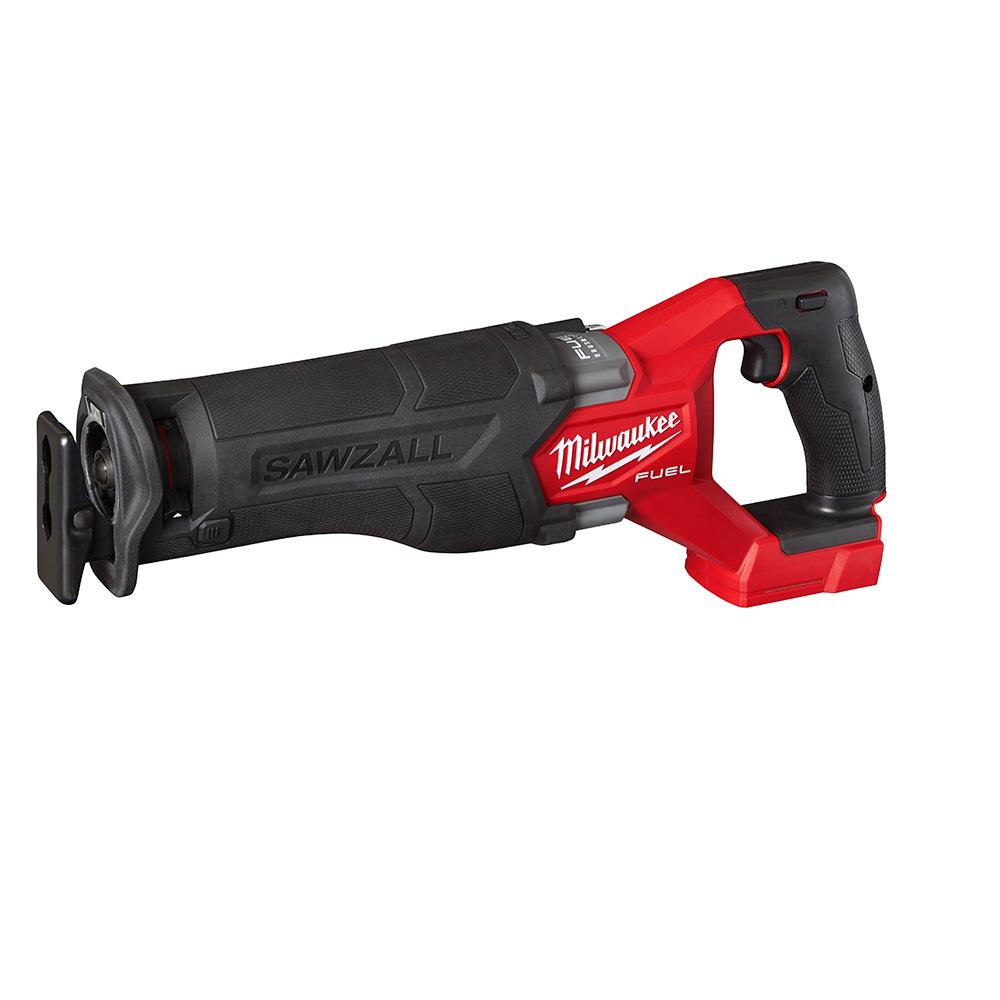
The fast answer: for most contractors and remodelers under $150, the Milwaukee M18 FUEL SAWZALL 2821-20 ($130-$150 tool-only) is the right pick — 1-1/4 inch stroke, 0-3,000 SPM, FUEL brushless motor, orbital action, ONE-KEY compatible. Step down to the Makita XRJ05Z ($100-$120) if you are on the LXT platform; the DeWalt DCS382B ($110-$130) if light weight matters more than orbital action; the Milwaukee 2621-20 ($80-$100) if you only need an occasional brushed M18 saw.
Check Milwaukee M18 FUEL 2821-20 price on Amazon →
Top 5 Sub-$150 Reciprocating Saws at a Glance
| Pick | Model | Price | Stroke | SPM | Orbital | Weight |
|---|---|---|---|---|---|---|
| Best overall | Milwaukee 2821-20 | $130-$150 | 1-1/4 in. | 3,000 | Yes | 7.9 lbs |
| Best LXT value | Makita XRJ05Z | $100-$120 | 1-1/4 in. | 3,000 | Yes | 8.0 lbs |
| Best lightweight | DeWalt DCS382B | $110-$130 | 1-1/8 in. | 3,000 | No | 5.7 lbs |
| Budget M18 | Milwaukee 2621-20 | $80-$100 | 3/4 in. | 3,000 | No | 5.6 lbs |
| Best low vibration | Bosch CRS180B | $90-$110 | 1-1/8 in. | 2,700 | No | 5.5 lbs |
Reciprocating saws earn their keep in demolition, remodeling, and rough plumbing — anywhere a cut needs to happen fast and clean does not matter. The sub-$150 price point (tool-only, no battery) now includes brushless models from every major platform. This guide compares five cordless reciprocating saws on the specifications that actually determine whether the tool stalls in a nail-embedded stud or powers through it: stroke length, strokes per minute, orbital action, and weight.
All prices reflect tool-only (bare tool) listings on Amazon as of early 2026. Battery and charger kits raise the price significantly, so the assumption here is that buyers already own at least one battery platform. Buyers comparing platforms before committing should review the DeWalt vs Milwaukee vs Makita battery platform comparison and the Milwaukee M18 vs DeWalt 20V breakdown for electricians — battery ecosystem cost dwarfs the saw itself over five years. Plumbers running cast iron and copper drain work should also see the reciprocating saws for plumbers guide, which weights blade compatibility and tight-space cuts more heavily than raw demo speed.
Why Stroke Length and SPM Matter More Than Marketing Claims
Two numbers define a reciprocating saw’s cutting speed: stroke length and strokes per minute (SPM).
Stroke length determines how much blade engages material per cycle. A 1-1/4 inch stroke exposes roughly 25% more fresh blade per pass than a 1-1/8 inch stroke. In thick lumber or cast iron pipe, that difference compounds — fewer passes means less heat buildup, less blade wear, and faster cuts. According to manufacturer specifications, most professional-grade reciprocating saws in this price range offer between 1-1/8 and 1-1/4 inch strokes.
SPM (strokes per minute) controls aggression. Higher SPM cuts faster in wood but generates more heat in metal. Variable-speed triggers matter here — a saw rated at 0-3,000 SPM gives the operator control to dial back for metal cutting (1,200-1,800 SPM) and run full speed for demolition wood.
The product to avoid: any reciprocating saw with a stroke length under 1 inch or a max SPM under 2,800. These specs indicate a tool designed for light-duty tasks that will bog down in real demo work.
Corded vs. Cordless for Demolition Work
Corded reciprocating saws still deliver more sustained power for all-day demo, but the gap has narrowed considerably with brushless 18V/20V platforms. Per manufacturer data sheets, the top brushless cordless models in this guide produce cutting speeds comparable to 10-11 amp corded saws.
Cordless makes sense when: working on a roof, cutting in crawl spaces, moving between rooms during a gut renovation, or doing plumbing rough-in where dragging a cord through standing water is a safety concern.
Corded still wins when: running a full day of commercial demolition with continuous cutting. A 5.0Ah battery typically provides 15-25 minutes of heavy cutting before needing a swap. For dedicated demo crews, a corded saw or a deep battery rotation remains the practical choice.
Orbital Action Explained
Orbital action adds an elliptical motion to the blade path — the blade swings slightly forward on the upstroke and back on the downstroke, creating a more aggressive cut in wood. According to manufacturer specifications, orbital action can increase cutting speed in wood by 30-50% compared to straight reciprocating motion.
The tradeoff: orbital action produces rougher cuts and should be turned off for metal cutting, where a straight stroke reduces heat and extends blade life. Of the five saws reviewed here, not all include adjustable orbital action — a feature worth weighing if the tool will split time between wood demo and pipe cutting.
How to Choose a Reciprocating Saw Under $150
Use the table to match the saw’s priorities to your dominant job and existing battery platform.
| If most of your work is | Prioritize | Why |
|---|---|---|
| Nail-embedded framing, lumber, or rough wood demolition | Adjustable orbital action and a longer stroke | Orbital motion makes the cut more aggressive in wood, while a longer stroke exposes more blade per pass. |
| Pipe, conduit, sheet metal, or mixed materials | A variable-speed trigger and a controlled straight stroke | Lower speed and straight reciprocating motion help manage heat when cutting metal. |
| Overhead cuts, crawl spaces, or frequent repositioning | A weight and form factor you can control comfortably | Handling fatigue can matter as much as cutting speed when the saw is used away from a stable stance. |
| Occasional work on an existing battery platform | Battery compatibility before feature differences | A compatible bare tool lets you use the batteries and charger already in your kit. |
Top 5 Reciprocating Saws Under $150
1. Milwaukee M18 FUEL SAWZALL 2821-20 — Best Overall
| Spec | Detail |
|---|---|
| Stroke Length | 1-1/4 in. |
| SPM | 0-3,000 |
| Motor | FUEL Brushless |
| Weight (bare) | 7.9 lbs |
| Orbital Action | Yes |
| Street Price | $130-$150 (tool only) |
Per Milwaukee’s product data sheet, the 2821-20 is the FUEL-tier SAWZALL with ONE-KEY compatibility, allowing tool tracking and customization through the Milwaukee app. The 1-1/4 inch stroke length and 3,000 SPM put it at the top of this class for raw cutting speed. The QUIK-LOK blade clamp allows tool-free blade changes with gloves on.
The FUEL brushless motor delivers measurably longer runtime per charge compared to Milwaukee’s brushed models. Weight at 7.9 lbs (bare) is on the heavier side, which matters during overhead cutting but contributes to reduced vibration during heavy cuts.
2. DeWalt DCS382B — Best Value
| Spec | Detail |
|---|---|
| Stroke Length | 1-1/8 in. |
| SPM | 0-3,000 |
| Motor | Brushless |
| Weight (bare) | 5.7 lbs |
| Orbital Action | No |
| Street Price | $110-$130 (tool only) |
According to DeWalt’s specifications, the DCS382B runs on the 20V MAX platform and features a 4-position blade clamp for flush cutting in multiple orientations. At 5.7 lbs bare, it is notably lighter than the Milwaukee FUEL, which makes a real difference during a full day of overhead demo or plumbing work.
The tradeoff is the shorter 1-1/8 inch stroke and the absence of orbital action. For mixed-material demo (wood and metal), the lack of orbital action is actually neutral — orbital mode would be turned off for metal regardless. For pure wood demolition, the Milwaukee’s orbital action and longer stroke give it an edge.
3. Makita XRJ05Z — Best Compact/Lightweight
| Spec | Detail |
|---|---|
| Stroke Length | 1-1/4 in. |
| SPM | 0-3,000 |
| Motor | Brushless |
| Weight (bare) | 8.0 lbs |
| Orbital Action | Yes (adjustable) |
| Street Price | $100-$120 (tool only) |
Per Makita’s product documentation, the XRJ05Z pairs the full 1-1/4 inch stroke with adjustable orbital action across three settings, matching the Milwaukee FUEL on paper specs while coming in $20-$30 lower. The tool-less blade change system and shoe adjustment keep it competitive on ergonomics.
Makita’s 18V LXT platform has a smaller battery ecosystem share than Milwaukee or DeWalt in North America. For contractors already invested in Makita batteries, this saw represents strong value. For those choosing a first platform, battery and charger availability should factor into the decision.
4. Milwaukee M18 2621-20 — Best Budget Milwaukee
| Spec | Detail |
|---|---|
| Stroke Length | 3/4 in. |
| SPM | 0-3,000 |
| Motor | Brushed |
| Weight (bare) | 5.6 lbs |
| Orbital Action | No |
| Street Price | $80-$100 (tool only) |
The 2621-20 is Milwaukee’s entry-level M18 reciprocating saw with a brushed motor. According to manufacturer specs, the shorter 3/4 inch stroke length is the primary compromise — noticeably shorter than the FUEL model’s 1-1/4 inch stroke, which means more passes through thick material and faster blade wear.
This saw makes sense for a remodeler or plumber who already owns M18 batteries and needs a recip saw for occasional use — cutting PVC, removing the odd stud, or trimming flush. It does not make sense as a primary demo tool. The brushed motor will also draw more battery per cut compared to the brushless alternatives.
5. Bosch CRS180B — Best Vibration Dampening
| Spec | Detail |
|---|---|
| Stroke Length | 1-1/8 in. |
| SPM | 0-2,700 |
| Motor | Standard |
| Weight (bare) | 5.5 lbs |
| Orbital Action | No |
| Street Price | $90-$110 (tool only) |
Per Bosch product documentation, the CRS180B features a counterbalance mechanism designed to reduce vibration during operation. At 5.5 lbs, it is the lightest saw in this comparison. The lower 2,700 max SPM and 1-1/8 inch stroke place it behind the Milwaukee FUEL and Makita on raw cutting speed.
The vibration reduction is the differentiator. For contractors dealing with hand-arm vibration concerns during extended use, or for anyone who finds aggressive reciprocating saws physically fatiguing, the Bosch offers a tangible comfort advantage. The tradeoff is slower cuts and a smaller Bosch 18V battery ecosystem compared to Milwaukee and DeWalt.
Best Reciprocating Saw by Trade
Per contractor usage patterns and demolition application data, reciprocating saw priorities differ significantly by trade:
Plumbers: Plumbing demolition and rough-in is the single highest-volume reciprocating saw application in the trades. Cutting ABS and PVC drain lines, copper supply, cast iron stack, and galvanized pipe in tight spaces under floors and behind walls defines what a plumber’s Sawzall does every day. The Milwaukee M18 FUEL 2821-20 is dominant in the plumbing trade for two reasons: the M18 ecosystem powers Milwaukee’s press tool, pipe threader, and drain cleaning equipment, and the FUEL motor delivers the torque to cut through cast iron stack with a bi-metal blade without the motor bog that lower-power saws exhibit. For tight under-sink and wall-cavity cuts, the compact stroke of the Makita XRJ05Z fits into spaces the full-size Milwaukee cannot reach.
Electricians: Electrical demolition and retrofit work involves cutting through wood framing for wire chases, trimming conduit in tight spaces, and cutting openings in existing construction. Reciprocating saws serve electricians primarily during service upgrades and panel replacement work — cutting out old conduit, removing knockouts, and trimming framing for service entrance clearance. The DeWalt DCS382B is a natural choice for electricians on the 20V MAX platform, with the variable speed trigger providing the control for precise conduit cuts that full-speed cutting would ruin.
Remodelers and demo contractors: Demolition work is where reciprocating saw endurance matters most — cutting through nailed framing assemblies, removing window frames, cutting plaster lath, and demolishing subfloor sections. The critical specs are SPM (strokes per minute) for cut speed and stroke length for cut depth per stroke. The Milwaukee M18 FUEL 2821-20 at 3,000 SPM and 1-1/4-inch stroke handles the most aggressive demo work in the under-$150 category. For all-day production demolition, a corded Milwaukee Super Sawzall at 13 amps outperforms all cordless options — the cordless tools here are best suited for mixed demo/framing work where portability matters.
Roofing contractors: Roof tear-off involves cutting through decking, fascia boards, and rafter tails — hard cuts through weather-hardened wood and occasional nail contact. Blade life is the constraint in roofing work, not motor power. Any saw here handles the cutting; budget for carbide-tipped demolition blades ($8–$15 each) that survive nail strikes without immediately dulling. The DeWalt DCS382B is a common roofing choice for its low price-to-performance ratio on a job where the saw is likely to get dropped from the roof at some point.
HVAC contractors: HVAC sheet metal cutting — duct penetrations through ceilings and walls, cutting existing ductwork for branch connections, and trimming sheet metal collars — requires metal-rated blades at variable low speed. The Bosch CRS180B is the HVAC choice for its superior vibration dampening during extended sheet metal cutting, which transmits less fatigue to the operator during repetitive overhead duct penetration work. Run a 14–18 TPI bi-metal blade at 50–60% trigger pressure for sheet metal — full speed work-hardens thin gauge material and causes blade binding.
Landscaping and tree work: Cutting roots during landscaping projects, trimming branches for access, and cutting through brush and small-diameter wood are outdoor reciprocating saw applications. Wood-cutting demolition blades with 6 TPI run at high speed through green wood and brush. The Milwaukee M18 2621-20 provides the battery platform depth for landscape crews already using M18 equipment, at the lowest Milwaukee entry price.
Spring Demo and Remodel Season: When Reciprocating Saw Demand Peaks
Per contractor scheduling data, reciprocating saw use concentrates in spring for consistent reasons:
Spring demolition season (March–May). Interior remodels, kitchen gut-outs, and bathroom demolitions start in spring as homeowners and contractors work through permit backlogs from winter planning. Demo work drives the highest single-session battery consumption of any application — a gut demolition of a kitchen or bathroom can burn through 3–4 batteries before the rough-in crew arrives.
Exterior repair season (April–June). Replacing rotted window frames, cutting out damaged siding, removing damaged deck ledger boards, and cutting free rusted bolts from exterior hardware all require a reciprocating saw. Exterior repair work is the application most likely to involve nail and fastener strikes — bi-metal or carbide-tipped blades are required; standard wood blades dull immediately on hidden nails.
Plumbing service season (March–May). Spring plumbing service calls increase as homeowners address deferred maintenance and add outdoor water lines, irrigation systems, and hose bibs. Service plumbers doing copper-to-PEX conversions and adding outdoor supply lines rely on reciprocating saws for cutting existing supply in crawl spaces and utility rooms.
ADU and addition rough-in (April–July). Accessory dwelling unit construction peaks in spring/summer. Framing an ADU involves reciprocating saw work for window rough openings, trimming headers, and cutting through existing framing for connection points — concentrated in a short build window.
Who This Is NOT For
- All-day commercial demolition crews. Cordless saws in this price range cannot match a 13-15 amp corded reciprocating saw for sustained, continuous cutting. Budget for a corded Sawzall or a deep battery rotation instead.
- Fine woodworking or finish carpentry. Reciprocating saws produce rough, aggressive cuts. For controlled cuts in finished material, a circular saw or oscillating multi-tool is the right tool.
- Buyers without an existing battery platform. Tool-only pricing assumes owned batteries. Adding a battery and charger pushes these well past $200. First-time cordless buyers should price the full kit before committing to a platform — the DeWalt vs Milwaukee vs Makita battery platform comparison covers long-term ecosystem costs.
- Anyone needing precision. Reciprocating saws are demolition and rough-cut tools. They vibrate, they wander, and they leave ragged edges. That is by design, not a flaw — but it means choosing the wrong tool for trim or cabinetry work.
Bottom Line
For most contractors and remodelers already on a battery platform, the Milwaukee M18 FUEL 2821-20 justifies its price premium through the longest stroke, orbital action, and brushless efficiency. The Makita XRJ05Z matches those specs at a lower price for LXT platform owners. The DeWalt DCS382B splits the difference between performance and weight for 20V MAX users. The budget Milwaukee 2621-20 is an acceptable occasional-use option, and the Bosch CRS180B earns consideration when vibration fatigue is a primary concern.
The specification that matters most: stroke length. A 1-1/4 inch stroke cuts meaningfully faster than 1-1/8 or 3/4 inch in real-world demo conditions. Start there, then factor in battery platform and weight.
Frequently Asked Questions
What is the difference between a reciprocating saw and a jigsaw?
A reciprocating saw is a demolition and rough-cut tool designed for fast, aggressive cuts in walls, pipes, and framing lumber — precision is not its purpose. A jigsaw is a finish-cutting tool designed for curved and intricate cuts in sheet goods, countertops, and trim. According to manufacturer documentation, reciprocating saws use longer, thicker blades and produce significantly more vibration than jigsaws.
Can a reciprocating saw cut metal?
Yes. Reciprocating saws cut metal effectively with the correct blade — typically a bi-metal blade with 18-24 teeth per inch (TPI). Per manufacturer guidelines, reducing the speed to 1,200-1,800 SPM when cutting metal reduces heat buildup and extends blade life. Orbital action should be turned off for metal cutting to maintain a straight stroke.
What blade should I use for demolition?
For general demolition involving wood with embedded nails, a carbide-tipped or bi-metal blade with 6-10 TPI provides the best balance of speed and durability. According to blade manufacturer specifications, carbide-tipped demolition blades survive nail strikes that would destroy standard bi-metal blades, making them the preferred choice for gut renovations and tear-outs.
What You’ll Also Need
- Reciprocating saw blades — wood demolition, 9 inch, 6 TPI — A long, aggressive wood demolition blade handles framing tearout, subfloor removal, and rough plumbing cuts where blade length matters more than cut quality. 6 TPI removes material fast without clogging on green lumber or composite materials. Search: “reciprocating saw blades for wood demolition 9 inch,” “reciprocating saw blade set wood demolition.” Check price on Amazon →
- Reciprocating saw blade set — wood and metal, assorted — A mixed blade set covering 6 TPI wood, 18 TPI bi-metal, and 14 TPI combination blades handles the full range of demo and plumbing cuts without ordering individual blade types. Per manufacturer blade data, an assortment eliminates the most common mid-job blade-availability problem. Search: “reciprocating saw blade set wood metal assorted,” “Diablo reciprocating saw blades multi-pack.” Check price on Amazon →
- Carbide reciprocating blade — nail embedded wood — Carbide-tipped demo blades survive nail strikes that destroy bi-metal blades instantly. For gut renovations and wall tear-outs where hidden fasteners are guaranteed, carbide blades pay for themselves in the first hour by eliminating mid-cut blade failures. Search: “nail embedded wood blade reciprocating carbide,” “carbide recip saw blade nail embedded.” Check price on Amazon →
- Pruning/wood cutting blade — 6 inch, 5 TPI — A coarse 5 TPI pruning blade cuts green wood, tree roots, and landscape material faster than fine-toothed blades. For contractors who also handle site clearing and drainage work, a pruning blade extends the saw’s utility beyond demo and demolition. Search: “reciprocating saw blade for pruning wood,” “reciprocating saw pruning blade 5 TPI.” Check price on Amazon →
- Cast iron / soil pipe blade — 12 TPI — Cast iron soil pipe requires a blade specifically rated for cast iron — standard bi-metal blades bind and snap in the material. A dedicated cast iron blade with a specific tooth geometry cuts cleanly through drain lines and boiler pipes. Search: “recip saw blade for cast iron soil pipe,” “reciprocating blade cast iron 12 TPI.” Check price on Amazon →
- Shoe extension / deep cut adapter — A blade offset adapter or extended shoe allows the saw to flush-cut pipes and studs at floor or wall level without tilting the saw awkwardly. Essential for plumbers removing old supply lines and for removing sill plates during structural work. Search: “reciprocating saw shoe extension adapter,” “recip saw flush cut adapter.” Check price on Amazon →
Sources
- Milwaukee Tool SAWZALL product specifications and data sheets — milwaukeetool.com
- DeWalt 20V MAX reciprocating saw specifications — dewalt.com
- Makita 18V LXT reciprocating saw product documentation — makitatools.com
- Bosch 18V reciprocating saw product specifications — boschtools.com
- Manufacturer-published stroke length, SPM, and weight specifications for all listed models