Best Impact Drivers for HVAC Technicians in 2026: Trade-Specific Guide
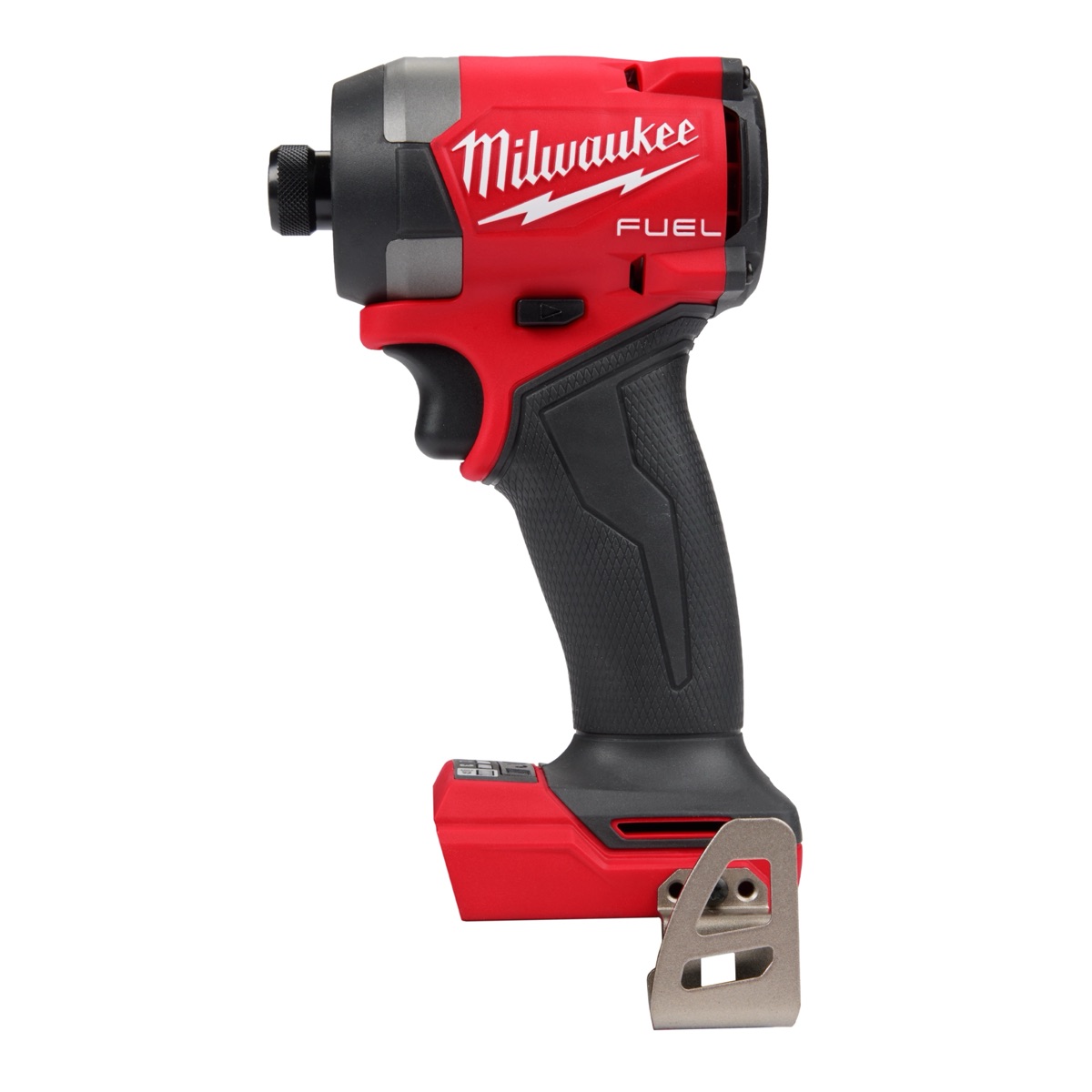
HVAC technicians drive more screws per day than almost any other trade. Sheet metal screws fasten ductwork sections and fittings. Self-drilling hex head screws mount equipment pads and brackets. Machine screws secure control panels and electrical knockouts. In attics, crawlspaces, mechanical rooms, and tight utility chases — positions where a bulky or heavy tool becomes the limiting factor.
The spec that separates a good HVAC impact driver from a general-contractor model is torque control — specifically, the ability to dial back output to avoid stripping the small-diameter fasteners used throughout ductwork and equipment mounting. An impact driver set to maximum torque on a #10 sheet metal screw will strip it. An impact driver with selectable modes lets the technician match output to the fastener.
For a broader impact driver comparison, see our best impact drivers guide. For platform selection, see our DeWalt vs Milwaukee vs Makita comparison.
What HVAC Techs Need from an Impact Driver
Selectable drive modes: The difference between driving a #8 sheet metal screw and a 5/16” lag into a concrete pad is an order of magnitude in required torque. A 4-mode or 3-mode impact driver lets the technician select the right output for each task without stripping or under-driving.
Compact body and short head length: Attic and crawlspace work means low-headroom positions. A 5-6 inch head-to-chuck length allows one-handed operation in confined spaces that full-size impact drivers cannot access.
Low vibration: HVAC techs drive hundreds of sheet metal screws per day on production work. Sustained vibration accelerates hand-arm fatigue. Anti-vibration design and smooth impacts (Makita’s T-mode, Milwaukee’s DRIVE CONTROL) reduce operator fatigue across a full workday.
1/4” hex chuck compatibility: All standard driver bits, nut drivers, and socket adapters for the common fastener sizes in HVAC work (5/16”, 3/8” nut drivers for equipment) fit a standard 1/4” hex chuck.
Battery platform depth: HVAC technicians also use drills, multi-tools, and work lights. A platform with 200+ tools means the impact driver shares batteries with the rest of the tool set.
Top Picks for HVAC Technicians
Milwaukee M18 FUEL DCF887 — Best Overall
| Spec | Value |
|---|---|
| Platform | Milwaukee M18 |
| Torque | 1,800 in-lbs |
| IPM | 0–3,600 |
| RPM | 0–3,250 |
| Drive Modes | 4 (DRIVE CONTROL) |
| Head Length | 5.35 inches |
| Weight (bare) | 2.3 lbs |
| Warranty | 5 years |
| Price (tool-only) | $130–$170 |
Per Milwaukee’s product specifications, the DCF887 delivers 1,800 in-lbs of torque across 3 speed/power modes plus a precision mode that limits output for small fasteners. Milwaukee’s DRIVE CONTROL technology manages impact rate and torque delivery electronically — the tool does not just switch between motor speeds but actually modulates the impact mechanism to produce appropriate output at each setting.
At 5.35 inches head length and 2.3 lbs, the DCF887 is among the most compact full-power 18V impact drivers available. The short head length allows one-handed driving in tight corners and panel spaces where longer drivers catch on framing.
Best for: HVAC technicians on the M18 platform, or those ready to invest in Milwaukee as their primary platform. Best-in-class torque control with the most granular mode selection.
DeWalt DCF887 — Best for DeWalt Platform Owners
| Spec | Value |
|---|---|
| Platform | DeWalt 20V MAX |
| Torque | 1,825 in-lbs |
| IPM | 0–3,250 |
| RPM | 0–2,800 |
| Drive Modes | 3 |
| Head Length | 5.5 inches |
| Weight (bare) | 2.2 lbs |
| Warranty | 3 years |
| Price (tool-only) | $100–$150 |
Per DeWalt’s specifications, the DCF887 matches Milwaukee on torque (1,825 in-lbs) and is 0.1 lbs lighter at 2.2 lbs bare. Three drive modes (low/medium/high) cover the range of HVAC fastener work. The tool is notably compact at 5.5 inches head length.
DeWalt’s 3-year warranty is shorter than Milwaukee’s 5-year coverage. For HVAC techs already on 20V MAX, the DCF887 is the straightforward choice without the platform switching cost.
Makita XDT16 — Best for Low-Vibration Sheet Metal Work
| Spec | Value |
|---|---|
| Platform | Makita 18V LXT |
| Torque | 1,600 in-lbs |
| IPM | 0–3,500 |
| RPM | 0–3,600 |
| Drive Modes | 4 (T-mode included) |
| Head Length | 5.2 inches |
| Weight (bare) | 2.4 lbs |
| Warranty | 3 years |
| Price (tool-only) | $120–$160 |
Per Makita’s product documentation, the XDT16 features T-mode (Tightening mode), which uses a two-stage impact mechanism that reduces impacts per minute in the final tightening phase. This produces measurably lower fastener cam-out and less overtorque on small sheet metal screws — the primary failure mode when driving HVAC ductwork screws at full impact speed.
At 5.2 inches, the XDT16 has the shortest head length on this list, making it the most maneuverable in tight mechanical rooms and low-clearance attic spaces.
Best for: HVAC techs who drive high volumes of sheet metal screws and experience fastener stripping with other tools. T-mode specifically addresses this problem.
Milwaukee M12 FUEL 2553-20 — Best Compact for Tight Spaces
| Spec | Value |
|---|---|
| Platform | Milwaukee M12 |
| Torque | 1,000 in-lbs |
| IPM | 0–4,000 |
| RPM | 0–3,100 |
| Drive Modes | 4 |
| Head Length | 4.65 inches |
| Weight (bare) | 1.7 lbs |
| Warranty | 5 years |
| Price (tool-only) | $80–$120 |
For HVAC work in the tightest attic crawlspaces and equipment rooms, the M12 FUEL compact impact driver offers a 4.65-inch head length and 1.7 lb weight that no 18V driver can match. Per Milwaukee’s specifications, 1,000 in-lbs is adequate for all ductwork and equipment-mounting fastener applications — only heavy structural lags and concrete anchors require more.
Many HVAC techs run an M12 impact driver as their primary driving tool and an 18V drill for heavier work. The M12 FUEL delivers professional-grade performance in the smallest possible package.
Fastener Size Reference for HVAC Work
| Application | Fastener | Recommended Mode |
|---|---|---|
| Ductwork connections (sheet metal to sheet metal) | #8 self-tapping, 3/4”–1” | Low / Precision mode |
| Register and diffuser mounting | #10 sheet metal screw | Low / Medium mode |
| Equipment pad mounting (light) | 5/16” lag | High mode |
| Concrete anchor driving | 3/8” sleeve anchor | High mode (use drill for pilot) |
| Control panel screws | #6–#8 machine screw | Precision / Low mode |
Who This Is NOT For
- High-torque structural fastening: Impact drivers, including the 1,800 in-lb models listed here, are not designed for large-diameter lag bolts (1/2”+) or structural through-bolts in wood framing. Use an impact wrench for those applications.
- Precision torque-controlled fastening (equipment flanges, refrigerant line fittings): Impact drivers deliver torque in pulses and cannot achieve consistent measured torque. For torque-spec fastening, use a calibrated torque wrench.
- Operators on a tight budget starting from zero: A bare M18 FUEL at $130–$170 plus M18 battery and charger ($100–$160) totals $230–$330 before you start. A full kit with two batteries is $250–$350 but is the better entry value.
Related Guides
- Best Impact Drivers — full comparison across all trades and use cases
- DeWalt vs Milwaukee vs Makita Battery Platform — platform selection before tool selection
- Best Cordless Drills for Electricians — companion trade tool guide
Sources
- Milwaukee M18 FUEL DCF887 and M12 FUEL 2553 product specifications (milwaukeetool.com)
- DeWalt DCF887 product data sheet (dewalt.com)
- Makita XDT16 product specifications (makitatools.com)
- SMACNA Residential Duct Construction Standards — fastener specifications