Best Cordless Drills for Electricians in 2026: Trade-Specific Guide
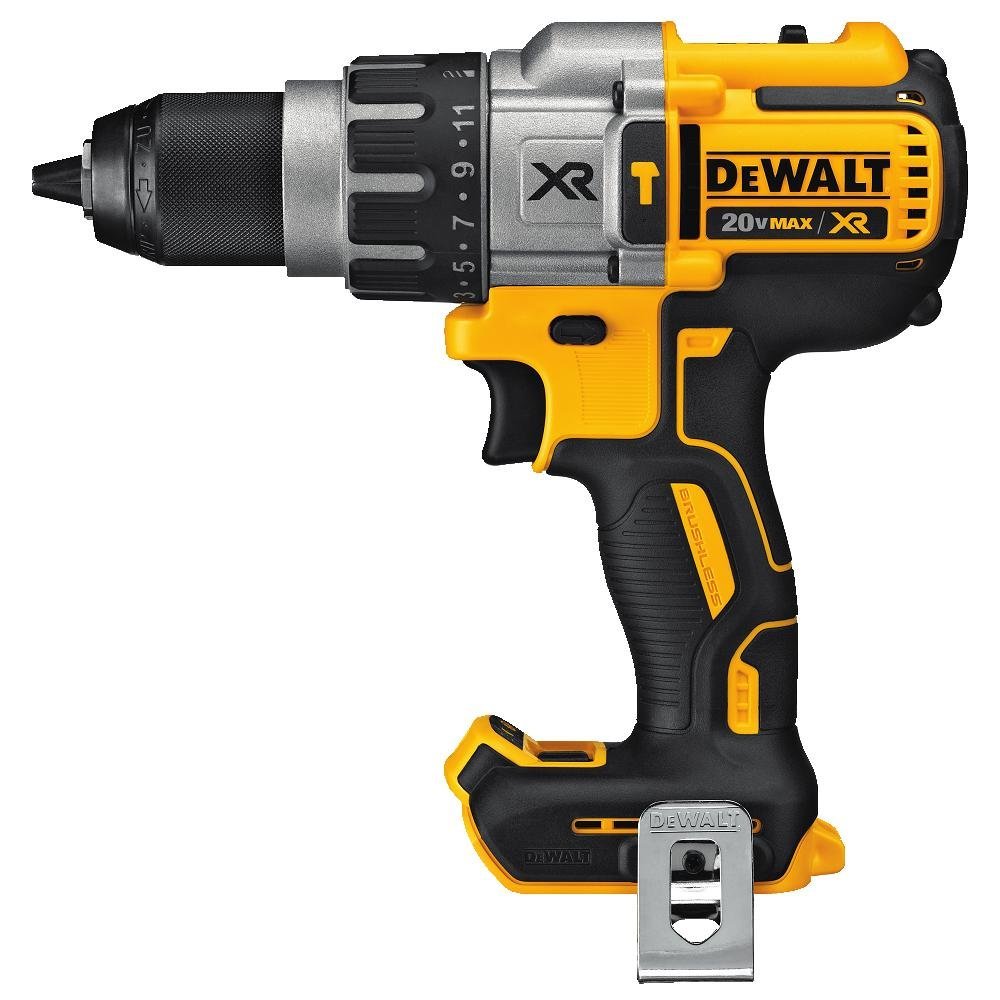
Electricians use cordless drills differently than general contractors or weekend DIYers. The work centers on three tasks: drilling pilot holes and cable runs through framing and masonry, driving screws into electrical panels and junction boxes, and anchoring conduit hangers — often overhead, in tight panel spaces, and in positions where a bulky drill becomes a liability.
The specs that matter for electrical work are not the same specs that dominate general contractor tool reviews. This guide identifies the drills best suited to actual electrical trade use, based on manufacturer specifications and the specific demands of the trade.
For a platform-level decision before choosing a specific drill, see our DeWalt vs Milwaukee vs Makita battery platform comparison.
What Electricians Need from a Drill
Torque control (clutch): Electrical work involves a lot of screw driving into metal boxes, panels, and conduit fittings. Overtorqued screws strip threads, crack plastic knockouts, and damage equipment. A drill with 20+ clutch settings and a reliable breakaway lets the operator set the right torque for each application.
Compact body (for panel work): A 200mm or shorter head-to-chuck length is the practical limit for many panel interiors. Longer drills are clumsy in breaker boxes and tight enclosures.
3-speed gearbox: High speed (3rd gear) for fast drilling through wood and drywall between joists. Low speed (1st gear) for maximum torque on masonry anchors and large bit diameters. Middle speed (2nd) for general-purpose screw driving.
Keyless chuck quality: Electricians change bits constantly — from flat-head screw bits to hole saws to brad points. A smooth, single-sleeve keyless chuck that holds bits without wobble saves time and reduces frustration on repetitive tasks.
Platform depth: Electricians accumulate tools — impact drivers, reciprocating saws, work lights. A drill that belongs to a platform with a deep tool catalog (M18, 20V MAX) means one battery system for the whole tool bag. See our best impact drivers guide for the companion tool that most electricians carry alongside their drill.
Top Picks for Electricians
Milwaukee M18 FUEL DCD996 — Best Overall for Electricians
| Spec | Value |
|---|---|
| Platform | Milwaukee M18 |
| Torque | 1,200 in-lbs |
| Speeds | 3 |
| Speed Range | 0–550 / 0–2,000 / 0–3,000 RPM |
| Clutch Settings | 60 |
| Chuck | 1/2” all-metal ratcheting keyless |
| Head Length | 7.9 inches |
| Weight (bare) | 4.5 lbs |
| Warranty | 5 years |
| Price (tool-only) | $170–$220 |
Per Milwaukee’s product specifications, the M18 FUEL DCD996 uses a POWERSTATE brushless motor with 1,200 in-lbs of torque — the highest in its class. The 60-position clutch provides precise torque control for sensitive electrical panel work. Milwaukee’s REDLINK PLUS intelligence system communicates between the tool and battery to prevent overload damage.
The 3-speed gearbox covers the full range: 550 RPM for maximum torque drilling, 2,000 RPM for general work, 3,000 RPM for fast drilling through wood framing. The all-metal chuck resists wear under the repeated bit changes typical of electrical work. Milwaukee specifies compatibility with the full M18 battery family from 1.5 Ah through 12.0 Ah HIGH OUTPUT — the platform is the industry standard among electricians and plumbers.
Best for: Working electricians on the M18 platform, or those ready to commit to Milwaukee as their primary platform. The 5-year warranty and 60-position clutch justify the premium over competing drills.
Limitation: Premium price. Tool-only at $170–$220 means you need M18 batteries already. Factor in $100–$160 for a 5.0 Ah battery if starting from zero.
DeWalt DCD996 — Best for DeWalt Platform Owners
| Spec | Value |
|---|---|
| Platform | DeWalt 20V MAX |
| Torque | 1,200 in-lbs |
| Speeds | 3 |
| Speed Range | 0–500 / 0–1,750 / 0–2,000 RPM |
| Clutch Settings | 24 |
| Chuck | 1/2” all-metal |
| Head Length | 8.0 inches |
| Weight (bare) | 3.61 lbs |
| Warranty | 3 years |
| Price (tool-only) | $150–$200 |
Per DeWalt’s specifications, the DCD996 brushless drill matches Milwaukee’s 1,200 in-lbs torque figure with a lighter 3.61 lb bare weight. The reduced weight matters for extended overhead work in attics and ceiling crawlspaces. The 24-position clutch covers most electrical work applications, though fewer settings than Milwaukee’s 60-position system means less granular torque control.
DeWalt’s 3-year warranty is shorter than Milwaukee’s 5-year coverage. For electricians already on the DeWalt 20V MAX platform — particularly those who carry a DeWalt impact driver, circular saw, or work lights — the DCD996 is the obvious choice.
Best for: Electricians already invested in the DeWalt 20V MAX ecosystem. The lightweight body makes it the better choice for overhead drilling in tight spaces.
Makita XFD131 — Best for Makita Platform + Compact Work
| Spec | Value |
|---|---|
| Platform | Makita 18V LXT |
| Torque | 530 in-lbs |
| Speeds | 2 |
| Speed Range | 0–550 / 0–2,100 RPM |
| Clutch Settings | 21 |
| Chuck | 1/2” single-sleeve keyless |
| Head Length | 7.4 inches |
| Weight (bare) | 3.5 lbs |
| Warranty | 3 years |
| Price (kit, 2 batteries) | $200–$280 |
Per Makita’s product data sheet, the XFD131 is a compact drill with a 7.4-inch head length — the shortest on this list — making it the best choice for panel interiors and tight conduit spaces. Torque at 530 in-lbs is lower than the Milwaukee and DeWalt options, which limits performance on large-diameter masonry anchors and self-tapping screws in heavy conduit. For standard electrical screw driving and pilot hole work, 530 in-lbs is adequate.
The XFD131 is available as a kit with two 2.0 Ah batteries, making it the best entry option for electricians starting a platform from scratch who prioritize compact size.
Best for: Tight-space electrical work, panel interiors, commercial work in equipment rooms. Electricians who prioritize compact length over maximum torque.
Milwaukee M12 FUEL 2504-20 — Best Compact Option for Panel Work
| Spec | Value |
|---|---|
| Platform | Milwaukee M12 |
| Torque | 350 in-lbs |
| Speeds | 2 |
| Speed Range | 0–500 / 0–1,700 RPM |
| Clutch Settings | 15 |
| Chuck | 3/8” metal ratcheting keyless |
| Head Length | 6.3 inches |
| Weight (bare) | 2.1 lbs |
| Warranty | 5 years |
| Price (tool-only) | $100–$130 |
For electricians who need the smallest possible tool for panel work and tight enclosures, the M12 FUEL is a separate consideration. At 6.3 inches head length and 2.1 lbs, it fits into residential and commercial panel boxes where 18V drills are impractical. The 3/8” chuck limits maximum bit diameter compared to 1/2” drills, but most electrical screw-driving applications use 1/4” hex bits that fit a 3/8” chuck.
Per Milwaukee’s specifications, the M12 FUEL brushless motor outperforms many 18V non-brushless drills in its class — the FUEL designation is meaningful in Milwaukee’s lineup. Best used as a secondary drill for panel-specific work alongside a full-size 18V drill for general drilling tasks.
Best for: Panel work specialists, commercial electricians in equipment rooms, or anyone who wants a dedicated compact drill for tight-space applications.
The Impact Driver vs Drill Decision
Most electricians carry both. The drill handles precision torque-controlled screw driving into sensitive electrical components and hole-drilling with twist bits. The impact driver handles self-tapping screws, conduit strap fasteners, and structural anchoring where overtorque isn’t a concern and speed matters. See our best cordless impact wrenches guide for options on the heavier-duty side.
Best Drill for Your Electrical Work Type
Electrical drilling requirements vary significantly by work type. Per NEC installation practice and electrical contractor usage data:
Residential rough-in (new construction): New construction rough-in involves drilling through studs, top and bottom plates, and engineered lumber joist systems for wire runs. Hole sizes range from 3/4-inch (for 14-2 and 12-2 wire) to 1-1/8-inch (for conduit or bundled circuits) using self-feed bits. Per trade practice, new construction electricians drilling for 8–10 hours per day need maximum motor endurance and large-capacity battery runtime above all other specs. The Milwaukee M18 FUEL DCD996 handles 1-1/8-inch self-feed bits through doubled 2×6 top plates without the motor bog that lower-torque drills show at 300–350 in-lbs of sustained demand.
Service and retrofit work: Service electricians work in finished spaces — drilling through fire-blocked framing in walls, fishing wire through existing cavities, and adding circuits to existing panels. Retrofit drilling is start-stop, not continuous. A compact body that fits through access holes and into small junction box spaces matters more than sustained torque. The Milwaukee M12 FUEL 2504-20 is the service electrician’s companion: 12V means a lighter drill that fits where the 18V body won’t, and the M12 platform is the most capable 12V ecosystem for service work. For heavier service calls requiring 1-inch bits in hard lumber, carry the 18V FUEL as backup.
Commercial rough-in: Commercial electrical rough-in involves EMT conduit installation, panel mounting, and cable tray work at heights. The critical spec is high-speed drilling (2,000+ RPM) for pilot holes in metal framing studs and unistrut, plus enough torque to drive 3/8-inch concrete anchors for conduit supports. The Milwaukee M18 FUEL DCD996 and DeWalt DCD999B both handle this range. For electricians on commercial jobs where 20V MAX equipment is specified or provided by the GC, the DeWalt is the natural choice.
Panel and gear work: Switchgear, panelboard assembly, and transformer connections involve driving machine screws into bussing hardware, drilling knockout slugs, and installing ground bars. These applications require a drill with fine clutch control — over-torquing panel hardware strips threads in bus bars and damages equipment worth thousands of dollars. The DeWalt DCD999B’s POWERDETECT system adjusts output based on load, providing more consistent low-torque delivery for sensitive panel work than Milwaukee’s fixed-output design.
Low-voltage and data cabling: Low-voltage installers drilling for data cables, security cameras, and AV wiring work in finished spaces with similar requirements to service electricians — compact body, light weight for overhead work, and enough torque for 1-inch flex bit runs through 2–3 stud bays without the bit stalling. The Makita XFD131 is a strong choice here: its compact body and reduced weight (4.6 lbs with 3.0Ah battery) minimizes fatigue during extended overhead cabling runs.
Spring Commercial and Residential Season
Per electrical contractor scheduling data, spring is the peak season for drill demand across both residential and commercial electrical work:
New housing starts (April–June). Residential new construction accelerates sharply in spring as builders push to frame and rough-in before summer. Electricians on production framing jobs drill thousands of holes per week during peak housing season. Battery runtime and motor longevity are the specs that determine productivity on a busy residential site.
Commercial construction push (March–June). Commercial projects permitted in Q4 of the prior year break ground in spring. Large commercial projects run electricians on rough-in concurrent with framing, generating sustained high-demand drill use for weeks at a time.
Spring service call volume. Homeowners add circuits for new appliances, EV chargers, and home office upgrades concentrated in spring. Service electricians running multiple service calls per day rely on battery swap efficiency — the M18 and 20V MAX platforms’ starter-kit interchangeability with existing jobsite batteries reduces mid-job delays.
Who This Is NOT For
- Apprentices starting from zero on a budget: The M18 and 20V MAX platforms are premium investments. A bare tool at $150–$220 plus batteries means $300–$400 to start. For apprentices buying a first drill on their own dime, a Milwaukee M12 FUEL kit with batteries is a more manageable entry at $200–$280 all-in.
- Drilling into concrete regularly: While these drills handle light masonry, regular concrete anchor drilling requires a hammer drill or rotary hammer. See our best rotary hammers for contractors guide.
- Mixed tradespeople using multiple platforms: If you use DeWalt saws and Milwaukee drills, you’re managing two battery systems. Platform commitment matters for total cost of ownership.
Related Guides
- DeWalt vs Milwaukee vs Makita Battery Platform — platform selection before tool selection
- Best Cordless Drills — general buyer’s guide for all use cases
- Best Impact Drivers — the companion tool most electricians carry alongside their drill
- Best Rotary Hammers for Contractors — for concrete anchor work
- Best Laser Levels for Contractors — for device-box height and conduit-run layout before drilling
Sources
- Milwaukee M18 FUEL DCD996 and M12 FUEL product specifications (milwaukeetool.com)
- DeWalt DCD996 product data sheet and specifications (dewalt.com)
- Makita XFD131 product specifications (makitatools.com)
- NFPA 70E — Standard for Electrical Safety in the Workplace (2024 edition)