Best Cordless Impact Wrenches Under $200 (2026): Milwaukee vs DeWalt vs Makita
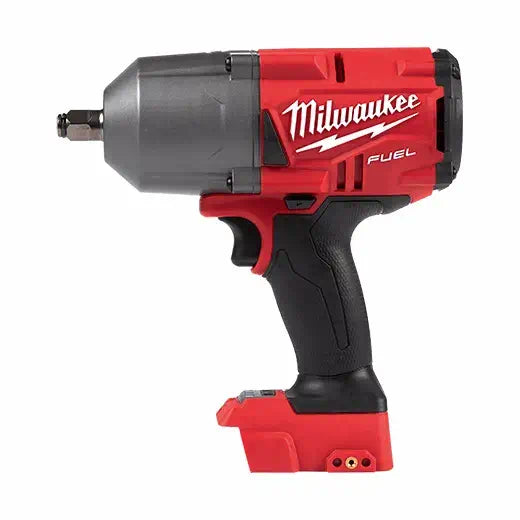
A cordless impact wrench eliminates the air hose, and at the sub-$200 price point the category has matured enough that serious torque output is no longer reserved for $300+ flagships. The five tools compared here cover a range from budget-friendly 450 ft-lb models to a 1,000 ft-lb unit that handles most automotive and structural work without blinking.
This guide breaks down the specifications that actually matter — nut-busting torque versus fastening torque, anvil size trade-offs, battery platform lock-in, and weight — so the right tool lands in the right hands.
Quick Comparison
| Model | Nut-Busting Torque | Fastening Torque | Anvil | Weight (bare) | Street Price (tool only) |
|---|---|---|---|---|---|
| Milwaukee M18 FUEL 2767-20 | 1,000 ft-lbs | 700 ft-lbs | 1/2” friction ring | 6.28 lbs | $170–$200 |
| DeWalt DCF899B | 700 ft-lbs | 400 ft-lbs | 1/2” detent pin | 7.2 lbs | $150–$180 |
| Makita XWT08Z | 740 ft-lbs | 500 ft-lbs | 1/2” friction ring | 7.9 lbs | $160–$190 |
| Ryobi PBLIW01B | 450 ft-lbs | 300 ft-lbs | 1/2” friction ring | 5.6 lbs | $100–$130 |
| Milwaukee M18 2663-20 | 450 ft-lbs | 300 ft-lbs | 1/2” friction ring | 6.4 lbs | $110–$140 |
Understanding Torque Specs: Nut-Busting vs. Fastening
Manufacturers list two torque numbers, and confusing them leads to poor purchasing decisions.
Nut-busting torque (also called breakaway torque) is the peak impulse force delivered to loosen a seized or corroded fastener. It represents a momentary spike, not sustained output. According to manufacturer data sheets, the Milwaukee 2767-20 delivers 1,000 ft-lbs of nut-busting torque — enough to break free most automotive lug nuts and suspension bolts without reaching for a breaker bar.
Fastening torque is the sustained, controlled output used to tighten fasteners to spec. This number is always lower. The same Milwaukee unit delivers 700 ft-lbs of fastening torque. For reference, most passenger vehicle lug nuts require 80–100 ft-lbs, while heavy truck lugs run 450–500 ft-lbs.
The gap between these two numbers matters. A tool with high nut-busting torque but low fastening torque can remove stubborn bolts but lacks the control to install them precisely. Variable speed triggers and multiple torque settings partially compensate, but the underlying ratio reveals the tool’s engineering priorities.
1/2-Inch vs. 3/8-Inch Anvil: Which Size Matters
Every tool in this comparison uses a 1/2-inch anvil, and that choice is deliberate at this price and torque range. Here is when each size makes sense:
1/2-inch anvil — The standard for automotive lug nuts, suspension work, and structural bolts. Accepts the widest range of impact-rated sockets. Required for any fastener above 3/4-inch diameter. All five tools here use this size.
3/8-inch anvil — Better suited for under-dash work, smaller engine bay fasteners, and precision assembly. Lighter tools, shorter sockets, tighter access. However, 3/8-inch impact wrenches in this price range typically max out at 200–300 ft-lbs — insufficient for lug nut removal.
If the primary use case involves wheel changes, suspension work, or deck bolts, 1/2-inch is the correct choice. If the work is mostly interior automotive or small-fastener assembly, a 3/8-inch model (or even a high-torque impact driver) may be more practical.
The Picks
Milwaukee M18 FUEL 2767-20 — Best Overall
Per the manufacturer’s product data sheet, the 2767-20 delivers 1,000 ft-lbs of nut-busting torque and 700 ft-lbs of fastening torque through a brushless POWERSTATE motor. At 6.28 lbs bare tool weight, it is the second lightest in this comparison despite producing the highest output.
The four-mode DRIVE CONTROL system provides granular torque management: modes for bolt removal, fastening, and two intermediate settings. The friction ring anvil allows one-handed socket changes, which matters during repetitive tasks like tire rotations.
Battery platform consideration: The M18 ecosystem is one of the largest in the industry, with 250+ tools sharing the same battery. For buyers already invested in M18, this is the obvious choice. For those starting fresh, the platform commitment is significant — M18 batteries are among the more expensive per amp-hour.
Key specs: 1,000 ft-lbs nut-busting · 700 ft-lbs fastening · 4-mode drive control · Brushless · 6.28 lbs · M18 battery platform
DeWalt DCF899B — Best Value
According to DeWalt’s specifications, the DCF899B delivers 700 ft-lbs of nut-busting torque and 400 ft-lbs of fastening torque. That is 30% less peak torque than the Milwaukee FUEL, but the street price typically runs $20–$40 lower.
The three-speed selector offers adequate control for most applications. At 7.2 lbs, it is noticeably heavier than the Milwaukee, which becomes a factor during extended overhead or confined-space work.
One specification difference worth noting: the DCF899B uses a detent pin anvil retention system rather than a friction ring. Detent pins hold sockets more securely during heavy impacts but require a hand to press the pin for socket changes. This is a durability advantage in exchange for a convenience trade-off.
Key specs: 700 ft-lbs nut-busting · 400 ft-lbs fastening · 3-speed · Brushless · 7.2 lbs · 20V MAX battery platform
Makita XWT08Z — Best Balance and Ergonomics
Makita’s XWT08Z sits between the Milwaukee FUEL and DeWalt in both torque and price. Per Makita’s product documentation, it delivers 740 ft-lbs of nut-busting torque and 500 ft-lbs of fastening torque. The fastening torque number is notably higher than the DeWalt despite similar nut-busting output, suggesting better sustained power delivery.
At 7.9 lbs, it is the heaviest tool here — a meaningful penalty during all-day use. However, Makita’s reputation for vibration dampening and grip ergonomics partially offsets the weight. The forward/reverse electronic brake stops the anvil quickly, reducing socket spin-off and improving control during fastening.
The 18V LXT battery platform offers a deep tool catalog, though not quite as extensive as Milwaukee’s M18 or DeWalt’s 20V MAX lineups.
Key specs: 740 ft-lbs nut-busting · 500 ft-lbs fastening · Brushless · Electronic brake · 7.9 lbs · 18V LXT battery platform
Ryobi PBLIW01B — Best Budget Option
The Ryobi ONE+ HP PBLIW01B delivers 450 ft-lbs of nut-busting torque at a street price that undercuts every other tool here by $40 or more. According to manufacturer specifications, the brushless motor paired with ONE+ HP battery technology provides performance improvements over previous Ryobi impact wrenches.
At 5.6 lbs, it is also the lightest tool in the comparison — a meaningful advantage for occasional users who do not want fatigue from a heavy tool.
The practical limitation is clear: 450 ft-lbs of nut-busting torque handles most passenger vehicle lug nuts and basic construction fasteners but will struggle with corroded suspension bolts, heavy truck lugs, or structural lag bolts. For a weekend mechanic doing seasonal tire swaps and basic maintenance, that is perfectly adequate. For a professional pulling rusty control arms, it is not.
The ONE+ battery platform is the most affordable entry point among major brands, with batteries readily available and tool prices consistently lower across the lineup.
Key specs: 450 ft-lbs nut-busting · 300 ft-lbs fastening · Brushless · ONE+ HP · 5.6 lbs · ONE+ battery platform
Milwaukee M18 2663-20 — Best Mid-Range
The 2663-20 occupies the space between the budget Ryobi and the flagship Milwaukee FUEL. Per Milwaukee’s data sheet, it delivers 450 ft-lbs of nut-busting torque — the same as the Ryobi — but benefits from the M18 battery platform and Milwaukee’s build quality reputation.
This model uses a standard motor rather than the brushless POWERSTATE motor found in the FUEL line. That means shorter runtime per charge and a larger motor housing. At 6.4 lbs, the weight penalty compared to the FUEL model is minimal.
The value proposition here targets buyers who already own M18 batteries and need an impact wrench that handles typical lug nut removal and light-to-medium bolt work without paying FUEL prices. For buyers starting from scratch, the Ryobi offers similar torque at a lower total cost.
Key specs: 450 ft-lbs nut-busting · 300 ft-lbs fastening · Standard motor · 1/2” friction ring · 6.4 lbs · M18 battery platform
Who This Is NOT For
Professional automotive technicians doing production-level disassembly. At this price point, none of these tools match the durability and sustained output of a $300+ professional-grade wrench like the Milwaukee 2962-20 or the Snap-on CT9080. High-volume shops burning through lug nuts and axle bolts eight hours a day need tools built for that duty cycle.
Anyone working on Class 7/8 trucks or heavy equipment. Lug nut torque specs on semi-trucks run 450–500 ft-lbs. While the Milwaukee FUEL technically has the nut-busting torque to handle this, sustained professional use on these fasteners demands a purpose-built heavy-duty wrench, often at the 3/4-inch anvil size.
Users who need precision torque control for final tightening. Impact wrenches are removal and rough-assembly tools. Final torque should always be set with a calibrated torque wrench. No impact wrench at any price replaces a torque wrench for critical fastening applications like head bolts, wheel studs, or structural connections.
Buyers who only need to drive screws, drill holes, or install lag bolts. An impact driver or a cordless drill is the correct tool for those tasks. Impact wrenches are purpose-built for socket-driven fastener work.
Battery Platform: The Hidden Cost
All five tools are sold as “bare tool” (tool only, no battery or charger). A battery and charger kit typically adds $80–$150 depending on the platform and amp-hour rating. For a detailed comparison of how each battery ecosystem stacks up across all tool categories, see the DeWalt vs Milwaukee vs Makita battery platform comparison. This means the true cost of entry for a buyer without existing batteries is:
- Ryobi ONE+: $180–$230 total (lowest entry cost)
- Milwaukee M18 (2663-20): $220–$280 total
- DeWalt 20V MAX: $280–$330 total
- Makita 18V LXT: $280–$340 total
- Milwaukee M18 FUEL: $300–$350 total
Buyers already invested in a battery platform should weight that existing investment heavily. Switching platforms for a single tool rarely makes financial sense.
Bottom Line
For buyers who need maximum torque under $200 and are willing to pay for batteries, the Milwaukee M18 FUEL 2767-20 delivers specifications that compete with tools costing $100 more. The 1,000 ft-lb nut-busting output handles virtually any automotive or construction fastener.
For buyers who prioritize total cost of ownership and adequate (not maximum) performance, the Ryobi PBLIW01B at $100–$130 with the most affordable battery ecosystem provides sufficient torque for passenger vehicle maintenance and light construction work.
The DeWalt and Makita split the middle — strong performers with mature battery platforms and competitive specifications. Neither is a wrong choice; the deciding factor is usually which batteries are already in the garage.
Frequently Asked Questions
Can a cordless impact wrench remove lug nuts?
Yes. According to manufacturer specifications, any impact wrench delivering 450 ft-lbs or more of nut-busting torque can remove standard passenger vehicle lug nuts, which are typically torqued to 80-100 ft-lbs. For corroded or over-torqued lug nuts, a 700+ ft-lb model like the Milwaukee M18 FUEL 2767-20 provides a wider margin of capability.
What is the difference between nut-busting torque and fastening torque?
Nut-busting torque is the peak impulse force delivered in a momentary spike to break free seized or corroded fasteners. Fastening torque is the sustained, controlled output used to tighten fasteners and is always a lower number. Per manufacturer data sheets, nut-busting torque can be 30-50% higher than fastening torque on the same tool.
Do I need a 1/2 inch or 3/8 inch impact wrench?
A 1/2-inch impact wrench is the correct choice for automotive lug nuts, suspension work, and structural bolts — it accepts the widest range of impact-rated sockets. A 3/8-inch impact wrench is better suited for smaller engine bay fasteners and under-dash work, but according to manufacturer specifications, 3/8-inch models in this price range typically max out at 200-300 ft-lbs, which is insufficient for lug nut removal.
Best Cordless Impact Wrench for Your Trade
The torque requirements, battery ecosystem, and ergonomic priorities vary significantly by trade. Per manufacturer specifications and trade-specific fastener data, here is how the sub-$200 lineup maps to actual work:
Automotive mechanics and tire shops: The Milwaukee M18 FUEL 2767-20 is the clear choice. Its 1,000 ft-lb nut-busting output handles corroded lug nuts and seized suspension bolts that stop every other tool here. The friction ring anvil allows one-handed socket swaps during high-volume tire rotations. For shops already on M18, it drops into an existing battery ecosystem with zero friction.
General contractors and framers: The DeWalt DCF899B is the natural fit for contractors on the 20V MAX platform. Structural lag bolts, joist hanger hardware, ledger board connections, and foundation anchor bolts all fall within its 700 ft-lb range. The detent pin anvil holds sockets under the vibration of framing-weight fastening better than friction ring designs in rough outdoor conditions.
Electricians: Per trade practice, electricians use impact wrenches primarily for panel knockout knockouts, conduit hanger hardware, transformer mounting bolts, and service entrance equipment connections. None of these applications demand more than 450 ft-lbs. The Milwaukee M18 2663-20 is the logical choice for electricians already invested in M18 — it handles all electrical trade fastening without overspending on torque they will never use.
Plumbers: Water heater connections, cast iron flange bolts, pipe union fittings, and wall-mounted fixture hardware are the primary plumbing applications. The Makita XWT08Z stands out for plumbers because of its electronic brake — it stops the anvil immediately on trigger release, which prevents over-tightening on threaded pipe connections where one extra impulse cracks a fitting. The 500 ft-lb fastening torque provides adequate headroom for corroded service connections.
HVAC technicians: HVAC work splits between light equipment room fastening and heavier rooftop equipment mounting bolts. The Ryobi PBLIW01B at 450 ft-lbs handles the majority of HVAC interior work at the lowest entry cost, and its 5.6-lb weight minimizes fatigue during overhead work in tight mechanical rooms. For rooftop curb mounting and compressor pad anchor bolts, step up to the Milwaukee FUEL.
Farm and ranch maintenance: Per the agricultural use case, farm equipment fasteners range from implement hitch pins to tractor wheel bolts running 450–600 ft-lbs. The Milwaukee M18 FUEL 2767-20 is the practical choice for operations that need one tool to cover PTO implement hardware, wheel bolts on utility vehicles, and equipment repair in the field. The M18 battery platform also powers a range of other farm shop tools. For lighter-duty farm maintenance — loader attachment pins, fence hardware, wagon axle nuts — the DeWalt DCF899B provides a cost-effective alternative.
Remodelers and demo contractors: Demo work demands maximum nut-busting torque to remove corroded structural hardware, rusted deck lag bolts, and seized anchor bolts in existing framing. The Milwaukee M18 FUEL 2767-20 is purpose-built for this — its 1,000 ft-lb breakaway torque handles the worst of what’s embedded in 30-year-old decks and additions.
Spring Construction and Maintenance Season: When Impact Wrench Demand Peaks
Per contractor and automotive service patterns, cordless impact wrench sales and rental demand spike from late March through June for consistent reasons:
Spring tire changeovers (March–May). Every vehicle that ran winter tires is changing back to all-season or summer tires. For mechanics doing seasonal changeovers, an impact wrench that can handle 100+ lug nut cycles per day without battery or motor fatigue is the critical spec. The Milwaukee M18 FUEL 2767-20’s brushless motor and high-efficiency platform is built for this duty cycle; budget tools with brush motors overheat under repetitive high-torque cycles.
Deck and exterior construction (April–June). Deck ledger board connections, post base hardware, joist hanger fastening, and structural lag bolt installation are peak spring construction work. Per structural fastener requirements, ledger connections to rim joists require through-bolts torqued to 200–400 ft-lbs — squarely within the DeWalt DCF899B and Milwaukee FUEL ranges, and at the upper limit of what the Ryobi handles cleanly.
Farm equipment spring prep. Before planting season, every implement on the farm needs attention: chipped mower blades, loose disc coulters, worn planter down-pressure hardware, and corroded 3-point hitch pins. Per common farm equipment hardware sizes, Category 1 and 2 three-point implement bolts run 7/8-inch to 1-inch hardware at 300–550 ft-lbs. The Milwaukee FUEL handles this without struggle; the lower-torque tools do not.
HVAC rooftop equipment installation (April–August). Commercial HVAC rooftop unit replacements peak in spring before summer cooling loads begin. Curb mounting bolts, refrigerant line bracket hardware, and electrical conduit supports require high-cycle impact work in awkward positions. The Milwaukee FUEL and DeWalt DCF899B both handle this work; the lighter Ryobi and Milwaukee 2663-20 are better suited to residential residential mechanical rooms than commercial rooftop applications.
Fence and gate installation. Post base plates, gate hinge hardware, and tension rod connections involve repetitive 1/2-inch hardware at moderate torque — 150–350 ft-lbs. The Ryobi PBLIW01B is adequate for this application and its low weight reduces fatigue on full-day fence installation projects.
What You’ll Also Need
- Impact socket set — 1/2-inch drive, SAE, 6-point — Standard chrome sockets shatter under impact loads. A 1/2-inch drive impact-rated SAE set with 6-point sockets handles lug nuts and structural bolts without rounding corners on corroded fasteners. Search: “impact socket set SAE 6 point 1/2 drive,” “impact wrench socket set 1/2 inch drive.” Check price on Amazon →
- Impact socket set — 1/2-inch drive, metric — Metric sockets are required for most foreign vehicles and modern domestic vehicles that use metric fasteners. A metric impact set rounds out the tool’s range and prevents the need to stop mid-job for a missing size. Search: “impact socket set metric 1/2 drive,” “metric impact socket set deep shallow.” Check price on Amazon →
- Torque stick set — 1/2-inch drive — Torque sticks provide approximate torque limiting through controlled deflection, preventing lug nuts from being overtightened during final seating. A 6-piece set covering 65-140 ft-lbs handles most passenger and light truck applications. Search: “torque stick set 1/2 drive,” “torque limiting extension bar set.” Check price on Amazon →
- Lug nut socket — 6-point thin-wall — Standard-depth sockets do not clear the wheel rim on many alloy wheels. A thin-wall 6-point lug nut socket provides the clearance needed on aftermarket and OEM alloy wheels without scratching the finish. Search: “lug nut socket set thin wall,” “lug nut removal socket 6 point.” Check price on Amazon →
- Impact wrench anvil replacement — 1/2-inch friction ring — The friction ring on a 1/2-inch anvil wears over time, causing sockets to slip or eject under load. Replacement anvil assemblies are inexpensive insurance against a worn anvil that becomes a safety hazard during heavy torque application. Search: “impact wrench anvil replacement 1/2 inch friction ring,” “impact wrench anvil pin replacement.” Check price on Amazon →
- Deep impact socket set — 1/2-inch drive — Deep sockets reach fasteners that are recessed inside housings, wheel wells, and structural channels where standard sockets fall short of full engagement. A 15-piece deep socket set eliminates the most common mid-job socket frustration. Search: “deep impact socket set 1/2 inch drive SAE metric,” “deep impact socket set combo.” Check price on Amazon →
Sources
- Milwaukee Tool product data sheets and specifications (milwaukeetool.com)
- DeWalt product specifications and documentation (dewalt.com)
- Makita product documentation and spec sheets (makitatools.com)
- Ryobi product specifications (ryobitools.com)
- SAE International torque specification references for automotive fasteners