Best Cordless Drills in 2026: Milwaukee, DeWalt, and Makita by Trade
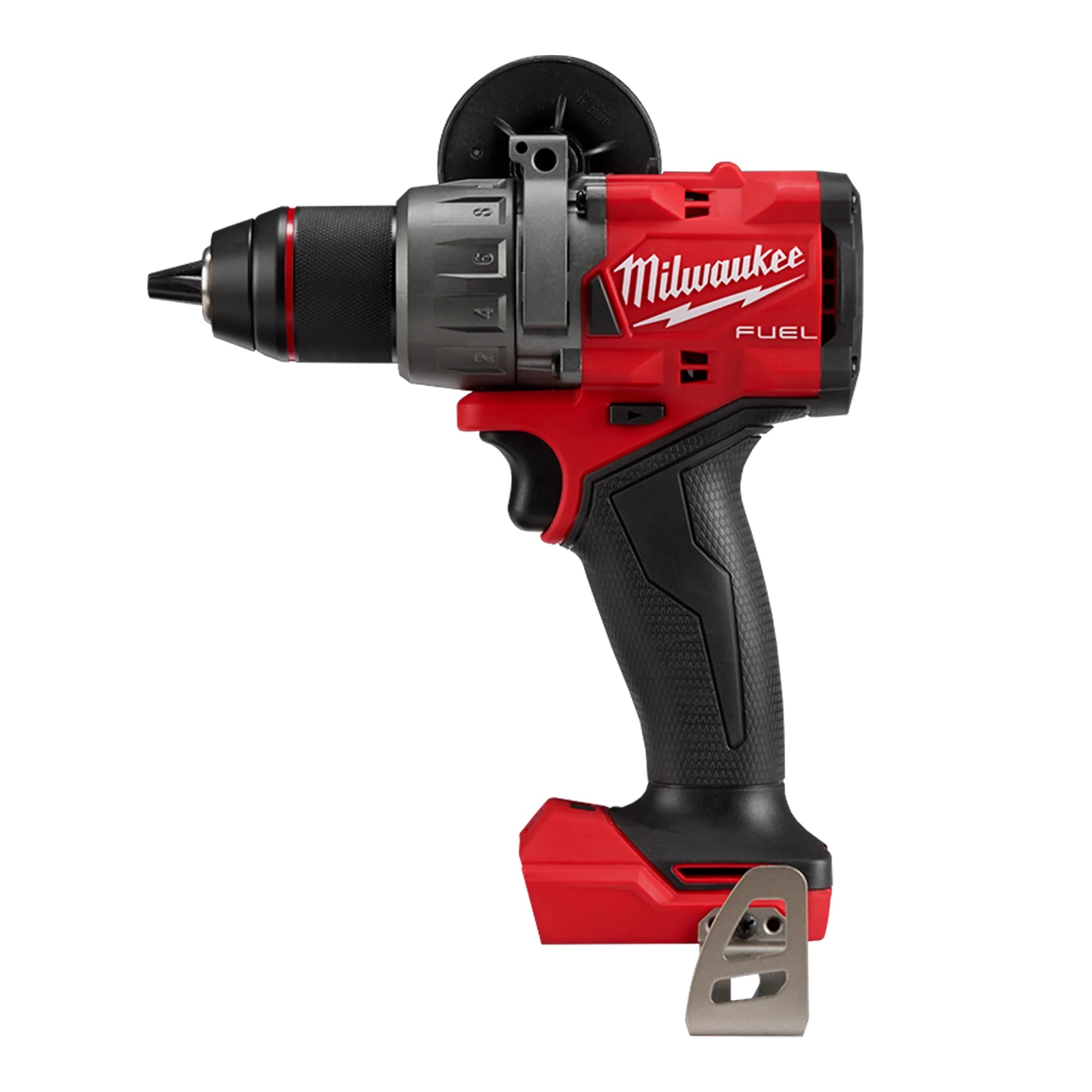
Bottom line up front: For most contractors buying into a cordless platform, the Milwaukee M18 FUEL 2903-22 is the right call — 1,400 in-lbs of torque, the deepest tool ecosystem in the industry, and a 5-year tool warranty at $140-$170 bare. If you’re a heavy boring specialist (electrician, plumber) who already runs DeWalt, the DCD999B’s three-speed gearbox and FLEXVOLT compatibility make it a better fit. If weight is your limiting factor after a long day, the Makita XFD14Z at 3.3 lbs bare is the lightest full-capability 18V drill on the market. For a ranked shortlist of ten drills across every tier, see the top 10 cordless drills roundup.
The wrong decision here is expensive. Battery platforms lock you in for years — the batteries on an 18V system represent $500-$2,000 of your tool investment over time. This guide works through the spec-level differences that actually matter by trade, so you buy the platform you can commit to, not just the drill that wins on one number.
Note on voltage labeling: DeWalt’s “20V MAX” is the same nominal 18V architecture as Milwaukee and Makita — the 20V figure is unloaded voltage per ANSI measurement standards. All drills in this comparison use 18V nominal battery platforms.
What Matters in a Professional Cordless Drill
Based on manufacturer specifications and industry standards:
- Brushless motor: Longer life, more power, better efficiency. All flagship models are brushless — avoid brushed motors for professional use
- Torque output: Measured in inch-pounds (in-lbs). 1,200+ in-lbs handles most drilling and driving tasks
- Chuck type: 1/2” all-metal ratcheting chuck is the professional standard. Keyless with auto-lock preferred
- Speed settings: Two-speed gearbox (low for driving, high for drilling) is minimum. Three-speed adds a mid-range for self-feeding bits
- Battery platform: The drill matters less than the ecosystem. Choose based on what other cordless tools you need
- Runtime and charge speed: Fast-charging batteries (under 45 minutes for a full charge) reduce downtime. Higher amp-hour (Ah) packs extend runtime but add weight — a 2.0 Ah compact pack suits overhead work while a 5.0 Ah or 6.0 Ah pack is better for sustained drilling
Top Cordless Drills
Milwaukee M18 FUEL 2903-22 — Best Overall
| Specification | Value |
|---|---|
| Voltage | 18V (M18) |
| Motor | Brushless (POWERSTATE) |
| Max Torque | 1,400 in-lbs |
| Speed 1 | 0-550 RPM |
| Speed 2 | 0-2,000 RPM |
| Chuck | 1/2” all-metal ratcheting |
| Weight (bare) | 3.7 lbs |
| Head Length | 6.9” |
| Battery Compatibility | 200+ M18 tools |
| Warranty | 5 years (tool), 3 years (battery) |
| Price Range | $140-$170 (bare tool) |
According to Milwaukee’s specifications, the 2903-22 delivers 1,400 in-lbs of torque — the highest in its class. The POWERSTATE brushless motor uses rare-earth magnets for sustained output under load. Milwaukee’s REDLINK PLUS electronics protect against overload, overheating, and over-discharge. The M18 platform now includes over 200 tools, making it the deepest cordless ecosystem available per Milwaukee’s catalog. The all-metal ratcheting chuck resists bit slippage under high-torque loads, a persistent problem with plastic-sleeve chucks on lower-tier drills.
Best for: Contractors building out a full cordless kit. The M18 ecosystem covers everything from drills to concrete tools to lighting, with battery compatibility across the entire line. For an electrician-focused head-to-head comparison, see Milwaukee M18 vs DeWalt 20V for electricians.
DeWalt DCD999B — Best for Heavy Drilling
| Specification | Value |
|---|---|
| Voltage | 20V MAX (18V nominal) |
| Motor | Brushless (FLEXVOLT ADVANTAGE) |
| Max Torque | 1,300 in-lbs |
| Speed 1 | 0-450 RPM |
| Speed 2 | 0-1,300 RPM |
| Speed 3 | 0-2,000 RPM |
| Chuck | 1/2” all-metal ratcheting |
| Weight (bare) | 4.2 lbs |
| Head Length | 7.4” |
| Battery Compatibility | 300+ 20V MAX tools |
| Warranty | 3 years (tool), 3 years (battery) |
| Price Range | $170-$200 (bare tool) |
Per DeWalt’s documentation, the DCD999 uses FLEXVOLT ADVANTAGE technology that draws increased power from FLEXVOLT 60V batteries (while remaining compatible with standard 20V MAX packs). The three-speed transmission provides a mid-range (1,300 RPM) optimized for self-feeding bits and hole saws — tasks where the two-speed models force a compromise between too slow and too fast. At 4.2 lbs, it is the heaviest drill in this comparison, which is the tradeoff for a more robust gearbox and the additional speed range.
Best for: Electricians, plumbers, and HVAC contractors who drill large-diameter holes regularly. The three-speed gearbox and FLEXVOLT compatibility provide measurable advantages for heavy boring work.
Makita XFD14Z — Best Ergonomics
| Specification | Value |
|---|---|
| Voltage | 18V (LXT) |
| Motor | Brushless |
| Max Torque | 1,240 in-lbs |
| Speed 1 | 0-500 RPM |
| Speed 2 | 0-2,100 RPM |
| Chuck | 1/2” all-metal single-sleeve |
| Weight (bare) | 3.3 lbs |
| Head Length | 7.0” |
| Battery Compatibility | 300+ LXT/XGT tools |
| Warranty | 3 years |
| Price Range | $110-$140 (bare tool) |
According to Makita’s specifications, the XFD14Z is the lightest drill in the flagship brushless category at 3.3 lbs bare. The ergonomic handle design uses a shorter head length and optimized center of gravity. Makita’s battery platform spans both 18V LXT and 40V XGT lines, with an adapter allowing cross-compatibility. Per Makita’s data, the electronic clutch provides 21 torque settings plus drill mode for consistent screw depth. The XFD14Z also offers the highest Speed 2 ceiling in this group at 2,100 RPM, which benefits smaller-diameter drill bits that perform better at higher rotational speeds.
Best for: All-day drilling and driving where fatigue matters. The weight advantage adds up over hundreds of screws per day. Strong choice for drywall, deck building, and general carpentry.
Bosch GSR18V-1330CN — Best Electronics
| Specification | Value |
|---|---|
| Voltage | 18V (CORE) |
| Motor | Brushless (EC) |
| Max Torque | 1,330 in-lbs |
| Speed 1 | 0-500 RPM |
| Speed 2 | 0-2,100 RPM |
| Chuck | 1/2” all-metal |
| Weight (bare) | 3.5 lbs |
| Head Length | 7.1” |
| Battery Compatibility | 75+ 18V tools |
| Warranty | 3 years |
| Price Range | $150-$180 (bare tool) |
Per Bosch’s documentation, the GSR18V-1330CN features Bluetooth connectivity to the Bosch Toolbox app, allowing users to customize torque settings, speed limits, and LED behavior. The KickBack Control uses an inertial sensor to detect binding events and shuts down the motor in milliseconds — a safety feature for large-diameter hole saws and auger bits. The smaller 18V ecosystem (75+ tools vs. 200-300+ for competitors) is a real limitation for contractors who want a single battery platform across every tool category.
Best for: Tech-forward contractors who value electronic customization. The KickBack Control is a genuine safety advantage for boring work in hard materials.
Comparison Summary
| Model | Torque | Weight | Head Length | Speeds | Ecosystem | Price |
|---|---|---|---|---|---|---|
| Milwaukee 2903-22 | 1,400 in-lbs | 3.7 lbs | 6.9” | 2 | 200+ tools | $140-$170 |
| DeWalt DCD999B | 1,300 in-lbs | 4.2 lbs | 7.4” | 3 | 300+ tools | $170-$200 |
| Makita XFD14Z | 1,240 in-lbs | 3.3 lbs | 7.0” | 2 | 300+ tools | $110-$140 |
| Bosch GSR18V-1330CN | 1,330 in-lbs | 3.5 lbs | 7.1” | 2 | 75+ tools | $150-$180 |
The Battery Platform Decision
The drill itself is a $100-$200 decision. The battery platform is a $2,000-$10,000 decision over the life of a professional kit. Per manufacturer catalogs:
- Milwaukee M18: Deepest selection in the professional segment. Dominates in plumbing, electrical, and mechanical trades
- DeWalt 20V MAX: Widest overall catalog including outdoor power and concrete. Strong with general contractors and framing crews
- Makita 18V LXT: Broadest international presence. Strong in woodworking, landscaping, and residential construction
- Bosch 18V: Smallest ecosystem but competitive individual tools. Strongest in European markets
Switching platforms is expensive — batteries, chargers, and tool muscle memory all factor in. Choose the platform that covers your full tool needs, not just the drill that wins on one specification. For a comprehensive analysis of how these ecosystems compare across all tool categories, see the DeWalt vs Milwaukee vs Makita battery platform comparison.
Best Cordless Drill by Trade
Per manufacturer specifications and trade-specific drilling demand data, here is how the 18V drill lineup maps to actual work:
Electricians: Electrical rough-in is one of the highest-volume cordless drill applications — drilling through studs, plates, joists, and engineered lumber for wire runs occupies most of a rough electrician’s day. Per trade practice, electricians typically carry a self-feed bit set (3/4-inch to 1-1/8-inch) for wire holes and a standard bit set for boxes and panel knockouts. The Milwaukee M18 FUEL 2903-22 is the dominant choice in the electrical trade: the M18 ecosystem covers the full electrical tool lineup (Milwaukee surge, hole hawg, rotary hammer), and the FUEL motor handles 1-1/8-inch self-feed bits through doubled 2×6 plates without the motor bog that lower-torque drills show under load. For electricians starting fresh on a platform, M18’s depth in electrical-specific tools (SDS rotary hammer, underground locator accessories) makes platform investment return higher than any other brand. For a full trade-specific breakdown, see the best cordless drills for electricians guide.
Plumbers: Plumbing rough-in drilling — 1/2-inch to 1-1/2-inch holes through framing for pipe runs — demands similar self-feed capability to electrical, with the added challenge that plumbing drilling frequently happens in wet or near-wet conditions (crawl spaces, under sinks, near supply lines). The DeWalt DCD999B with its XR POWERDETECT battery system is well-suited to plumbing: the tool’s brushless motor handles large-diameter self-feed bits and hole saws cleanly, and the 20V MAX platform includes DeWalt’s oscillating tool and reciprocating saw for cut-in work that plumbers perform on the same visit.
General contractors and carpenters: GC framing and carpentry work uses the drill for structural connector pre-drilling, anchor bolt holes, and cabinet installation as much as for driving fasteners. A drill with a wide clutch range (multiple torque settings) is more useful for carpentry than maximum torque — the ability to set torque precisely for cabinet hardware installation and trim work separates a tool with 15 clutch settings from one with 5. The Bosch GSR18V-1330CN stands out here: its electronic clutch provides more precise torque control than mechanical clutches, and its Bluetooth connectivity for job site tool management is a Bosch differentiator.
HVAC technicians: HVAC rough-in drilling through framing, panning, and sheet metal attachment drilling are primary drill uses in HVAC. Sheet metal self-tapping screws, duct flange drilling, and equipment pad anchor pre-drilling all require a drill with a consistent low-speed setting. The Makita XFD14Z excels in HVAC work: its 3-speed selector provides a genuine low-speed range for sheet metal work where high RPM strips threads, and its compact body fits in mechanical rooms and air handler closets where the DeWalt and Milwaukee’s larger frames are constrained.
Remodelers: Remodel drilling involves the widest variety of materials — original framing lumber, plaster, tile backer, subfloor panels, and occasional metal studs — with frequent bit changes and constant repositioning. Battery runtime matters more in remodeling than in new construction because the next outlet may be far away. A two-battery kit with a high-capacity 5.0Ah battery for heavy work and a compact 2.0Ah battery for light trim work represents the practical remodeler’s setup. The Milwaukee M18 FUEL and DeWalt DCD999B both offer this kit configuration.
Deck and outdoor contractors: Outdoor drilling — structural lag bolts, composite decking pre-drilling, deck hardware installation — puts weight and grip texture in front of torque specifications for all-day user comfort. Deck work involves sustained overhead and angled drilling that fatigues operators faster than typical framing. The Makita XFD14Z at 3.3 lbs bare tool is the lightest full-capability 18V option on this list, a meaningful advantage over a full day of elevated or angled drilling. For deck contractors running crews, Makita’s LXT platform offers competitive battery costs and a 300+ tool ecosystem.
Who This Is NOT For
- Occasional home use. A $60-$80 brushed 12V drill handles weekend projects without the cost and weight of an 18V professional tool. The batteries alone on an 18V platform cost more than a complete 12V kit
- Impact driving as the primary task. If 80% of your work is driving screws and fasteners, buy an impact driver first — they’re lighter, more compact, and better suited to high-torque driving than a drill. Most contractors carry both, but if the budget only allows one, let the dominant task decide
- Masonry drilling. Standard drills cannot drill concrete or brick effectively. A hammer drill or rotary hammer is the correct tool for masonry. Some models in this comparison (notably the DeWalt DCD999B) include a hammer drill function, but dedicated rotary hammers outperform combo tools in masonry by a wide margin
- Budget-constrained buyers who do not already own a battery platform. Bare tool prices look reasonable, but the real cost includes batteries ($60-$120 each), a charger ($40-$80), and a carrying case. Kit bundles (tool + 2 batteries + charger) run $200-$350 and represent significantly better value for first-time buyers
Frequently Asked Questions
What is the difference between a drill and an impact driver?
A drill delivers steady rotational force and is designed for drilling holes and driving screws with precise torque control via a clutch. An impact driver delivers concussive rotational blows that maintain torque without transferring wrist strain to the operator, making it faster and more efficient for driving fasteners. Most contractors carry both — the drill for hole-making and the impact driver for fastening.
How many volts do I need in a cordless drill?
For professional use, 18V (or DeWalt’s equivalent 20V MAX) is the current standard, delivering 1,200-1,400 in-lbs of torque in flagship models. According to manufacturer specifications, 12V drills are adequate for light-duty home use and overhead work where reduced weight matters, but they lack the sustained power for demanding tasks like drilling large-diameter holes or driving long lag bolts.
What does brushless mean in a cordless drill?
A brushless motor uses electronic commutation instead of physical carbon brushes to drive the rotor. Per manufacturer documentation, brushless motors deliver longer runtime per charge (up to 50% more), higher power output, less heat generation, and significantly longer motor life compared to brushed alternatives. All flagship professional drills from Milwaukee, DeWalt, Makita, and Bosch now use brushless motors.
What You’ll Also Need
- Cobalt drill bit set — 29 piece — A full 29-piece set covering 1/16” through 1/2” handles wood, metal, and plastic drilling. Cobalt bits resist heat better than standard HSS and last significantly longer in steel and hardwood without dulling or wandering at the tip. Search: “drill bit set cobalt 29 piece,” “titanium drill bit set 29 piece.” Check price on Amazon →
- Impact-rated bit set — 1/4 hex shank — Standard driver bits shatter under the concussive loads of high-torque driving. An impact-rated set with S2-modified steel absorbs shock rather than snapping, extending bit life substantially during heavy fastening. Search: “impact rated bit set 1/4 hex shank,” “screwdriver bit set impact rated.” Check price on Amazon →
- Drill bit extension — 12 inch — Extends reach into deep cavities, through walls for wire fishing, and into confined spaces where the drill body cannot fit. Essential for electricians and plumbers drilling through framing members in tight locations. Search: “drill bit extension 12 inch,” “flexible drill bit extension.” Check price on Amazon →
- Magnetic bit holder with quick-release — Keeps the bit aligned with the fastener head and prevents drops in overhead or angled work. A spring-loaded magnetic holder seats bits securely and allows one-handed bit swaps without interrupting workflow. Search: “magnetic bit holder quick release,” “magnetic screw guide holder drill.” Check price on Amazon →
- Hole saw kit for cordless drill — A 13-piece or larger hole saw kit handles door hardware, pipe penetrations, recessed lighting, and junction box cutouts. Bi-metal hole saws cut wood, drywall, and thin metal without changing tools. Search: “hole saw kit cordless drill,” “bi-metal hole saw kit set.” Check price on Amazon →
- Titanium step drill bit set — Step bits drill clean holes in sheet metal, thin steel, and plastic conduit enclosures without the need for a center punch. A 3-piece set covering common sizes eliminates the tedious process of enlarging holes incrementally with standard bits. Search: “titanium step drill bit set,” “step drill bit set sheet metal.” Check price on Amazon →
Related guides: If you regularly drive lag bolts, deck screws, or lug nuts, a cordless impact wrench handles those tasks faster and with less wrist strain than any drill. For cutting tasks that pair with drilling on remodel and demolition work, see best reciprocating saws for plumbers and best oscillating multi-tools for contractors.
Sources
- Milwaukee M18 FUEL 2903-22 specifications (milwaukeetool.com)
- DeWalt DCD999B FLEXVOLT ADVANTAGE specifications (dewalt.com)
- Makita XFD14Z product documentation (makitatools.com)
- Bosch GSR18V-1330CN specifications (boschtools.com)
- ANSI/CTA-2045 battery voltage measurement standards