Best Fence Post Drivers for Small Farms in 2026: Manual, Tractor, and Hydraulic
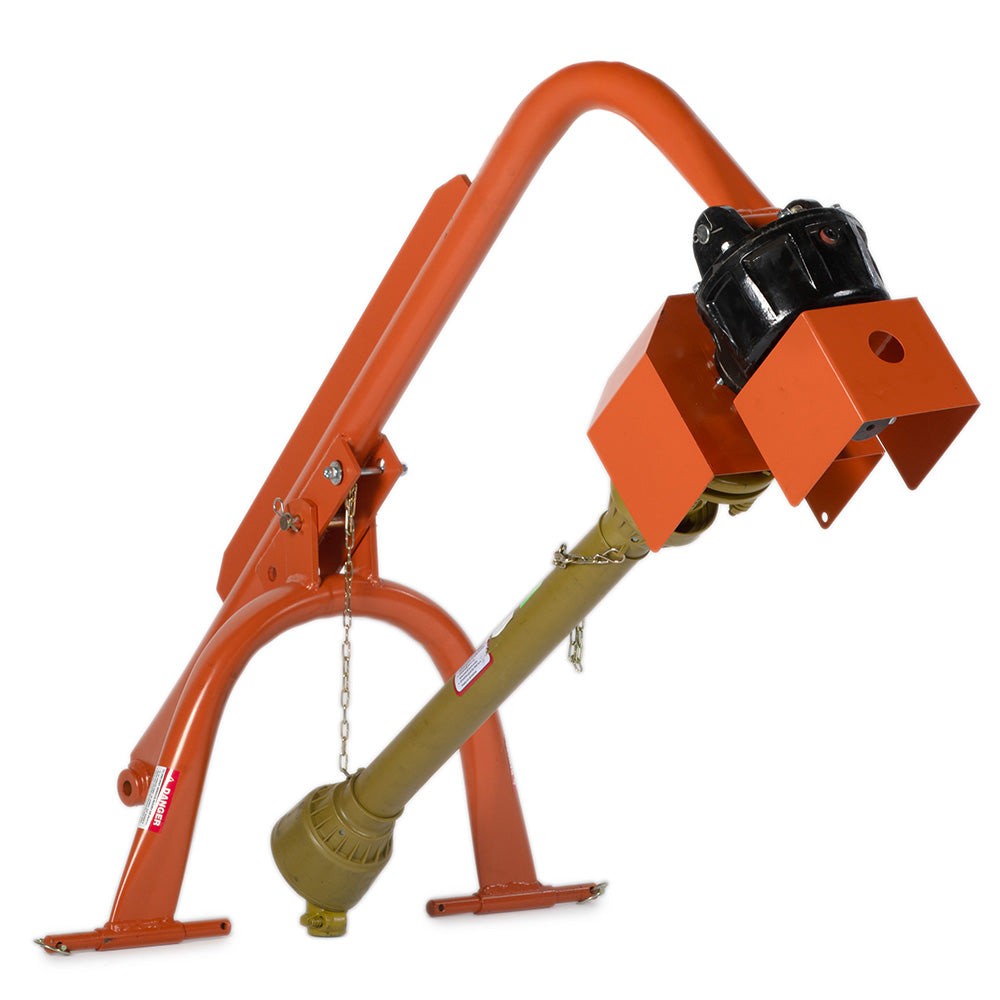
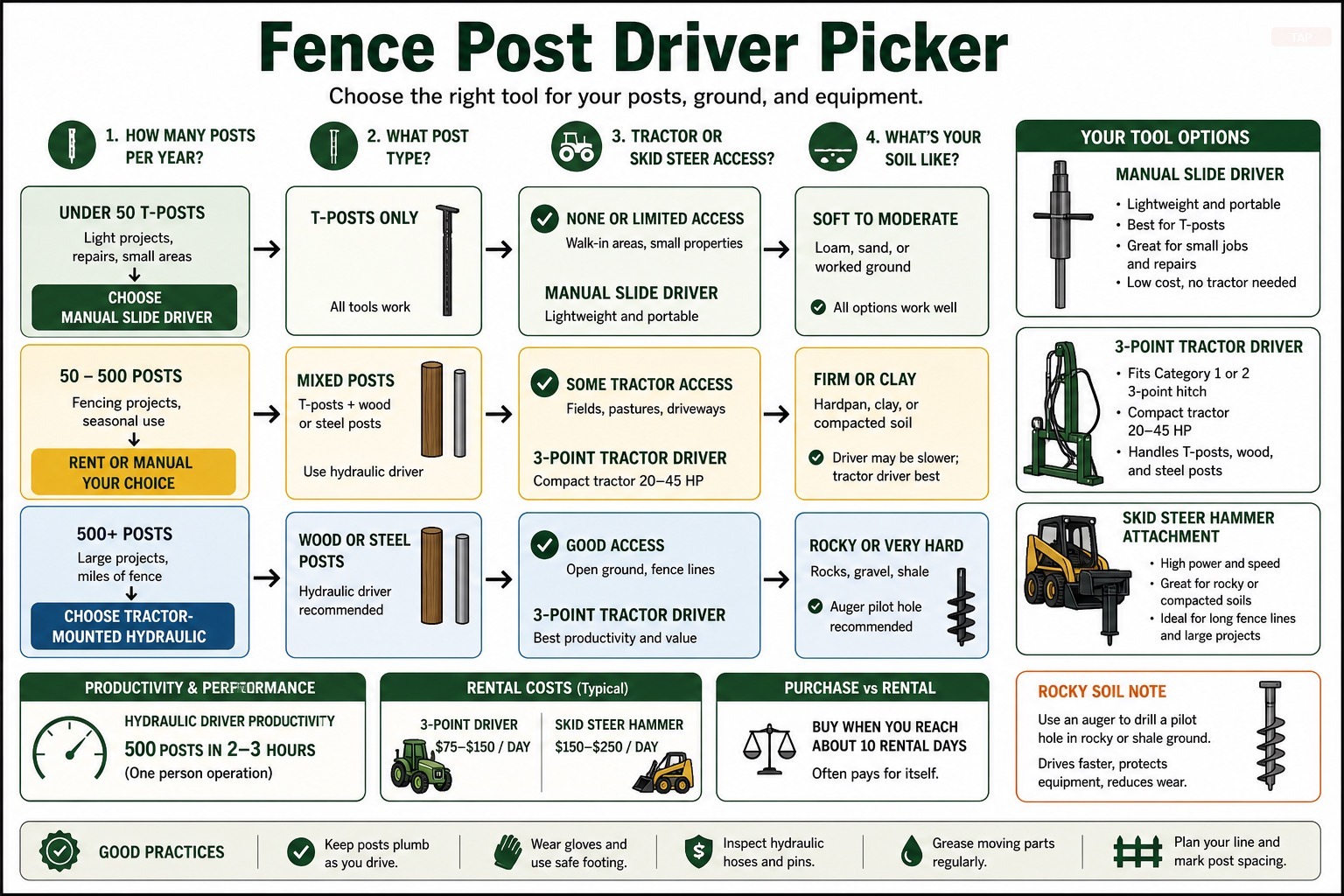
Installing fence on a small farm is one of the most labor-intensive tasks that directly rewards the right tool selection. Driving 500 posts with a manual driver is a full day of punishing work. A tractor-mounted hydraulic driver can complete the same job in 2–3 hours. The decision between manual, manual-powered slide, and tractor-mounted hydraulic comes down to three variables: post count, post type (t-post vs wood), and whether a suitable tractor is available.
This guide covers each tier with specific product recommendations, spec tables, and the honest accounting of when rental beats buying.
For broader farm implement context, see our best tractor implements for small farms guide and our best post hole diggers for small farms for the complementary tool used when wood posts require drilled holes.
Which Type of Post Driver Do You Need?
| Situation | Recommended Type |
|---|---|
| Under 50 t-posts, occasional use | Manual slide driver |
| 50–500 t-posts per year | Manual + consider rent/hire |
| 500+ t-posts or regular wood posts | Tractor-mounted hydraulic |
| Mixed wood and t-post, large acreage | Tractor-mounted hydraulic with wood post adapter |
| No tractor available | Manual slide or rent |
Top Picks
Speeco S16103000 — Best Tractor-Mounted for Small Farms
| Spec | Value |
|---|---|
| Hitch | Category 1, 3-point |
| Compatible HP | 20–45 HP |
| Drive method | Tractor hydraulics (no PTO) |
| Max post diameter | 6 inches |
| Max post length | 10 feet |
| Driving force | 2,000–3,000 lbs (hydraulic) |
| Weight | 185 lbs |
| Price | $900–$1,200 |
Per Speeco’s product specifications, the S16103000 mounts via Category 1 three-point hitch and operates entirely from tractor hydraulics — no PTO shaft required. The driver head clamps the post and drives it by lowering the 3-point hitch against the post cap with the tractor’s hydraulic weight plus the driver’s drop weight mechanism. Compatible with t-posts, round wood posts up to 6 inches diameter, and square posts.
The 20–45 HP compatibility range covers most compact and sub-compact tractors used on small farms. Per Speeco’s data, the driver can install t-posts in average soil conditions in under 30 seconds per post with an experienced operator.
Best for: Small farm operators with a 20–45 HP compact tractor who install more than 100 posts per year. The per-post labor savings justify the machine cost within one or two fencing seasons.
Limitation: Requires a compatible 3-point hitch tractor. Not suitable for fence lines in terrain inaccessible to tractors (steep hillsides, rocky ledges).
Worksaver PD-500 — Best Heavy-Duty for Larger Posts
| Spec | Value |
|---|---|
| Hitch | Category 1/2, 3-point |
| Compatible HP | 35–75 HP |
| Drive method | PTO-powered hydraulic pump |
| Max post diameter | 8 inches |
| Driving weight | 500 lbs ram |
| Post capacity | Wood up to 8 inch, T-posts |
| Weight | 420 lbs |
| Price | $2,800–$4,200 |
Per Worksaver’s product data sheet, the PD-500 uses a PTO-driven hydraulic pump to generate 500 lbs of driving force — substantially more than gravity-drop or tractor-lift-only systems. The heavier ram handles large-diameter wood posts (6–8 inches) and hard clay or rocky subsoil conditions where lighter systems struggle.
The PTO-powered hydraulic pump also allows continuous driving without relying on the tractor’s 3-point lift capacity, which matters on lower-horsepower machines where lift capacity is a constraint.
Best for: Mid-scale operations with 40+ HP tractors installing large wood posts or fencing in difficult soil conditions. The higher driving force justifies the premium over Speeco for large post work.
Rhino Tuff GP-1100 — Best Manual Driver for T-Posts
| Spec | Value |
|---|---|
| Type | Manual slide driver |
| Compatible posts | T-posts, 1.25–2.0 inch diameter |
| Driver weight | 16.5 lbs |
| Handle length | 30 inches |
| Material | Steel tube, powder coat |
| Price | $60–$90 |
For small perimeter fencing projects, temporary paddock divisions, or operations without a tractor, a manual slide driver handles t-posts faster and with less fatigue than a sledgehammer. Per manufacturer specs, the GP-1100 is a 16.5 lb slide hammer sized for standard t-posts — the closed bottom cap fits over the post head and the weight slides down to drive.
Manual drivers are appropriate for under 100 posts per session. Above that, operator fatigue accumulates significantly and the productivity advantage of tractor-mounted systems becomes decisive.
Best for: Light fencing work, temporary electric fence installation, operations without tractors, or as a supplement to tractor-mounted work for isolated posts in inaccessible spots.
General Equipment PS185 — Best Skid Steer Attachment
| Spec | Value |
|---|---|
| Attachment type | Skid steer (universal plate) |
| Drive method | Hydraulic hammer |
| Impact energy | 185 ft-lbs per blow |
| Max post diameter | 6 inches |
| Strikes per minute | 200–400 |
| Weight | 290 lbs |
| Price | $3,500–$5,500 |
For operators with a skid steer loader rather than a tractor with 3-point hitch, the PS185 provides hydraulic post-driving capability via the skid steer’s auxiliary hydraulic circuit. Per General Equipment’s specifications, the 185 ft-lb impact energy handles wood and steel posts in most soil conditions. Skid steer attachment suits operations where the tractor lacks a functional 3-point hitch or where the skid steer’s maneuverability is needed in tight fencing areas.
Best for: Operators with skid steers as their primary machine, or larger operations where a dedicated skid steer attachment makes sense alongside a primary tractor driver.
Soil Conditions and Post Type Reference
The right driver for a given application depends on soil conditions as much as post type.
| Soil Condition | T-Post | Wood Post (under 6”) | Wood Post (6”+ or corner) |
|---|---|---|---|
| Sandy/loose | Manual slide driver | Speeco 3-point | Speeco 3-point |
| Average loam | Manual slide driver | Speeco 3-point | Worksaver PD-500 |
| Heavy clay | Speeco 3-point | Speeco 3-point | Worksaver PD-500 or auger first |
| Rocky subsoil | Speeco 3-point + rock bar | Auger pilot hole first | Auger pilot hole required |
In rocky or very hard clay conditions, attempting to drive large-diameter wood posts without a pilot hole risks splitting the post and damaging the driver. Per fencing contractor practice, corner posts and brace assemblies in difficult soil are almost always augered, not driven.
The Rental Case
For operators installing fewer than 200–300 posts per year, rental frequently beats ownership:
- Manual driver rental: Typically not rented — too cheap to own
- Tractor-mounted hydraulic driver rental: $75–$150/day from equipment rental dealers
- Hydraulic hammer skid steer attachment: $150–$250/day
At $100/day rental cost and $1,000 purchase price, a 3-point driver pays off at 10 rental-equivalent days. For operators fencing once every 2–3 years, rental is the correct economic choice. For annual fence maintenance and expansion, ownership at the Speeco tier pays off within 2–3 seasons.
Best Fence Post Driver by Application
Post driver selection depends as much on what you’re fencing as how much of it you’re fencing. Per manufacturer specifications and farm fencing practice:
Rotational grazing paddock division: Rotational grazing systems require frequent paddock reconfiguration — moving temporary fence lines every 3–7 days as cattle, sheep, or goats are moved to fresh grass. For rotational grazing, a manual slide driver paired with step-in plastic posts (not steel t-posts) is often more practical than a tractor-mounted unit. Driving step-in posts is fast enough by hand for most paddock sizes, and the absence of a tractor requirement means paddock moves happen on the operator’s schedule rather than equipment availability. For operations using heavier t-posts in semi-permanent rotational paddocks, the Speeco S16103000 allows rapid t-post installation and removal without the physical toll of 200+ manual drives.
Perimeter fence (permanent pasture boundary): Perimeter fence is the highest-investment fencing on a farm — 5- or 6-strand barbed wire or high-tensile with wood corner and brace assemblies every 660 feet. Corner and line posts are typically 4–6 inch round cedar or treated pine. Per fencing contractor practice, wood posts of this diameter require either the Worksaver PD-500 for driving in average soil or a post hole digger (auger) for corners and brace assemblies in any soil with significant rock or clay. Manual driving of 5-inch wood posts is physically impractical beyond a small number of posts. On a working cattle operation, these same driven corner and line posts anchor the perimeter corral and working alley that surround a cattle squeeze chute.
Electric fence paddock management: Electric fence systems using 6-inch fiberglass or step-in plastic posts don’t require a mechanical driver — step-in posts are foot-pressed. However, the t-post corner and end assemblies that anchor electric fence runs require a driver. For operations managing electric fence across 20–50 acres, the Speeco S16103000 handles the periodic t-post work for electric fence charger mounts, gate anchor posts, and corner assemblies at a cost that competes with repeated rental.
Orchard and vineyard deer fence: Deer exclusion fencing for orchards and high-value garden areas typically uses 8-foot deer fence on wood posts spaced 12–15 feet apart. Post diameter is typically 4 inches treated wood. Per installation guidelines, 8-foot posts require sufficient depth (at least 2 feet) to resist deer pressure — the Worksaver PD-500 provides the driving force to achieve this depth in average soil without splitting posts.
Arena and round pen construction: Horse arena and round pen construction uses heavy panel posts (4–6 inch square steel or 4–6 inch round wood) that require significant driving force. Hydraulic drivers handle this work well; manual driving of arena posts is not practical. Per contractor practice, arena post work in hard soil often requires a pilot hole to full post depth before driving to prevent post splitting. The General Equipment PS185 skid steer attachment is preferred for arena construction where post layout precision matters more than raw speed.
Riparian buffer and wildlife habitat fencing: Conservation fencing programs (USDA NRCS EQIP, state buffer programs) typically require fencing cattle out of creek corridors with continuous woven wire or electric fence. These fence lines often run through irregular terrain — creek banks, wooded edges, wet bottomland — that limits tractor access. For terrain where a tractor cannot operate, a manual slide driver handles t-post work; for wood corner assemblies, hand-digging or a towable one-man auger is the realistic option.
Spring Fencing Season: When Post Driver Demand Peaks
Post driver purchases and rentals concentrate in a predictable spring window for farm operations across most of the country:
Post-frost ground thaw (March–April). In the northern half of the country, frozen ground prevents post driving from November through March. The first window when soil thaws deep enough to drive posts without shattering them is the trigger for spring fencing work. Per fencing contractor practice, t-posts can be driven as soon as frost depth drops below 12 inches; wood posts require frost-free depth to full post penetration.
Pre-grazing season paddock setup (April–May). Operations that rotationally graze need paddock infrastructure in place before the first grass flush of spring. Rotational paddock setup, energizer installation, and water access infrastructure all concentrate in April and May ahead of spring turnout. This is the highest-demand period for both manual slide drivers and compact 3-point units.
Annual fence walk and repair (March–April). Spring fence walks identify winter damage — frost heaving that lifted posts, deer crossing damage, ice storm downed wires, and posts rotted at soil level. Repair driving — resetting heaved posts, replacing broken ones — represents a significant annual post driver use occasion on most farms even when no new fence construction is planned.
Spring garden and orchard protection. Garden and orchard protective fencing (deer, rabbit, groundhog) is installed in spring before crops emerge. Smaller diameter posts for garden perimeter fence are well within manual driver range; larger orchard deer fence posts shift toward tractor-mounted capability.
New farm setup and property purchase. Spring property purchases trigger immediate fencing needs — buyers who closed over winter start fence work as soon as ground allows. First-time farm operators frequently make their initial large tool purchases (tractors, implements, post drivers) in the March–May window.
What You’ll Also Need
- T-post puller: For removing and relocating fence lines. A lever-action t-post puller costs $25–$60 and saves the post from damage during extraction.
- Post level: A post level clips to the post and provides a hands-free bubble level during driving — eliminates the need for a second person to eyeball plumb.
- Fence pliers: The multi-tool of fencing work — stretching, cutting, stapling, and twisting wire. Quality fence pliers run $25–$50.
- Post hole digger (for wood corner posts): See our best post hole diggers for small farms guide — auger-drilled holes are necessary for corner and brace assemblies in most soil types.
Who This Is NOT For
- Operators needing to remove existing posts: Post drivers install; they do not extract. A dedicated post puller or chain + tractor is required for removal.
- Fence lines through heavy rock: No driver — including 500 lb hydraulic hammers — reliably drives posts through ledge rock or dense gravel beds. In those conditions, rock-mounted fence brackets or drilled anchors are required.
- Buyers comparing to a contractor bid: For one-time farm fencing jobs (initial property perimeter, single large paddock), getting a competitive fence contractor bid is worth comparing against DIY equipment cost. Fencing contractors typically run $1.50–$4.00 per linear foot for basic woven wire, which may be competitive against equipment purchase plus material cost for operators who won’t reuse the equipment frequently.
Related Guides
- Best Post Hole Diggers for Small Farms — auger-based companion tool for wood posts
- Best Tractor Implements for Small Farms — full implement overview
- Small Farm Equipment Cost Guide — full budget context for new farm equipment buyers
Sources
- Speeco S16103000 product specifications and compatibility data (speeco.com)
- Worksaver PD-500 product data sheet (worksaver.com)
- Rhino Tuff GP-1100 manual post driver specifications (rhinotuff.com)
- General Equipment PS185 hydraulic post driver specifications (generalequip.com)
- Farm fencing contractor cost benchmarks and equipment rental rate data