Best Bobcat Subcompact Tractors in 2026: CT1025 vs CT2025 vs CT4045 Compared
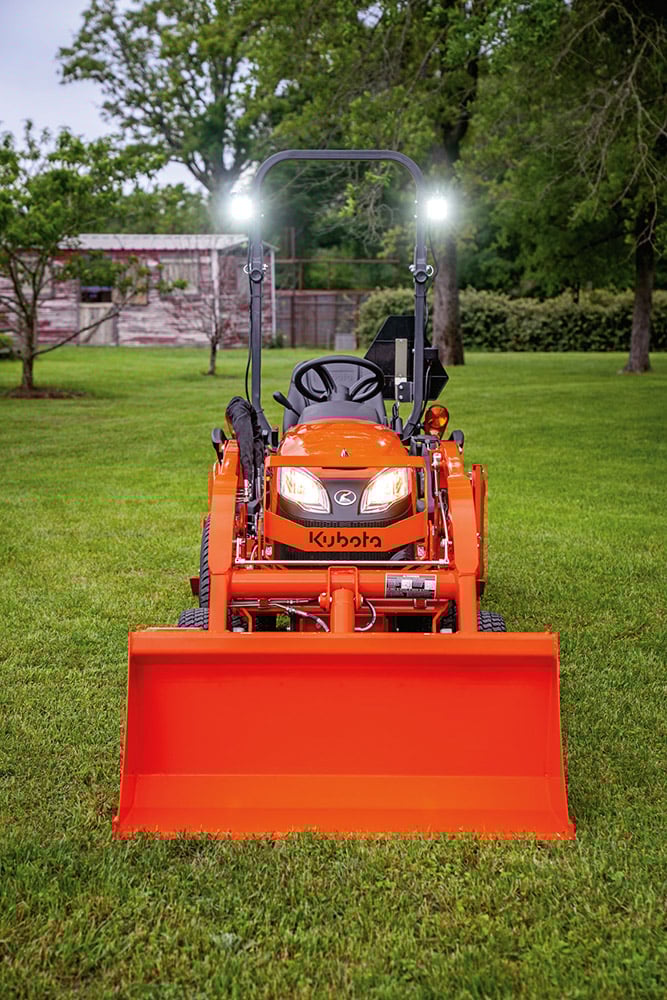
For most small-acreage buyers comparing subcompact tractors, the Bobcat CT2025 is the model that warrants serious evaluation: 25 HP gross, 19.6 PTO HP, and a loader lift capacity of 1,411 lbs — nearly double what the Kubota BX2380 delivers and 67% more than the John Deere 1025R. Per Bobcat’s published specifications, the BL-125 loader uses the same Bob-Tach quick-attach coupler found across Bobcat’s skid steer and compact track loader line, meaning operations that already stock Bobcat front-end attachments can add the CT2025 without duplicating inventory. The machine is not the right choice for every buyer — dealer network coverage in rural agricultural markets is the primary limitation — but if loader lift capacity is the decision driver and a Bobcat dealer is within 40 miles, the CT2025 earns a first look.
The rest of this guide covers where Bobcat fits, where it doesn’t, and how the three CT series models stack up against Kubota, John Deere, Kioti, and Mahindra across the specs that matter most.
CT1025 vs John Deere 1025R: Head-to-Head
| Bobcat CT1025 | John Deere 1025R | |
|---|---|---|
| Engine HP | 24.7 HP (gross) | 23.9 HP (gross) |
| PTO HP | 17.1 HP | 18.0 HP |
| Loader lift capacity | ~800 lbs | 843 lbs |
| 3-Point Hitch | Category 1 | Category 1 |
| Transmission | Hydrostatic | Hydrostatic |
| AutoConnect mid-mount mower | ✗ | ✓ (seat-on hookup) |
| iMatch quick-hitch | ✗ | ✓ |
| Price range | $13–16K | $17–22K |
| Ag dealer coverage | Poor | Excellent |
| Used market depth | Thin | Deep |
CT1025 vs 1025R verdict: The John Deere 1025R costs $4,000–$6,000 more at entry, but delivers significantly better dealer support, a deeper used market, and the AutoConnect mid-mount mower — the most user-friendly belly mower hookup in the class. The CT1025 is competitive on HP and loader lift at a lower price point, but that price advantage disappears quickly if the nearest Bobcat dealer is more than 40 miles away. Per-ownership-cost, the 1025R is the more defensible choice for most small acreage buyers unless you already have Bobcat equipment on the property. For buyers weighing front loader performance specifically, see Best Front-End Loaders for Compact Tractors for a loader-focused comparison across brands.
Quick Answer: CT2025 vs. Kubota BX vs. John Deere 1025R
| Bobcat CT2025 | Kubota BX2380 | John Deere 1025R | |
|---|---|---|---|
| Engine HP | 25 | 21.6 | 23.9 |
| Loader lift capacity | 1,411 lbs | 656 lbs | 843 lbs |
| PTO HP | 19.6 | 16.6 | 18.0 |
| Price range | $18–22K | $16–20K | $17–22K |
| Ag dealer coverage | Poor | Best | Best |
| Used market depth | Thin | Deep | Deep |
| Proprietary attachments | Bob-Tach (front only) | None | iMatch, AutoConnect |
| Buy if… | You need max loader lift in subcompact class | You want best dealer and implement ecosystem | You want AutoConnect mower or iMatch quick-hitch |
One-line verdict: The Bobcat CT2025 has a loader lift advantage that no other subcompact tractor at this price can match — 1,411 lbs vs. 843 lbs for the John Deere 1025R and 656 lbs for the Kubota BX2380. That advantage is real and meaningful for operations that move heavy material regularly. The reason most buyers still choose Kubota or Deere: dealer proximity in agricultural markets, a deeper used equipment market, and a broader implement ecosystem.
Bobcat is best known for skid steer loaders, but the company has built out a tractor lineup under its parent brand Doosan (now part of HD Hyundai) that competes directly with the Kubota BX series, John Deere 1 Series, and the rest of the mainstream subcompact tractor field. For buyers who already own Bobcat skid steers or compact track loaders, the CT series tractors offer a familiar attachment interface and a single dealer relationship for service. For buyers without existing Bobcat equipment, the question is whether the CT series holds up on price, performance, and dealer support against the dominant brands.
This guide covers the three Bobcat models most relevant to small acreage owners: the CT1025 entry-level subcompact, the CT2025 mid-range loader-ready model, and the CT4045 compact utility tractor for heavier implement work.
Which Model Fits Your Acreage?
If you need a fast answer before digging into specs, this table maps property size and primary use to the right CT model:
| Acreage / Primary Use | Right Model | Why |
|---|---|---|
| Under 5 acres — mowing, light loader work, basic grading | CT1025 | Smallest footprint, lowest entry cost, adequate for light weekly tasks |
| 5–15 acres — 3-point implement work, rotary cutter, post digger | CT2025 | More PTO output and significantly stronger loader lift for regular implement use |
| 15–30 acres — regular bush hogging, heavier grading, hillside work | CT4045 | Substantially more power margin; handles 5’–6’ rotary cutters without lugging |
If loader work is your main job: The CT2025’s 1,411 lb loader lift is the standout metric in this class — nearly double the Kubota BX2380 and 67% more than the John Deere 1025R. If mowing and PTO implement work dominate: Kubota BX or John Deere 1025R remain the safer choice due to deeper dealer networks in agricultural markets (see the decision checklist below).
CT Series Spec Comparison at a Glance
Per Bobcat published specs, the three CT series models relevant to small acreage buyers compare as follows:
| Model | Engine HP | PTO HP | Loader Lift | Operating Weight | MSRP Range |
|---|---|---|---|---|---|
| CT1025 | 24.7 HP (gross) | 17.1 HP | ~800 lbs | ~1,900 lbs | $13,000–$16,000 |
| CT2025 | 25 HP (gross) | 19.6 HP | 1,411 lbs | ~2,100 lbs | $18,000–$22,000 |
| CT4045 | 44.9 HP (gross) | 36.3 HP | 2,623 lbs | ~3,800 lbs | $28,000–$34,000 |
Weights and lift capacities per Bobcat manufacturer specifications. Operating weight varies with loader and attachment configuration. MSRP ranges are approximate and vary by dealer region.
How Bobcat CT Series Tractors Fit the Market
Per Bobcat’s product documentation, the CT series was designed to bridge tractor and compact equipment operations. The loader attachment system uses Bobcat’s Bob-Tach coupler — the same quick-attach system used across Bobcat’s skid steer and compact track loader lines. For operations that already stock Bobcat-compatible buckets, grapples, and pallet forks, this standardization reduces attachment inventory and simplifies operator training.
The trade-off is dealer network coverage. Bobcat’s primary dealer presence is in construction and industrial markets. In rural agricultural areas, Kubota and John Deere dealers are far more common than Bobcat dealers, which has practical implications for warranty service and routine maintenance.
Bobcat CT Series Compared
Bobcat CT1025 — Entry-Level Subcompact
| Specification | Value |
|---|---|
| Engine HP | 24.7 HP (gross) |
| PTO HP | 17.1 HP |
| Loader Lift Capacity | ~800 lbs |
| 3-Point Hitch | Category 1 |
| Transmission | Hydrostatic |
| MSRP Range | $13,000–$16,000 |
According to Bobcat’s specifications, the CT1025 runs a Tier 4-compliant diesel engine with a hydrostatic transmission. At 24.7 HP gross, it sits at the upper end of the subcompact HP range. The Category 1 three-point hitch accepts standard subcompact implements — box blades, tillers, finish mowers, and light rotary cutters.
The ~800 lb loader lift capacity is competitive with the Kubota BX2380 (656 lbs) but trails the John Deere 1025R (843 lbs) and the CT2025’s significantly stronger loader frame. Per the product data sheet, the CT1025 is sized for properties in the 1–5 acre range where the primary tasks are loader work, grading, and light implement use.
Best for: Buyers wanting the smallest Bobcat tractor footprint for basic acreage maintenance, particularly those with existing Bobcat equipment on the property.
Bobcat CT2025 — Best Overall in the CT Series
| Specification | Value |
|---|---|
| Engine HP | 25 HP (gross) |
| PTO HP | 19.6 HP |
| Loader Lift Capacity | 1,411 lbs (BL-125 loader) |
| 3-Point Hitch | Category 1 |
| Transmission | Hydrostatic |
| Mid-Mount Mower | Compatible |
| MSRP Range | $18,000–$22,000 |
The CT2025 is the most capable model in Bobcat’s subcompact lineup and the clearest competitor to the Kubota BX2380 and John Deere 1025R. Per Bobcat’s specifications, the BL-125 loader raises the CT2025’s loader lift capacity to 1,411 lbs — substantially more than the Kubota BX2380 (656 lbs) and the John Deere 1025R (843 lbs). That loader advantage is meaningful for operations moving heavy materials: gravel, compost, firewood, or large bales.
At 19.6 PTO HP, the CT2025 also leads the subcompact class on rear PTO power, which translates to more consistent performance when running rotary cutters, tillers, or other PTO-driven implements near their rated capacity. Mid-mount mower compatibility expands the machine’s use as a primary property mower, not just a utility tractor.
According to Bobcat’s documentation, the Bob-Tach front loader attachment interface allows the loader to be removed and reattached without tools — useful for operations that frequently switch between loader work and rear implement use.
Best for: Small acreage owners who need strong loader capacity and PTO output in a subcompact frame, particularly those already in the Bobcat equipment ecosystem.
Bobcat CT4045 — Compact Utility for Heavier Work
| Specification | Value |
|---|---|
| Engine HP | 44.9 HP (gross) |
| PTO HP | 36.3 HP |
| Loader Lift Capacity | 2,623 lbs |
| 3-Point Hitch | Category 1/2 |
| Transmission | Hydrostatic |
| MSRP Range | $28,000–$34,000 |
The CT4045 crosses out of the subcompact category into compact utility tractor territory. At 44.9 HP gross and 36.3 PTO HP, per Bobcat’s specifications, it has the capacity to run larger rotary cutters (5’–6’), heavier box blades, and implements that would overwhelm the CT1025 or CT2025. The dual Category 1/2 hitch accommodates a wider range of implement sizes.
The 2,623 lb loader lift capacity places it in a different class than the CT1025 and CT2025 — this is a machine for moving significant material volume, not just occasional loader work. Per Bobcat’s product data, the CT4045 targets operations in the 10–50 acre range that need more implement muscle than a subcompact can provide.
Price at $28,000–$34,000 positions the CT4045 against compact utility tractors from Kubota (B3350, L3902), John Deere (3025E, 3032E), and Kioti (DK4210) — all of which have deeper dealer networks in agricultural markets.
Best for: Operations that need compact utility tractor capability and already have a Bobcat dealer relationship, or construction-farm crossover properties.
Bobcat vs. Kubota vs. John Deere vs. Mahindra: Full Cross-Brand Comparison
Per manufacturer specifications, the leading subcompact models compare as follows. Verify all figures before purchase, as manufacturers update specifications and pricing periodically.
| Model | HP (gross) | PTO HP | Loader Lift (lbs) | Operating Weight (lbs) | Price Range |
|---|---|---|---|---|---|
| Bobcat CT1025 | 24.7 | 17.1 | ~800 | ~1,900 | $13–16K |
| Bobcat CT2025 | 25 | 19.6 | 1,411 | ~2,100 | $18–22K |
| John Deere 1025R | 23.9 | 18.0 | 681 | 1,560 | ~$20K |
| Kubota BX2380 | 21.6 | 16.6 | 727 | 1,433 | ~$17K |
| Mahindra eMax 22 | 22 | 16.5 | 810 | 1,499 | ~$15K |
| Kioti CS2520 | 24.5 | 18.9 | 793 | ~1,750 | $16–20K |
Loader lift capacities and operating weights per respective manufacturer specifications. John Deere 1025R loader lift per D120 loader data sheet (deere.com). Kubota BX2380 per LA344 loader specifications (kubotausa.com). Mahindra eMax 22 per Mahindra product data (mahindrausa.com). Prices are approximate and vary by region and dealer. Verify before purchase.
Where Bobcat wins: Loader lift capacity on the CT2025 is the standout advantage — 1,411 lbs exceeds every other model in this comparison by a wide margin. If loader performance is the primary selection criteria, the CT2025 deserves serious consideration. PTO HP on the CT2025 (19.6) also leads the comparable models.
Where Kubota and John Deere win: Dealer network depth. According to industry data, Kubota and John Deere have the most extensive rural dealer networks in North America. For a machine that requires periodic hydraulic service, filter changes, and occasional warranty work, dealer proximity within 30–40 miles is operationally important. In many agricultural areas, the nearest Bobcat tractor dealer may be 60–100 miles away. Kubota also offers a broader third-party implement ecosystem, with more aftermarket implement manufacturers specifying Kubota compatibility.
Where Mahindra wins on value: The Mahindra eMax 22 typically carries the lowest price point in this comparison and comes with a longer standard warranty than Bobcat or Kubota in most configurations. For buyers who don’t have an existing equipment relationship with any of these brands and are primarily cost-driven, Mahindra warrants comparison. Dealer coverage varies significantly by region — verify Mahindra dealer proximity before purchasing.
Where John Deere wins exclusively: The AutoConnect mid-mount mower system (seat-on attachment without manual pin connections) remains unique to John Deere in this class. The 1025R’s iMatch quick-hitch also simplifies rear implement swaps in a way no other brand matches at this price point. On resale value, John Deere and Kubota both carry deeper used equipment markets with more established pricing benchmarks than Bobcat or Mahindra — a meaningful difference for buyers who plan to sell within 5–7 years.
Implement Compatibility and Attachments
Bob-Tach vs Category 1: Two Separate Systems
Bobcat CT tractors use two different attachment interfaces, and buyers need to understand both before sourcing implements.
Bob-Tach (front loader attachments): Bobcat’s proprietary quick-attach coupler for front loader buckets, pallet forks, grapples, and bale spears. Per Bobcat’s documentation, Bob-Tach uses a spring-loaded latch that allows attachment changes without tools. Implements are interchangeable across Bobcat skid steers, compact track loaders, and CT tractors — the standardization benefit for operations that already run Bobcat equipment.
Category 1 three-point hitch (rear implements): Industry-standard three-point hitch geometry. Any aftermarket box blade, tiller, finish mower, or rotary cutter designed for subcompact tractors will physically attach. Bobcat does not use a proprietary rear hitch — standard Category 1 geometry applies.
| Attachment Type | Interface | Proprietary? | Where to Source |
|---|---|---|---|
| Loader bucket, pallet fork, grapple | Bob-Tach | Yes — Bobcat-specific | Bobcat dealer or Bob-Tach compatible aftermarket |
| Box blade, tiller, rotary cutter | Category 1 three-point hitch | No — industry standard | Any subcompact implement dealer or Amazon |
| Finish mower (belly-mount) | Model-specific deck mount | Verify per CT model | Bobcat dealer (CT2025 compatible; CT1025 verify) |
| Mid-mount mower deck | CT2025/CT4045 specific | Yes | Bobcat dealer |
Bobcat CT series tractors use standard Category 1 three-point hitch geometry, meaning most aftermarket implements designed for subcompact tractors will physically attach. However, some implement manufacturers specify compatibility by tractor brand (particularly belly mower decks), so verifying compatibility before purchase is important.
For implement options available through Amazon, the following categories are broadly compatible with Bobcat CT series Category 1 hitches:
- Rear box blade — for grading driveways and managing topsoil: Check price on Amazon. For a full comparison of box blade options sized for subcompact tractors, see Best Box Blades for Subcompact Tractors.
- Rotary tiller — for garden and food plot preparation: Check price on Amazon
- Rear finish mower — for mowing under fences and tight areas: Check price on Amazon
For a broader look at implement options across tractor brands, see the farm implement guide for small farms.
Should You Buy Bobcat? A Decision Checklist
These questions determine whether the CT series makes sense over Kubota or John Deere for a given buyer:
Buy Bobcat CT if all of the following are true:
- A Bobcat dealer is within 30–40 miles (service and warranty work require periodic dealer visits)
- Maximum loader lift capacity in the subcompact class is a priority (the CT2025’s 1,411 lbs is the key advantage)
- The operation already owns Bobcat skid steer or compact track loader equipment with Bob-Tach-compatible attachments
- The primary use is loader work — moving gravel, compost, firewood, or heavy material — rather than PTO-implement use across varied terrain
Buy Kubota BX or John Deere 1025R instead if any of the following are true:
- Nearest Bobcat tractor dealer is more than 40 miles away
- The primary use is mowing and PTO implement work (tillers, rotary cutters) rather than loader work
- A used machine is preferred — Kubota BX series and JD 1025R have far deeper used inventory in most regions, making quality used examples easier to find and price-check (see the used subcompact tractor buying guide for price benchmarks and inspection points)
- Third-party implement compatibility is important — Kubota has the widest aftermarket implement ecosystem in the subcompact class
- The John Deere AutoConnect mid-mount mower or iMatch quick-hitch system is relevant to the operation
Dealer proximity matters more than most buyers expect. A subcompact tractor that requires warranty or hydraulic service needs a dealer within reasonable distance. A Bobcat CT2025 with a failed hydraulic pump 80 miles from the nearest dealer is a costly problem. Before purchasing any tractor, confirm the dealer’s service department hours, typical turnaround time on in-season repairs, and whether loaner equipment is available during service — questions that apply to Kubota and John Deere dealers equally, but are more often the limiting factor on Bobcat given its smaller agricultural dealer footprint.
Who This Is NOT For
- Buyers with less than 3 acres. A subcompact tractor is overkill for a small yard or suburban lot. A capable zero-turn mower handles mowing and light property work for a fraction of the cost and with far less maintenance. The capital expenditure on a CT1025 or CT2025 only makes sense when there is enough acreage and task variety to justify the machine — typically 5+ acres with a mix of loader work, PTO implement use, and terrain management.
- Buyers who need a mid-mount mower as the primary mowing tool. Bobcat’s subcompact tractors do not support the kind of seat-on belly mower hookup that John Deere’s AutoConnect system provides on the 1025R. If seamless mid-mount mower operation is the primary buying reason, the John Deere 1025R is the category leader. The CT2025 does support a mid-mount deck, but the hookup process is more involved than John Deere’s system — verify the specific process with your dealer before making this a deciding factor.
- Buyers in rural agricultural markets where the nearest Bobcat tractor dealer is more than 40 miles away. Per industry availability data, Bobcat’s tractor dealer footprint is concentrated in construction and suburban markets, not agricultural communities. Warranty service and hydraulic system maintenance require periodic dealer visits. A machine 80 miles from its nearest service facility during peak season is an operational liability — verify dealer distance and service department capacity before committing to any brand.
- Anyone comparing purely on sticker price. John Deere and Kubota both carry stronger resale value in the used equipment market than Bobcat CT tractors, per equipment listing comparables. A CT2025 purchased at $20,000 and resold in 5 years may net less than a comparable 1025R purchased at the same price, due to thinner used market depth. Total cost of ownership — including residual value — often favors the more established brands when the price difference is small.
- Anyone prioritizing third-party implement compatibility. Kubota’s implement ecosystem is the most developed in the subcompact class, with more aftermarket manufacturers specifying Kubota compatibility. Bobcat’s smaller market share means fewer implement-specific compatibility confirmations.
- Anyone needing more than 45 HP. The CT4045 is the top of the Bobcat CT line. Buyers needing 50+ HP for larger implements should look at full utility tractor options from Kubota, John Deere, or Mahindra. See the compact tractor comparison for coverage of the 25–60 HP range.
- Budget-first buyers without a specific Bobcat reason. At comparable price points, the Mahindra eMax 22 offers competitive loader lift capacity at a lower entry price with a longer standard warranty in most configurations. Without an existing Bobcat dealer relationship or Bob-Tach attachment inventory to leverage, the CT series pricing premium requires a specific justification.
Financing, Attachment Costs, and Total Cost of Ownership
Bobcat subcompacts typically sell through Bobcat dealers at or near list price with limited negotiation room — less discounting flexibility than brands like Mahindra or Kioti. Per Bobcat’s published financing materials, promotional rates are available for qualified buyers through Bobcat’s dealer network, but specific terms change seasonally; verify current offers directly with your dealer. Budget attachment costs separately from the tractor purchase — a front loader (if not included) adds approximately $3,500–$5,000 to the invoice, a 3-point Category 1 finish mower adds $1,200–$2,500 depending on cut width and brand, and a rotary cutter for bush hogging adds $1,500–$3,000. Dealer installation and setup fees vary and are not always disclosed in advertised package prices. A realistic all-in budget for a CT2025 with loader, a finish mower, and a box blade is $24,000–$30,000 before tax and registration.
Financing terms often determine the effective total cost more than the sticker price, and the three brands differ significantly in their programs:
Bobcat financing (Doosan Capital / HDFC): Per Bobcat dealer program data, Bobcat typically offers 0% financing for 36–48 months on new CT series tractors. Promotional rates are available through Bobcat’s dealer network but are less frequently advertised than Kubota or Deere programs. Package financing (tractor + loader + implement) is common through Bobcat dealers and may offer better terms than financing components separately.
Kubota financing: Kubota Financial has historically offered 0% APR for up to 60 months on new BX series tractors — the most competitive financing terms in the subcompact class when promotions are active. The extended term reduces monthly payments meaningfully on a $16–20K purchase. Kubota runs promotional financing several times per year (typically spring and fall); buying outside promotional windows may mean higher rates. Verify current program terms with your local Kubota dealer, as promotional windows change.
John Deere financing (John Deere Financial): John Deere Financial offers 0% APR for 48 months on qualifying new equipment, along with John Deere’s PowerGard extended warranty options. The iD program for agricultural buyers offers specific rate structures for full-time farming operations. John Deere’s broader dealer network means more competition for financing terms in some markets.
Practical implication: On a $18,000 Bobcat CT2025 at 0% for 48 months, the monthly payment is $375. On a $16,500 Kubota BX2380 at 0% for 60 months, the monthly payment is $275. The lower Kubota payment may be the deciding factor for buyers managing cash flow — even if the CT2025 has superior loader capacity. Confirm current promotional rates before making a price-based comparison, as programs change seasonally.
Annual Ownership Cost Estimate
Beyond the purchase price and financing, expect the following recurring costs for a Bobcat CT series subcompact (CT1025 or CT2025):
Routine maintenance (per year, light to moderate use): Expect roughly $300–$600/year covering engine oil and filter changes at 100-hour intervals, hydraulic/transmission fluid service, air filter replacement, and annual grease on pivot points. The CT series requires a 50-hour initial service (dealer-performed on new machines) followed by 250-hour interval maintenance. Parts and fluids sourced through Bobcat dealers typically run slightly higher than equivalent Kubota BX consumables due to smaller parts volumes.
Farm equipment insurance: A subcompact tractor on a farm policy typically runs $200–$400/year depending on coverage level, state, and deductible. Dealers and farm bureaus often bundle equipment coverage with existing farm policies at favorable rates. Standalone equipment floaters are available for operations without a farm policy.
Depreciation: Subcompact tractors — Bobcat, Kubota, and John Deere alike — hold value substantially better than consumer riding mowers. A well-maintained CT2025 purchased new typically retains 55–70% of purchase price at resale in the 4–6 year range, per equipment listing comparables. This compares favorably to consumer riding mowers, which may lose 60–70% of value in the same window. The thinner used market for Bobcat CT tractors (versus Kubota BX or JD 1025R) can make resale slightly slower, but pricing per comparable unit tends to hold.
Buying Considerations
When a Bobcat CT Tractor Makes Clear Sense
The Bobcat CT series has a genuine use case for operations that already run Bobcat skid steer loaders or compact track loaders. Per Bobcat’s product documentation, the Bob-Tach coupler standardizes the loader attachment interface across Bobcat’s equipment line. Farms or small construction operations that already stock Bobcat-compatible buckets, grapples, and pallet fork sets can add the CT tractor to the rotation without duplicating attachment inventory.
The single dealer relationship also simplifies service logistics for mixed-fleet operators. A dealer who services the skid steer will service the CT tractor, using the same parts and service infrastructure.
Pricing and Negotiation
Per dealer pricing data, Bobcat CT series tractors are sold through Bobcat equipment dealers, not traditional ag equipment dealers. Pricing is typically fixed closer to MSRP than brands like Mahindra or Kioti, where dealer negotiation is more common. Package deals (tractor + loader + implement) may offer better overall value than purchasing components separately — ask for package pricing explicitly.
Maintenance Items
Maintenance consumables for Bobcat CT series are sourced through Bobcat dealers or compatible aftermarket suppliers:
- Hydrostatic transmission fluid: Check compatible fluid options on Amazon
- Diesel engine oil 15W-40: Check price on Amazon
- Category 1 quick hitch (for faster implement changes): Check price on Amazon
What You’ll Also Need
Beyond the tractor, the practical ownership costs include implements, fluids, and hitch hardware purchased on a recurring basis:
- Category 1 quick hitch — allows rear implement changes without crawling under the tractor to set lower link pins. Standard on most subcompact implement setups. Check price on Amazon →
- PTO shear bolt assortment — shear bolts protect the PTO driveline when an implement hits a rock or obstruction. Keep a kit on hand; they consume regularly. Most subcompact PTO shafts use 3/8” or 7/16” Grade 5 bolts. Check price on Amazon →
- Diesel engine oil 15W-40 — most CT series diesel engines call for 15W-40 at 100-hour service intervals. Shell Rotella T4 is widely used. Check price on Amazon →
- Rear ballast box — adds rear weight for loader work, improving front-axle steering and reducing rear wheel lift. Essential when running heavy front loader loads. Check price on Amazon →
Buying New vs Used Bobcat CT Tractors
Used Bobcat CT tractors are less common on the market than Kubota BX series or John Deere 1025R units, per equipment listing data. When a used CT does appear, pricing typically reflects 50–65% of new MSRP in the 3–7 year age range — comparable to used pricing on equivalent Kubota and Deere machines.
What to check on a used Bobcat CT:
- Bob-Tach coupler condition: Inspect the front loader quick-attach latch for wear and secure engagement. Test the attachment and detachment cycle; worn latches can allow unintended loader disengagement during operation.
- Hydrostatic transmission: Drive the tractor through the full speed range forward and reverse. Hesitation, jerking at low speeds, or delayed response indicates hydrostatic drive wear — the highest-cost repair item on these machines.
- Loader cylinder seals: Raise the loader bucket to full height under a light load and leave it for 10 minutes. Hydraulic drift (bucket slowly descending) indicates cylinder seal wear.
- Service history: Request maintenance records through the Bobcat dealer if possible. The CT series requires a 50-hour initial service and 250-hour interval maintenance; a machine without documented service may have deferred maintenance on hydraulic fluid, filters, and belt tension.
The used market limitation: Unlike Kubota BX or John Deere 1025R used equipment — where thousands of listings establish clear market pricing — used Bobcat CT tractors have thin market data in most regions. This makes it harder to confirm fair pricing and spot outliers. Cross-reference against current dealer MSRP and apply a deferred-maintenance buffer of $500–$1,500 for any machine without documented service history.
Sources
- Bobcat CT1025 product specifications (bobcat.com)
- Bobcat CT2025 product specifications (bobcat.com)
- Bobcat CT4045 product specifications (bobcat.com)
- Kubota BX2380 specifications (kubotausa.com)
- John Deere 1025R specifications (deere.com)
- Kioti CS2520 specifications (kioti.com)
- ASABE tractor classification standards