Makita Belt Sanders: Full Line Comparison (2026)
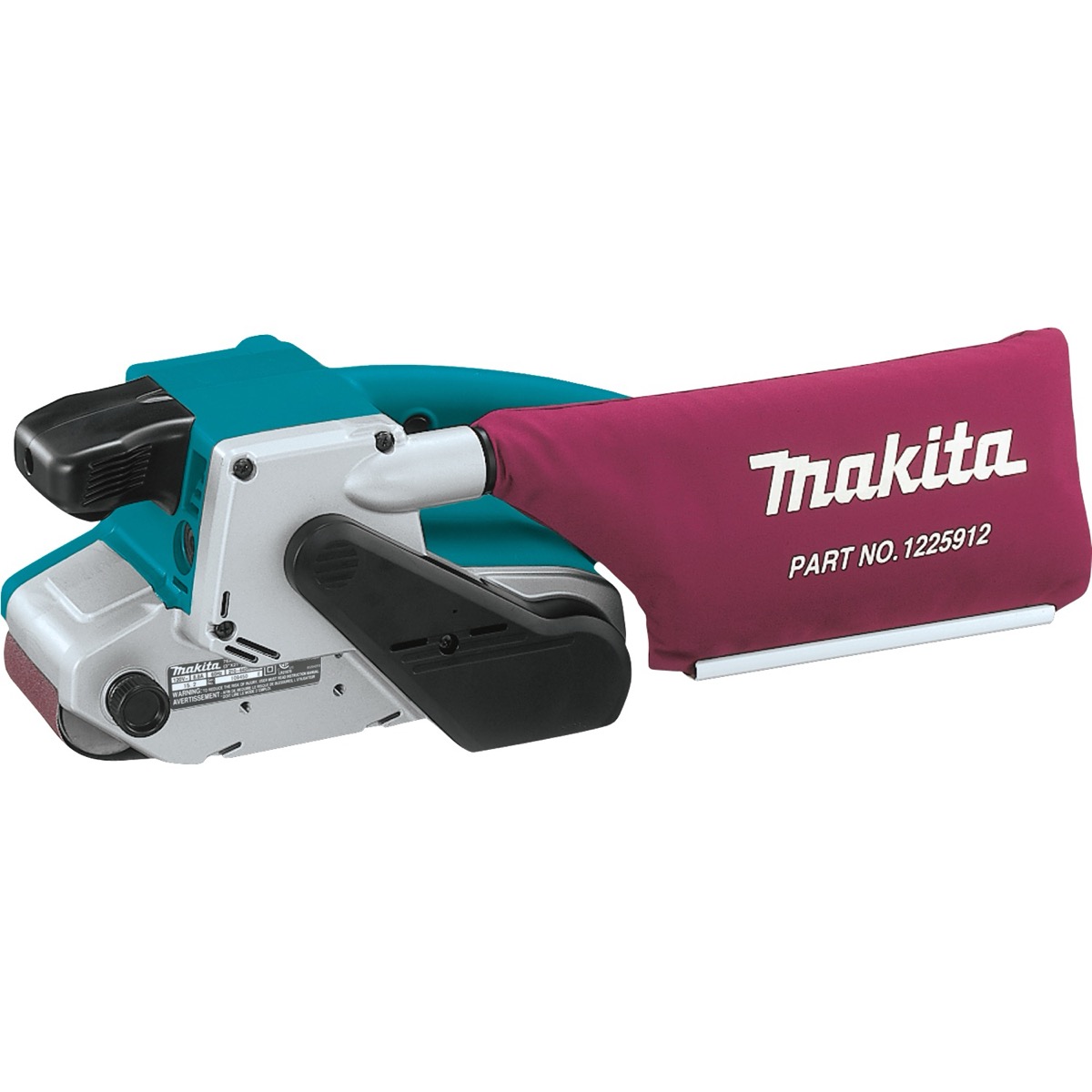
Makita’s belt sander line covers five distinct models from a cordless 3x18-inch to a corded 4x24-inch production sander. Each addresses a different use case, and the overlap between models is limited enough that the right choice is usually obvious once the application is clear. This guide breaks down the full Makita belt sander lineup by specification, application fit, and who each model is actually designed for.
Understanding Belt Size: Why It Matters More Than Motor
Before comparing individual models, belt dimensions deserve attention. Belt sander performance is more constrained by belt size than by motor power within a given brand’s lineup:
Width determines how much surface is covered per pass. A 4-inch-wide belt removes material across more surface area per stroke than a 3-inch belt, making wider belts faster for large flat surfaces (floors, tabletops, panels). Narrower belts fit between rails, stiles, and narrower stock dimensions where a 4-inch belt would contact edges and create rounding.
Length determines available belt selection and heat management. Longer belts distribute heat across more abrasive surface, reducing burning risk on dense hardwoods. Per Makita’s product line, belt lengths range from 18 inches (XBT01Z cordless) to 24 inches (9404 and 9741).
SFPM (surface feet per minute): Belt speed at the tool’s rated no-load condition. Higher SFPM = faster material removal, more heat generation. Variable speed allows slowing for final passes to prevent heat discoloration and cross-grain marks.
The Makita Belt Sander Lineup
Makita 9903 — Best All-Around Belt Sander
| Specification | Value |
|---|---|
| Belt Size | 3 × 21 inches |
| Motor | 8.8 amps |
| Speed | Variable: 670–1,040 FPM |
| Dust Collection | Yes (bag, hose port) |
| Auto-Tracking | Yes |
| Weight | 8.8 lbs |
| Warranty | 1 year |
| Price Range | $140–$175 |
Per Makita’s specifications, the 9903 uses a variable speed dial (670–1,040 FPM) that allows the operator to set belt speed before contact and maintain consistent feed rate across a workpiece. The automatic belt tracking adjustment — a dial on the front roller — keeps the belt centered without stopping the tool, a feature that distinguishes the 9903 from lower-tier belt sanders where tracking requires power-off adjustment. The 3x21 belt size is widely stocked, and 3M, Norton, and Mirka all produce 3x21 belts in the full grit range from 40 to 220.
Per Makita’s dust management documentation, the 9903 connects to a vacuum hose or the included fabric bag at the rear of the tool. The bag captures approximately 80% of sanding dust in wood applications — adequate for clean shop work; a vacuum connection is recommended for production use or fine dust environments.
Best for: Woodworkers, finish carpenters, and contractors who need one belt sander to handle both stock removal and final passes. The variable speed is the differentiator — low speed for hardwood finishing, high speed for construction-grade material prep.
Limitation: The 3x21 belt size is narrower than competing 3x24 belts, meaning more passes are required to cover wide surfaces compared to the 9404.
Makita 9904 — Best for Production Material Removal
| Specification | Value |
|---|---|
| Belt Size | 3 × 24 inches |
| Motor | 9.0 amps |
| Speed | Fixed: 1,550 FPM |
| Dust Collection | Yes (bag, hose port) |
| Auto-Tracking | Yes |
| Weight | 9.1 lbs |
| Warranty | 1 year |
| Price Range | $150–$185 |
Per Makita’s documentation, the 9904 runs at a fixed 1,550 FPM — 50% faster than the 9903’s maximum 1,040 FPM — making it the faster material removal tool in the 3-inch width class. The 3x24 belt is slightly longer than the 9903’s 3x21, distributing heat across more abrasive surface for sustained cutting in dense materials. The fixed speed is the tradeoff: the 9904 cannot slow down for finish passes, which makes it less appropriate for hardwood furniture work where heat buildup and cross-grain marks are a concern.
Best for: Contractors and construction tradespeople who use a belt sander for rough tasks — subfloor leveling, door bottom trimming, concrete form cleanup, paint stripping — where high belt speed and material removal rate matter more than finish quality. Also appropriate for production woodworking shops where rough dimensioning is handled by a dedicated high-speed belt sander before a variable-speed tool handles finish passes.
Makita 9404 — Best for Large Surface Work
| Specification | Value |
|---|---|
| Belt Size | 4 × 24 inches |
| Motor | 11.0 amps |
| Speed | Variable: 820–1,475 FPM |
| Dust Collection | Yes (bag, hose port) |
| Auto-Tracking | Yes |
| Weight | 13.0 lbs |
| Warranty | 1 year |
| Price Range | $210–$260 |
Per Makita’s specifications, the 9404 uses a 4x24-inch belt — the widest in the Makita lineup — with an 11-amp motor and variable speed. The 4-inch belt width covers more surface per pass than any 3-inch alternative, making the 9404 the fastest option for wide flat surfaces: hardwood flooring, tabletops, panel faces, exterior decking. The 13-lb weight is a factor — heavier than the 3-inch models, and fatiguing for vertical or overhead use. Per Makita’s guidance, the variable speed range (820–1,475 FPM) allows slowing for hardwood finish passes, though the minimum speed is faster than the 9903’s 670 FPM minimum.
4x24 belts are less universally stocked than 3x21 and 3x24 belts — verify local availability before committing to this belt size if supply chain reliability is a concern.
Best for: Flooring contractors, furniture shops, and woodworkers who regularly sand wide panels and flat surfaces where coverage speed is the priority. The 4-inch belt reduces the number of passes required per surface significantly compared to 3-inch tools.
Limitation: At 13 lbs, the 9404 is tiring for extended use on vertical surfaces or narrow stock. It is a bench or floor sander in practice, not a hand-control finish sander. For high-volume panel and tabletop surfacing, a stationary wide belt or drum sander removes stock more consistently than any handheld belt sander.
Makita XBT01Z 18V LXT — Best Cordless Option
| Specification | Value |
|---|---|
| Belt Size | 3 × 18 inches |
| Battery Platform | 18V LXT |
| Motor | Brushless |
| Speed | Variable: 490–820 FPM |
| Dust Collection | Yes (hose port) |
| Auto-Tracking | Yes |
| Weight (bare tool) | 6.6 lbs |
| Warranty | 3 years (tool), 1 year (battery) |
| Price Range | $130–$165 (bare tool) |
Per Makita’s product documentation, the XBT01Z uses the 18V LXT platform and a brushless motor to deliver variable belt speed (490–820 FPM). The 3x18 belt is the shortest in the lineup — a trade-off for cordless portability. Belt speed at maximum is lower than any corded model in this comparison, which limits aggressive material removal but provides adequate cutting speed for typical jobsite sanding tasks: smoothing door edges, trimming shims, prepping painted wood surfaces. The lighter weight (6.6 lbs) relative to corded models is a practical advantage for overhead or vertical use. The XBT01Z shares batteries with Makita’s 300+ 18V LXT tool ecosystem.
Best for: Contractors already on Makita LXT who need a belt sander for occasional jobsite use — door fitting, rough trim sanding, subfloor spot work — without adding a corded tool and extension cord to the kit. Not intended for production woodworking where belt speed and surface area coverage are the priority.
Makita 9741 Wheel Sander — Specialty Surface Work
| Specification | Value |
|---|---|
| Belt Size | 9-inch drum, 4x24 belt combination |
| Motor | 10.0 amps |
| Drum Speed | 3,200 RPM |
| Belt Speed | Fixed |
| Weight | 14.1 lbs |
| Price Range | $280–$350 |
Per Makita’s documentation, the 9741 combines a 9-inch abrasive drum with a belt sanding surface — providing two distinct contact surfaces in one tool. The drum contact is designed for curved surface work, contour sanding, and deburring on pipe, tube, and irregular profiles. This is a specialty tool — not a general-purpose belt sander — intended for metal fabricators, knife makers, and shops that require both flat and contour sanding capability from one machine. It is heavier and more expensive than the standard belt models and is not a substitute for a general-purpose 9903 or 9404 in a woodworking context.
Best for: Metal fabrication shops, knife makers, and contractors who need contour sanding capability on curved or irregular surfaces. The 9-inch drum handles pipe, tube, and round stock that flat platens cannot address.
Belt Grit Selection Guide
Per abrasive manufacturer specifications for belt sanders:
| Grit | Application |
|---|---|
| 40 | Aggressive stock removal, paint stripping, heavy rust |
| 60 | Medium stock removal, leveling rough surfaces |
| 80 | Surface preparation, removing milling marks |
| 100 | Pre-finish sanding, softwood finish prep |
| 120 | Final belt-sanding pass before orbital sanding |
| 150+ | Typically too fine for belt sanders — use random orbital instead |
Per industry convention, follow each grit step sequentially — skipping grits leaves visible scratch patterns that show through finish. Starting at 80 grit and jumping to 150 grit leaves 80-grit cross-grain scratches visible under stain.
Belt Sander vs. Random Orbital Sander: When to Use Each
Per application data, belt sanders and random orbital sanders serve different purposes in the same shop:
Belt sander: Leveling, dimensioning, aggressive stock removal, flattening glue-ups, removing material to a line. The unidirectional belt motion cuts efficiently but leaves directional scratches that must be sanded out with subsequent grits before finishing.
Random orbital sander: Final smoothing, finish preparation, removing belt sander scratches. The orbital motion leaves no directional scratch pattern, making it the correct last tool before staining or finishing. See the best random orbital sanders under $100 for the final-stage tool recommendation.
Using a belt sander as a finishing tool — stopping at 120 grit on the belt — typically leaves scratches visible under water-based stain. A 120-grit belt pass followed by 180-grit random orbital is the professional standard for furniture and cabinet work.
Who This Is NOT For
- Finish-only woodworkers who rarely remove stock. A random orbital sander handles 90% of finish-sanding tasks more consistently than a belt sander with less skill requirement. A belt sander is a dimensioning and leveling tool — if the work is primarily smoothing and finish preparation, a belt sander adds cost and complexity without benefit
- Knife makers and metal fabricators who need a contact wheel. The standard Makita belt sanders (9903, 9904, 9404) use a flat platen — they cannot grind bevels on curved surfaces. The 9741 Wheel Sander addresses contour work, or a dedicated 2x72 knife-making grinder is the appropriate tool. See the best belt grinders for knife making for the specialized recommendation, or compare smaller stationary belt sanders for knife making on a budget
- Operators who need 2x72 capability. Makita does not make a 2x72 belt grinder. If the application is knife making, tool-and-die work, or bladesmithing requiring the 2x72 format’s power and belt selection, a dedicated 2x72 grinder from KMG, Grizzly, or Bader is the correct tool category
- Anyone who will use the sander infrequently. A $140–$260 Makita belt sander represents a significant investment for occasional use. A lower-tier belt sander ($60–$90) handles infrequent projects without justifying Makita’s professional-grade price point
What You’ll Also Need
- 3x21 sanding belt assortment — 40/80/120 grit — A mixed-grit assortment covers the full range from stock removal to pre-finish smoothing without purchasing individual packs. Fits the Makita 9903. Check price on Amazon →
- 3x24 sanding belts — 60 grit, 10 pack — Fits the Makita 9904. 60-grit is the workhorse grit for construction sanding and rough preparation. Check price on Amazon →
- 4x24 sanding belts — 80 grit — Fits the Makita 9404. 80-grit balances material removal with surface quality for general hardwood and softwood work. Check price on Amazon →
- Abrasive belt cleaning stick — A rubber-compound cleaning stick extends belt life by unclogging loaded abrasive. Running the stick against the moving belt removes sawdust and pitch buildup that causes glazing and reduced cutting speed. Check price on Amazon →
- Shop vacuum with hose adapter — Connecting the belt sander’s dust port to a shop vacuum eliminates 95% of fine sanding dust versus the bag alone. A 1-1/4-inch hose adapter fits most shop vacs to the Makita’s dust port. Check price on Amazon →
Sources
- Makita 9903, 9904, 9404, XBT01Z, and 9741 product specifications (makitatools.com)
- 3M Abrasive Products belt selection guide (3m.com)
- Norton Abrasives grit selection reference (nortonabrasives.com)