Best Mini Metal Lathes for Home Shops in 2026
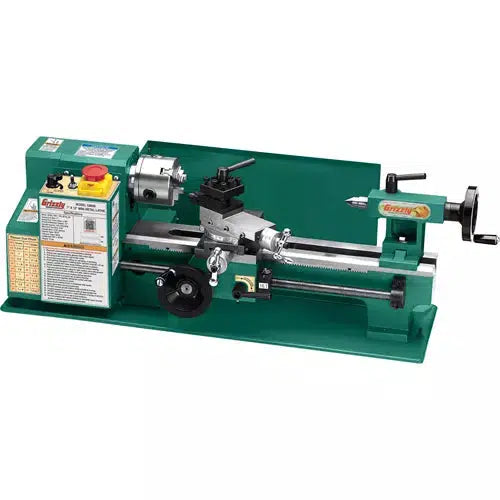
Mini metal lathes — specifically the 7-inch swing class — occupy a specific niche that larger benchtop lathes do not serve: affordable, compact, and capable enough for turning small parts, threading bolts, and machining soft metals in a home shop with limited space and budget. The entire category is built around a common Chinese-manufactured platform, which means quality differences are real but often subtle. This guide evaluates the 7x10, 7x12, and 7x14 class based on published manufacturer specifications, focusing on the specs that actually determine whether a mini lathe is frustrating or functional.
All specs are sourced from manufacturer documentation and publicly available product data.
Understanding Mini Lathe Specifications
The designation “7x14” means 7-inch swing (the maximum diameter workpiece the lathe can spin) and 14 inches of bed length (maximum distance between centers, which limits the length of stock that can be turned). Per lathe terminology standards:
- Swing: Maximum diameter over the bed. A 7-inch swing lathe turns parts up to 3.5-inch radius.
- Bed length: Distance between headstock and tailstock when fully extended. Longer beds allow longer parts but do not affect diameter capacity.
- Spindle bore: The through-hole diameter in the headstock spindle. Parts must pass through this hole or mount externally. Most 7-inch lathes have 3/4-inch spindle bores.
- Thread range: How many threads per inch (TPI) the lathe can cut using its change gear system. Per machinist references, 16 TPI (standard coarse thread) and 20 TPI (fine) cover most common fastener work.
- Motor power: Expressed in HP or watts. Mini lathes in this class range from 1/3 to 3/4 HP. Per machining references, 1/3 HP is adequate for aluminum and brass; steel requires more power and slower speeds.
What Mini Lathes Are Not Good At
Per machinist forums and manufacturer documentation, mini lathes in the 7-inch class have documented limitations that prospective buyers should understand:
- Rigidity: The small cross-section of the bed and saddle creates more deflection than larger machines under equivalent cutting loads. Aggressive cuts in steel cause chatter on mini lathes that a full-size benchtop lathe handles without issue.
- Repeatability under sustained production: These are hobby machines. Tool post flex and headstock play accumulate over time, requiring periodic adjustment. Not appropriate for production work requiring consistent tolerances.
- Large diameters: Practical cutting diameter on a 7-inch lathe is approximately 4-5 inches. Larger diameters are technically within spec but difficult to turn without flex.
Top Picks Based on Specifications
Grizzly G8688 — Best Supported Mini Lathe
| Spec | Value |
|---|---|
| Swing Over Bed | 7 inches |
| Distance Between Centers | 12 inches |
| Spindle Bore | 3/4 inch |
| Spindle Speeds | Variable, 0-2,500 RPM |
| Motor | 1/3 HP (250W) |
| Thread Range | 12-52 TPI |
| Tailstock Taper | MT #2 |
| Weight | 73 lbs |
| Warranty | 1 year (Grizzly standard) |
| Price Range | $450-$550 |
Per Grizzly’s product documentation, the G8688 is a 7x12 mini lathe with variable-speed DC motor control — a meaningful advantage over fixed-speed or multi-step-pulley units. Variable speed allows the operator to precisely match spindle speed to material and tool diameter, which per machining references is critical for surface finish quality and tool life.
Grizzly specifies a 3/4-inch spindle bore, MT #2 tailstock taper, and a thread range of 12-52 TPI via change gears. Per Grizzly’s documentation, the lathe includes a 3-jaw chuck, faceplate, dead center, and basic change gears. Grizzly’s parts and service infrastructure is the strongest among Chinese-import mini lathe brands operating in the US market — replacement parts, manuals, and technical support are available directly from Grizzly.
Best for: First-time lathe buyers who want the mini lathe platform with the best available domestic support infrastructure. Grizzly’s parts availability, manual quality, and warranty service are meaningfully better than generic import brands. The variable-speed motor is a legitimate performance advantage for precision work.
Limitation: At $450-$550, the G8688 is the most expensive mini lathe on this list. The 12-inch bed limits maximum part length. The 1/3 HP motor is adequate for aluminum and brass; steel turning requires conservative cuts and slower feeds.
VEVOR 7x14 — Best Bed Length Value
| Spec | Value |
|---|---|
| Swing Over Bed | 7 inches |
| Distance Between Centers | 14 inches |
| Spindle Bore | 3/4 inch |
| Spindle Speeds | Variable, 50-2,500 RPM |
| Motor | 550W (~3/4 HP) |
| Thread Range | 11-44 TPI |
| Tailstock Taper | MT #2 |
| Weight | 66 lbs |
| Warranty | 1 year |
| Price Range | $350-$500 |
Per VEVOR’s product specifications, the 7x14 provides the longest bed on this list (14 inches between centers) and the most powerful motor at 550W. The 14-inch bed meaningfully expands part length capability — for example, turning a 12-inch shaft requires a 14-inch lathe but fits within a 12-inch bed only if the part extends into the chuck.
VEVOR specifies variable-speed operation from 50 to 2,500 RPM, a broader range than many competitors at this price. The 550W motor is rated for heavier cuts in mild steel than 250-350W alternatives.
Best for: Buyers who need more bed length for longer workpieces and want the most motor power available in the mini lathe class. The 14-inch bed and 550W motor represent genuine capability upgrades over 7x10 and 7x12 alternatives.
Limitation: VEVOR is an import-direct brand without the parts support network of Grizzly. Replacement gears, gibs, and accessories may require longer lead times or sourcing from third-party suppliers like Little Machine Shop. Fit and finish on individual units can be inconsistent per user reports.
BestEquip 7x12 — Budget Entry Point
| Spec | Value |
|---|---|
| Swing Over Bed | 7 inches |
| Distance Between Centers | 12 inches |
| Spindle Bore | 3/4 inch |
| Spindle Speeds | Variable, 50-2,500 RPM |
| Motor | 350W (~1/2 HP) |
| Thread Range | 12-40 TPI |
| Tailstock Taper | MT #2 |
| Weight | 55 lbs |
| Warranty | 1 year |
| Price Range | $300-$420 |
Per BestEquip’s product specifications, this is the lightest and lowest-cost mini lathe on the list. At 55 lbs, it is more easily repositioned. The 350W motor is adequate for light aluminum and brass turning but requires very conservative cuts in steel. Variable speed from 50 to 2,500 RPM matches the VEVOR’s range.
Best for: Absolute beginners who want to learn lathe operation at the lowest possible cost before committing to a larger machine. At $300-$420, losses are minimal if the buyer discovers machining is not for them.
Limitation: The lightest and least rigid option on this list. Per user reports and machinist references, lighter mini lathes require more frequent adjustment and show greater susceptibility to chatter on difficult cuts. Parts support is the weakest of the three options listed.
Full Comparison Table
| Spec | Grizzly G8688 | VEVOR 7x14 | BestEquip 7x12 |
|---|---|---|---|
| Swing | 7” | 7” | 7” |
| Between Centers | 12” | 14” | 12” |
| Motor | 1/3 HP (250W) | 550W | 350W |
| Speed Range | 0-2,500 RPM | 50-2,500 RPM | 50-2,500 RPM |
| Thread Range | 12-52 TPI | 11-44 TPI | 12-40 TPI |
| Weight | 73 lbs | 66 lbs | 55 lbs |
| Parts Support | Excellent (Grizzly) | Limited | Limited |
| Price | $450-$550 | $350-$500 | $300-$420 |
Who This Is NOT For
- Production machinists. Mini lathes are hobby machines. For consistent tolerances across production runs, a full-size benchtop lathe (see best benchtop lathes) or a manual South Bend, Logan, or Hardinge is the correct choice.
- Buyers expecting to turn large stock. The 7-inch swing class is for small parts: pen blanks, bushings, small shafts, and hobby components. For turning 6-inch diameter stock or parts over 18 inches long, a larger lathe is required from the start.
- Shops without patience for setup. Every mini lathe in this class requires initial setup work: aligning headstock and tailstock, adjusting gibs, tramming the compound rest. Per Little Machine Shop’s setup guides, expect 4-8 hours of initial setup before a new mini lathe is cutting accurately. This is not a plug-and-play machine.
- Heavy steel turning. The motor power and rigidity limitations of this class make sustained steel turning frustrating. Aluminum, brass, and plastics are the practical materials for regular work on a 7-inch mini lathe.
Upgrade Path
Mini lathes are frequently the first step toward a larger machine. When the 7-inch class becomes limiting — typically when parts grow beyond 4-inch diameter or 10-inch length — the logical upgrade is a 9x20 or 10x22 benchtop lathe. For reference, see the best benchtop lathes guide for the next capability tier. A lathe handles round parts, but flat work — pockets, slots, and faces — calls for a mill; many home shops pair a mini lathe with a benchtop milling machine, and those moving toward programmable production step up to a CNC mill for a small job shop.
What You’ll Also Need
Buyers of mini metal lathes typically need the following accessories to get started. Per manufacturer setup guides, these are not optional for productive use:
- LittleMachineShop Mini Lathe Tooling Kit ($50-$80): A starter set of HSS cutting tools sized for 7-inch class lathes — includes right-hand, left-hand, and boring tools that fit the included tool post. Find on eBay →
- Accusize 3-Inch 4-Jaw Independent Chuck ($40-$65): A 4-jaw chuck enables centering of irregular and off-center workpieces that a 3-jaw scroll chuck cannot hold accurately. Check price on Amazon →
- MT2 Drill Chuck with Arbor ($15-$25): A Morse taper #2 drill chuck mounts in the tailstock for drilling center holes, through-holes, and reaming operations. Check price on Amazon →
- Tap Magic Cutting Oil (16 oz) ($10-$18): Cutting oil reduces friction and heat during turning operations — essential for steel work and threading on mini lathes with limited motor power. Check price on Amazon →
Sources
- Grizzly G8688 product documentation and owner’s manual (grizzly.com)
- VEVOR 7x14 mini lathe product specifications (vevor.com)
- BestEquip 7x12 mini lathe product documentation
- Little Machine Shop — Mini Lathe Buyer’s Guide and Modification Resources (littlemachineshop.com)
- South Bend Lathe Works — Lathe Specification Terminology Reference
- Machinery’s Handbook (31st Ed.) — Turning and boring chapter