Best Benchtop Metal Lathes for Home Shops in 2026
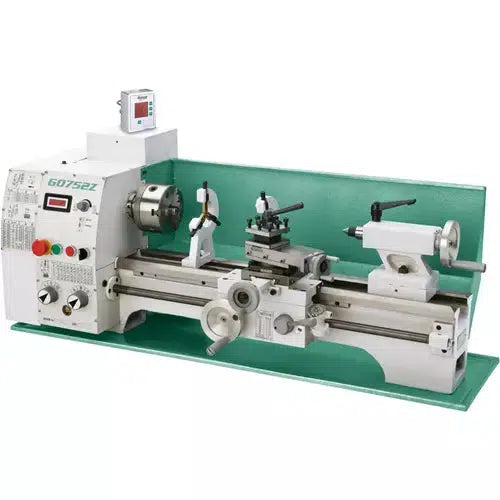
A benchtop metal lathe is the centerpiece of any home machine shop, and choosing the wrong one costs more than money — it costs years of frustration. The most common failure modes on cheap lathes are well documented: bed flex under cutting loads that makes precision work impossible, gear backlash that ruins threading operations, spindle runout measured in thousandths when it should be in tenths, and underpowered motors that stall on anything harder than aluminum. These are not minor annoyances. They are fundamental limitations that no amount of skill or tooling upgrades can fix. The bed and spindle define the machine’s ceiling, and no operator can exceed it.
This guide compares five benchtop metal lathes based on published manufacturer specifications, third-party measurement data, and documented owner experiences. The goal is straightforward: match the right machine to the right use case, and flag where the marketing claims diverge from the mechanical reality.
Key Specs That Actually Matter
Before comparing specific machines, it helps to understand which specifications actually predict lathe performance and which are marketing noise.
- Swing over bed — The maximum diameter a workpiece can have and still clear the bed. A 10” swing means a 5” maximum radius from center. This is a hard physical limit.
- Distance between centers — Determines the longest workpiece the lathe can hold between the headstock and tailstock. A 22” distance between centers handles most home shop work; anything over 30” is uncommon at the benchtop level.
- Spindle bore diameter — Limits the diameter of bar stock that can pass through the headstock. Per manufacturer specs, most benchtop lathes offer 1” to 1.5” spindle bores. Larger bores add significant flexibility for through-boring and working with bar stock.
- Spindle taper — MT3 is standard on most benchtop machines. MT4 and MT5 appear on larger models. The taper determines which centers, drill chucks, and collet systems fit. MT3 tooling is widely available and affordable.
- Spindle nose type — D1-4 camlock is the standard on quality benchtop lathes. Threaded spindle noses are found on mini lathes and budget machines. Camlock chucks swap in seconds; threaded chucks require careful alignment each time.
- Motor horsepower — According to manufacturer data sheets, 3/4 HP is the practical minimum for steel work. 1 HP handles most home shop operations. 1.5-2 HP provides headroom for interrupted cuts and harder materials.
- Gear vs. belt drive — Belt drive machines run quieter and absorb vibration. Gear-head machines offer more torque at low RPM, which matters for threading and large-diameter work. Both designs have trade-offs; neither is categorically superior.
- Bed material and weight — Cast iron bed weight correlates directly with rigidity and vibration damping. A heavier machine is almost always a more capable machine. According to engineering references, mass is the most effective vibration damper available.
Mini Lathe vs Benchtop Lathe: What’s the Difference?
The terms get used interchangeably, but they describe meaningfully different machines.
| Specification | Mini Lathe | Benchtop Lathe |
|---|---|---|
| Typical size | 7x10 to 7x16 | 10x22 to 12x36 |
| Swing over bed | 7” | 10”-12” |
| Motor power | 1/3-3/4 HP | 1-2 HP |
| Weight | 80-110 lbs | 350-600+ lbs |
| Spindle bore | 3/4” | 1”-1.5” |
| Spindle nose | Threaded (most) | D1-4 camlock (most) |
| Price range | $400-$900 | $1,500-$5,000 |
| Primary use | Light aluminum, brass, small parts | Steel, prototyping, general machining |
When a mini lathe makes sense: Learning fundamentals, making small brass and aluminum parts, watchmaking, model engineering, or extremely tight shop space. According to documented owner feedback, a mini metal lathe is a capable machine within its envelope — but that envelope is small.
When a benchtop lathe makes sense: Steel work, threading, prototype development, repair work involving shafts and bushings, or any application where tolerances below 0.002” matter consistently. The jump from a 7x mini to a 10x22 benchtop is not incremental — it is a different category of machine capability.
Top Picks Based on Specifications
Grizzly G0752 — Best Overall for Home Shops
| Spec | Value |
|---|---|
| Swing over bed | 10” |
| Distance between centers | 22” |
| Spindle bore | 1-1/16” |
| Spindle taper | MT3 |
| Spindle nose | D1-4 camlock |
| Motor | 1.5 HP, 110V/220V |
| Weight | 574 lbs |
| Price range | $2,200-$2,800 |
Per the Grizzly product data sheet, the G0752 ships with a ground and hardened bed, D1-4 camlock spindle, and a 1.5 HP motor that runs on either 110V or 220V. At 574 lbs, it has enough mass to damp vibration effectively during steel cutting operations. The D1-4 camlock nose accepts standard 3-jaw and 4-jaw chucks without the alignment hassle of threaded spindle noses. The 1-1/16” spindle bore is adequate for most home shop bar stock work, though operators regularly working with larger diameter material should note this as a limitation. The threading gearbox covers standard inch threads and, according to the spec sheet, metric threading with change gears.
This machine occupies the sweet spot where capability, price, and parts availability intersect. Grizzly’s domestic support and parts inventory are well documented advantages for home shop owners who need replacement gears or bearings without long international shipping delays.
Precision Matthews PM-1228VF-LB — Best Precision
| Spec | Value |
|---|---|
| Swing over bed | 12” |
| Distance between centers | 28” |
| Spindle bore | 1.5” |
| Spindle taper | MT4 |
| Spindle nose | D1-4 camlock |
| Motor | 1.5 HP, variable frequency drive |
| Weight | ~600 lbs |
| Price range | $3,500-$4,200 |
According to Precision Matthews specifications, the PM-1228VF-LB features a variable frequency drive (VFD) that provides infinitely adjustable spindle speeds without belt changes. The VFD also enables electronic braking, which is a genuine safety and productivity advantage. The 1.5” spindle bore is notably larger than competing machines in this class and accepts substantially larger bar stock. The MT4 spindle taper accommodates heavier tooling than the MT3 found on most benchtop machines.
Per documented third-party measurements, Precision Matthews machines typically arrive with spindle runout below 0.0005”, which is exceptional at this price point. The larger 12” swing and 28” between centers push this machine toward the upper boundary of “benchtop” — it requires a sturdy stand and a dedicated circuit. For operators whose work demands consistent precision on steel and stainless, the VFD and tighter tolerances justify the price premium over the Grizzly.
Grizzly G0602 — Best Value 10x22
| Spec | Value |
|---|---|
| Swing over bed | 10” |
| Distance between centers | 22” |
| Spindle bore | 3/4” |
| Spindle taper | MT3 |
| Spindle nose | Threaded |
| Motor | 1 HP, 110V |
| Weight | 396 lbs |
| Price range | $1,500-$1,800 |
The G0602 is Grizzly’s entry-level 10x22, and it is important to understand exactly where the cost savings come from. Per the product data sheet, this machine uses a threaded spindle nose rather than a D1-4 camlock, a 3/4” spindle bore instead of the G0752’s 1-1/16”, and a 1 HP motor rather than 1.5 HP. At 396 lbs, it is nearly 180 lbs lighter than the G0752, which translates directly to less vibration damping.
These are not trivial differences. The threaded spindle nose makes chuck changes slower and more error-prone. The smaller spindle bore limits bar stock diameter. The lighter weight means more chatter at aggressive feed rates. However, the G0602 still has a hardened bed, standard 10” swing, and adequate power for aluminum and mild steel at moderate feeds. For operators on a budget who plan to take lighter cuts and primarily work softer materials, it represents genuine value. Just go in with clear expectations.
Bolton Tools BT1340 — Best for Larger Work
| Spec | Value |
|---|---|
| Swing over bed | 13” |
| Distance between centers | 40” |
| Spindle bore | 1-9/16” |
| Spindle taper | MT5 |
| Spindle nose | D1-5 camlock |
| Motor | 2 HP, 220V |
| Weight | ~1,100 lbs |
| Price range | $3,000-$3,800 |
According to Bolton Tools product documentation, the BT1340 stretches the definition of “benchtop” — at 1,100 lbs and 40” between centers, this is effectively a floor-standing machine. It is included here because it competes in the same price bracket and appeals to home shop operators who need capacity beyond the typical 10x22 envelope. The 13” swing, 1-9/16” spindle bore, and MT5 taper put it in a different capability class entirely.
The 2 HP motor on 220V provides sufficient torque for steel work at the larger diameters this machine supports. The D1-5 camlock spindle accepts larger chucks. Per the manufacturer’s threading chart, both inch and metric threads are covered through the standard gearbox. The trade-off is obvious: this machine requires a dedicated shop space, a 220V circuit, and a concrete floor that can handle over half a ton. For operators building shafts, large bushings, or prototype parts that exceed 10” swing, the BT1340 fills a gap that no 10x22 can.
Grizzly G8688 — Budget Mini Lathe
| Spec | Value |
|---|---|
| Swing over bed | 7” |
| Distance between centers | 12” |
| Spindle bore | 3/4” |
| Spindle taper | MT3 |
| Spindle nose | Threaded |
| Motor | 3/4 HP, 110V |
| Weight | 98 lbs |
| Price range | $550-$700 |
The G8688 needs honest context. Per the Grizzly product data sheet, this is a 98 lb mini lathe with a 3/4 HP motor. It can turn aluminum, brass, and mild steel in small diameters at light depths of cut. It cannot do heavy steel work. It will chatter on interrupted cuts. The threaded spindle nose and light mass are inherent limitations of the form factor, not defects.
What the G8688 does well: it fits in tight spaces, runs on a standard 110V outlet, and costs less than the tooling budget for a larger machine. For learning fundamental lathe operations, making small parts from soft metals, or supplementing a mill-only shop with basic turning capability, it serves a legitimate purpose. The key is understanding that this is a precision instrument for small work, not a scaled-down version of a full-size lathe. Expecting it to perform like a 10x22 leads to frustration; using it within its design envelope leads to surprisingly capable results.
Who This Is NOT For
Woodturners — A metal lathe is the wrong machine for woodturning. Wood lathes spin faster, have different tool rests, and use entirely different tooling. Buying a metal lathe for wood projects is an expensive mistake in both directions.
Shops without adequate power or space — Most serious benchtop lathes require 220V circuits. All of them require a rigid mounting surface. A 500+ lb machine on a wobbly table or a long extension cord is a safety hazard and a precision killer. Verify electrical capacity and floor loading before purchasing.
Production environments — Benchtop lathes are designed for prototype work, one-off parts, and small-batch runs. Shops running production quantities need full-size toolroom lathes with power feeds, larger spindle bores, and the rigidity to hold tolerance over hundreds of consecutive parts. A benchtop machine in a production role will wear prematurely and frustrate the operator.
Operators expecting CNC capability — These are manual machines. Some can be retrofitted with DRO (digital readout) systems, but CNC conversion of a manual benchtop lathe is rarely cost-effective. Operators who need CNC turning should evaluate purpose-built CNC lathes or consider pairing a manual lathe with a benchtop CNC mill for programmatic work.
Choosing the Right Machine
The decision framework is simpler than the marketing suggests. Operators working primarily in aluminum and brass on small parts can start with the Grizzly G8688 mini lathe and upgrade later. General home shop use in mild steel and aluminum points to the Grizzly G0752 or G0602, depending on budget and whether a camlock spindle matters. Operators who need tighter tolerances and value the convenience of a VFD should evaluate the Precision Matthews PM-1228VF-LB. And shops needing capacity beyond a 10” swing should look directly at the Bolton BT1340.
A benchtop lathe is a long-term purchase. The right machine, properly maintained, will outlast decades of projects. Buying slightly more capability than currently needed is usually cheaper than replacing an undersized machine two years later. For shops also considering milling capability, a benchtop milling machine is the natural complement to a lathe — together they cover the majority of home machining operations.
What You’ll Also Need
Buyers of benchtop metal lathes typically need the following accessories to get started. Per manufacturer setup guides, these are not optional for productive use:
- Accusize 5-Piece Indexable Carbide Turning Tool Set (3/8” shank) ($35-$55): Indexable carbide turning tools handle facing, boring, threading, and parting operations — the included tool post on most lathes ships without adequate tooling. Check price on Amazon →
- Bison 6-Inch 3-Jaw Scroll Chuck (D1-4) ($150-$250): A quality 3-jaw chuck with D1-4 camlock mount provides the concentricity and grip strength that precision turning requires. Check price on Amazon →
- Accusize ER32 Collet Set (18-piece) ($80-$120): ER32 collets mounted in a collet chuck provide superior concentricity over 3-jaw chucks for small-diameter precision work. Check price on Amazon →
- Tap Magic Cutting Oil (16 oz) ($10-$18): Cutting oil is required for threading and parting operations in steel — running dry causes premature tool wear and poor surface finish. Check price on Amazon →
Consider Buying Used
For benchtop metal lathes in the $1,500-$4,200 range, used equipment from reputable sellers can save 30-50% over new pricing. Per industry resale data, quality metal lathes hold their value exceptionally well — cast iron beds and hardened ways last decades with proper maintenance. Check current listings:
Find used benchtop lathes on eBay →
When buying used, verify: the spindle runs smoothly without rumbling or vibration (indicating bearing wear), the bed shows no visible scoring or heavy wear marks, the carriage and cross-slide move without binding, and the threading gearbox engages cleanly. For machines over $1,000, request a test cut video showing surface finish and dimensional accuracy.
Sources
- Grizzly Industrial product data sheets: G0752, G0602, G8688 specifications (grizzly.com)
- Precision Matthews PM-1228VF-LB product specifications and documentation (precisionmatthews.com)
- Bolton Tools BT1340 product documentation and threading charts (boltontools.com)
- Manufacturer-published spindle runout and tolerance specifications
- Published engineering references on cast iron vibration damping properties