Best Drill Presses for Metal Work in 2026
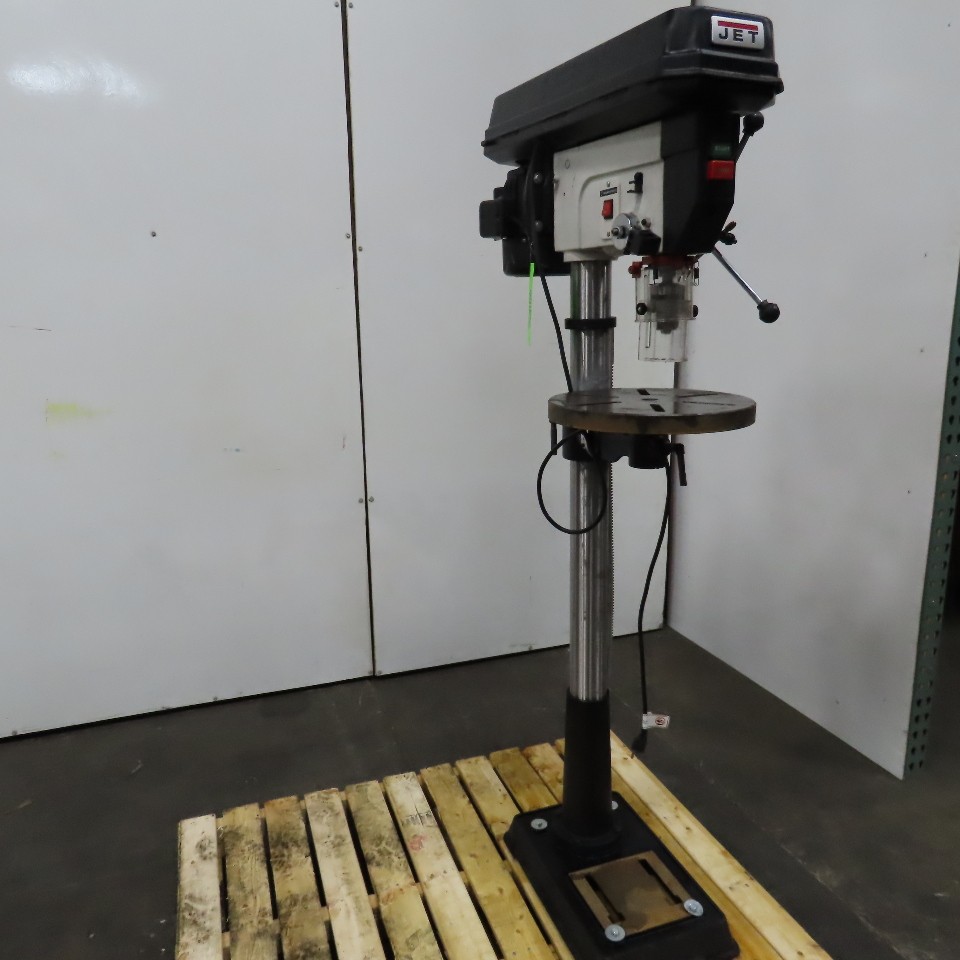
A drill press applies axial feed to a rotating spindle with precision that a handheld drill cannot replicate — the column, table, and quill constrain the bit to a true vertical path, enabling accurate hole location, controlled depth, and the sustained torque needed for drilling steel without the operator absorbing the reaction. For shops drilling metal — as opposed to wood shops where a drill press is primarily a convenience tool — the relevant specs are spindle runout, quill travel, speed range at low RPM, table rigidity, and spindle taper.
This guide evaluates four drill presses from benchtop to professional floor models based on published manufacturer specifications, with emphasis on the requirements of metal drilling rather than wood shop use.
Benchtop vs. Floor Drill Press: The Practical Tradeoffs
Per manufacturer documentation:
| Feature | Benchtop | Floor Model |
|---|---|---|
| Footprint | Small — mounts to workbench | Dedicated floor space required |
| Column height | 12-16” typical | 36-60” typical |
| Table travel | Limited | Full column height range |
| Motor | 1/3–1/2 HP typical | 1/2–3/4 HP typical |
| Rigidity | Lower — deflects under heavy cuts | Higher — better for large drill diameters |
| Price | $100-$400 | $400-$2,000+ |
For metal drilling, column height matters because it determines the maximum workpiece height that can be positioned under the spindle. Floor models also provide more table travel, allowing large parts to be repositioned without removing the workpiece from the table. For shops drilling material heavier than 1/4” steel regularly, a floor model’s added rigidity reduces bit deflection and improves hole quality.
Key Specifications for Metal Drilling
Spindle runout: The eccentricity of the spindle centerline — the amount the spindle wobbles during rotation. Per ASME B94.11M and Machinery’s Handbook, drill press spindle runout directly affects hole size and quality. A runout specification of 0.003” or better is acceptable for general metalworking; precision work requires 0.001” or better. Manufacturer-specified runout at the spindle taper is the most useful comparison point.
Speed range: Metal drilling requires lower RPM than wood drilling. Per machining speed-and-feed reference data, a 1/2” drill bit in mild steel requires approximately 300–600 RPM; a 1/4” bit can run at 1,000–1,500 RPM. Drill presses with a minimum speed above 500–600 RPM cannot be used for large-diameter drilling in steel without burning the bit. Variable speed models or multi-step belt drives with a low-speed range (250–300 RPM minimum) cover the full metal drilling range.
Quill travel: The axial movement of the spindle from fully raised to fully extended. More quill travel reduces the need to reposition the table for through-drilling deep parts. 5” of quill travel is the practical minimum for production metalwork; 6” is preferable.
Spindle taper: Most drill presses use a Morse Taper (MT) spindle that accepts MT-shank drill chucks and boring bars directly. MT2 is standard on mid-size floor models; MT3 on larger production presses. A Jacobs chuck mounted in the MT taper accepts standard drill shanks.
Table: Cast iron tables are rigid and flat to a machining tolerance; stamped steel tables flex under clamping force. For metal drilling where workpiece clamping is required — any drill that could catch will require the work to be clamped — cast iron table construction is the practical requirement.
Top Drill Presses by Specification
WEN 4214 12-Speed Drill Press — Best Budget Benchtop
| Specification | Value |
|---|---|
| Type | Benchtop |
| Swing | 10” |
| Spindle Travel (Quill) | 3-1/8” |
| Speed Range | 580-3,200 RPM (12 speeds) |
| Chuck | 1/2” keyed |
| Table | Cast iron, tilts 45° |
| Motor | 1/2 HP |
| Spindle Taper | MT2 |
| Weight | 54 lbs |
| Warranty | 2 years |
| Price Range | $150-$220 |
Per WEN’s specifications, the 4214 is a 10-swing benchtop drill press with 12 belt-selectable speeds from 580 to 3,200 RPM. The 580 RPM minimum is adequate for steel drilling up to approximately 1/2” diameter. The cast iron table tilts 45° for angle drilling, and the 1/2” keyed chuck handles the full range of standard drill shank sizes. At 54 lbs and benchtop mounting, this is a compact metal-capable drill press suited for a home shop without floor space for a full column model.
Best for: Home shop operators who need drill press accuracy for occasional metal drilling — hole patterns in steel plate, drilling aluminum extrusions, and controlled-depth work in cast iron — without dedicating floor space to a full column press.
Limitation: 3-1/8” quill travel is tight for through-drilling thicker stock without table adjustment. 580 RPM minimum limits large-diameter steel drilling. Benchtop mounting reduces rigidity under heavy cuts.
RIKON 30-140 14” Drill Press — Best Mid-Range Benchtop
| Specification | Value |
|---|---|
| Type | Benchtop |
| Swing | 14” |
| Spindle Travel (Quill) | 4” |
| Speed Range | 250-3,000 RPM (16 speeds) |
| Chuck | 5/8” keyed |
| Table | Cast iron, tilts 45° |
| Motor | 3/4 HP |
| Spindle Taper | MT2 |
| Laser | Yes |
| Weight | 73 lbs |
| Warranty | 5 years |
| Price Range | $280-$380 |
Per RIKON’s product documentation, the 30-140 reaches a minimum speed of 250 RPM — low enough for 3/4” and larger drill bits in steel. The 5/8” chuck capacity and 3/4 HP motor handle larger bits than the WEN. At 14” swing it is a meaningful step up in work envelope. RIKON specifies a 5-year warranty — the longest in this comparison. The laser is not a precision tool for metalwork (thermal drift affects accuracy) but is useful for quick hole location in layout work.
Best for: Home shop metalworkers who need a larger work envelope and low-speed capability than entry benchtop presses offer, without committing to a floor model. The 250 RPM minimum and 5-year warranty are differentiators in the benchtop category.
Limitation: Still a benchtop unit — less rigid than floor models under heavy cuts in steel. Laser feature adds cost but has limited precision value for metalwork.
JET JDP-17MF 17” Floor Drill Press — Best Overall
| Specification | Value |
|---|---|
| Type | Floor |
| Swing | 17” |
| Spindle Travel (Quill) | 6” |
| Speed Range | 170-3,000 RPM (12 speeds) |
| Chuck | 5/8” keyed |
| Table | Cast iron, tilts 45° both directions, rotates 360° |
| Motor | 3/4 HP |
| Spindle Taper | MT3 |
| Depth Stop | Yes |
| Weight | 230 lbs |
| Warranty | 2 years |
| Price Range | $600-$750 |
Per JET’s specifications, the JDP-17MF reaches 170 RPM at its slowest setting — the lowest speed in this comparison, adequate for 1” diameter drilling in mild steel per standard machining speed-and-feed tables. The 6” quill travel handles most through-drilling operations without table repositioning. The MT3 spindle taper accepts MT3-shank chucks and boring tools directly. JET specifies a 360° rotating table with bi-directional 45° tilt, which enables positioning irregular workpieces under the spindle without repositioning the part. At 230 lbs, this is a permanent floor installation.
Best for: Fabricators and machinists who drill metal regularly and need the work envelope, rigidity, and low-speed range of a floor model. The 170 RPM minimum, 6” quill travel, and 17” swing cover the full range of home shop and light commercial metalwork. For related shop setup planning, see the home shop setup cost guide.
Limitation: 230-lb floor installation requires permanent shop space. At $600–$750, it is significantly more expensive than benchtop alternatives.
Powermatic PM2800B Drill Press — Best for Precision Work
| Specification | Value |
|---|---|
| Type | Floor |
| Swing | 15” |
| Spindle Travel (Quill) | 6” |
| Speed Range | 200-3,630 RPM (16 speeds) |
| Chuck | 5/8” keyed |
| Table | Large cast iron, tilts 45°, rotates 360° |
| Motor | 1 HP |
| Spindle Taper | MT3 |
| Spindle Runout | Specified ≤ 0.002” |
| Depth Stop | Precision micrometer stop |
| Weight | 285 lbs |
| Warranty | 5 years |
| Price Range | $1,000-$1,400 |
Per Powermatic’s product documentation, the PM2800B specifies maximum spindle runout of 0.002” — the tightest specification in this comparison, and Powermatic provides it as a published spec rather than leaving runout unspecified as most manufacturers do. The 1 HP motor handles sustained production drilling in steel and aluminum. The micrometer depth stop provides repeatable depth control relevant for blind holes, counterbores, and production part runs. Powermatic’s 5-year warranty reflects confidence in the build quality. For shops where hole location accuracy and surface quality in the bore are priorities rather than just making a hole, the PM2800B’s precision specifications justify the price premium.
Best for: Machinists, toolmakers, and serious home shop operators where dimensional accuracy matters — jig work, fixture drilling, production parts where hole position tolerance is a design requirement. The published runout spec and micrometer depth stop set this apart from competitors.
Limitation: $1,000–$1,400 is a significant investment for a manual drill press; shops needing repeatable CNC positioning should look at a benchtop CNC mill instead. The 15” swing is smaller than the JET at a higher price — the Powermatic premium is for precision, not work envelope size.
Comparison Table
| Model | Type | Swing | Min RPM | Quill Travel | Motor | Runout Spec | Warranty | Price |
|---|---|---|---|---|---|---|---|---|
| WEN 4214 | Benchtop | 10” | 580 | 3-1/8” | 1/2 HP | Not specified | 2 years | $150-$220 |
| RIKON 30-140 | Benchtop | 14” | 250 | 4” | 3/4 HP | Not specified | 5 years | $280-$380 |
| JET JDP-17MF | Floor | 17” | 170 | 6” | 3/4 HP | Not specified | 2 years | $600-$750 |
| Powermatic PM2800B | Floor | 15” | 200 | 6” | 1 HP | ≤ 0.002” | 5 years | $1,000-$1,400 |
Who This Is NOT For
- Buyers who primarily drill wood at high speed. A wood-focused drill press needs high speed (3,000+ RPM) and large tables. The recommendations here are optimized for low-speed metal drilling. A dedicated woodworking drill press with a wider table and higher top speed may serve a wood shop better than a metal-optimized press.
- Shops needing true milling capability. A drill press can be pushed into light milling with an X-Y vise, but the quill bearings are not designed for lateral loads and will fail quickly under sustained milling. A benchtop milling machine or CNC mill is the correct tool for cutting side profiles and slots.
- Production shops with high hole-count volume. Manual drill presses have cycle times limited by manual quill operation. For production drilling of repetitive parts — 50+ holes per day in the same location — a multiple-spindle drill press head, CNC drilling center, or even a simple pneumatic drill fixture provides better throughput.
- Buyers trying to avoid proper workpiece fixturing. A drill press is only as safe as the workpiece clamping. Drilling metal without a clamp, vise, or step block setup is a kickback hazard — a drill bit catching in metal can spin the workpiece with significant force. The machine purchase is incomplete without appropriate workholding.
- On-site structural steel drilling. A stationary drill press requires bringing the workpiece to the machine. For drilling beam flanges, columns, and plate in place, a magnetic drill press mounts directly to the steel and brings the tool to the work.
What You’ll Also Need
- Drill press vise ($40-$120): A swivel-base drill press vise holds square and rectangular stock accurately under the spindle without rotation risk. Required for any production metalwork. Check price on Amazon →
- MT2 or MT3 drill chuck set ($30-$80): A precision drill chuck with 0.001” runout spec outperforms the standard chuck included with most drill presses — the included chuck is often the runout limiting factor. Size matched to the spindle taper (MT2 for benchtop, MT3 for JET/Powermatic). Check price on Amazon →
- High-speed steel drill set ($30-$80): Standard twist drills in a 29-piece or 115-piece HSS set cover the standard fractional range. For steel drilling, HSS cobalt-grade bits (M35 or M42) last significantly longer than standard HSS. Check price on Amazon →
- Cutting oil ($8-$20): Cutting oil extends drill bit life and improves hole quality in steel and cast iron. Per machining references, dry drilling steel is acceptable for occasional use but significantly reduces bit life versus lubricated drilling. Check price on Amazon →
Sources
- WEN 4214 12-Speed Drill Press product specifications (wenproducts.com)
- RIKON 30-140 14” Drill Press product documentation (rikontools.com)
- JET JDP-17MF 17” Floor Drill Press product specifications (jettools.com)
- Powermatic PM2800B Drill Press product documentation (powermatic.com)
- ASME B94.11M — Twist Drills and Straight Shank Core Drills
- Machinery’s Handbook, 30th Edition — Speeds and Feeds for Drilling, Chapter on Drill Presses