Best Miter Saw Stands for Contractors in 2026
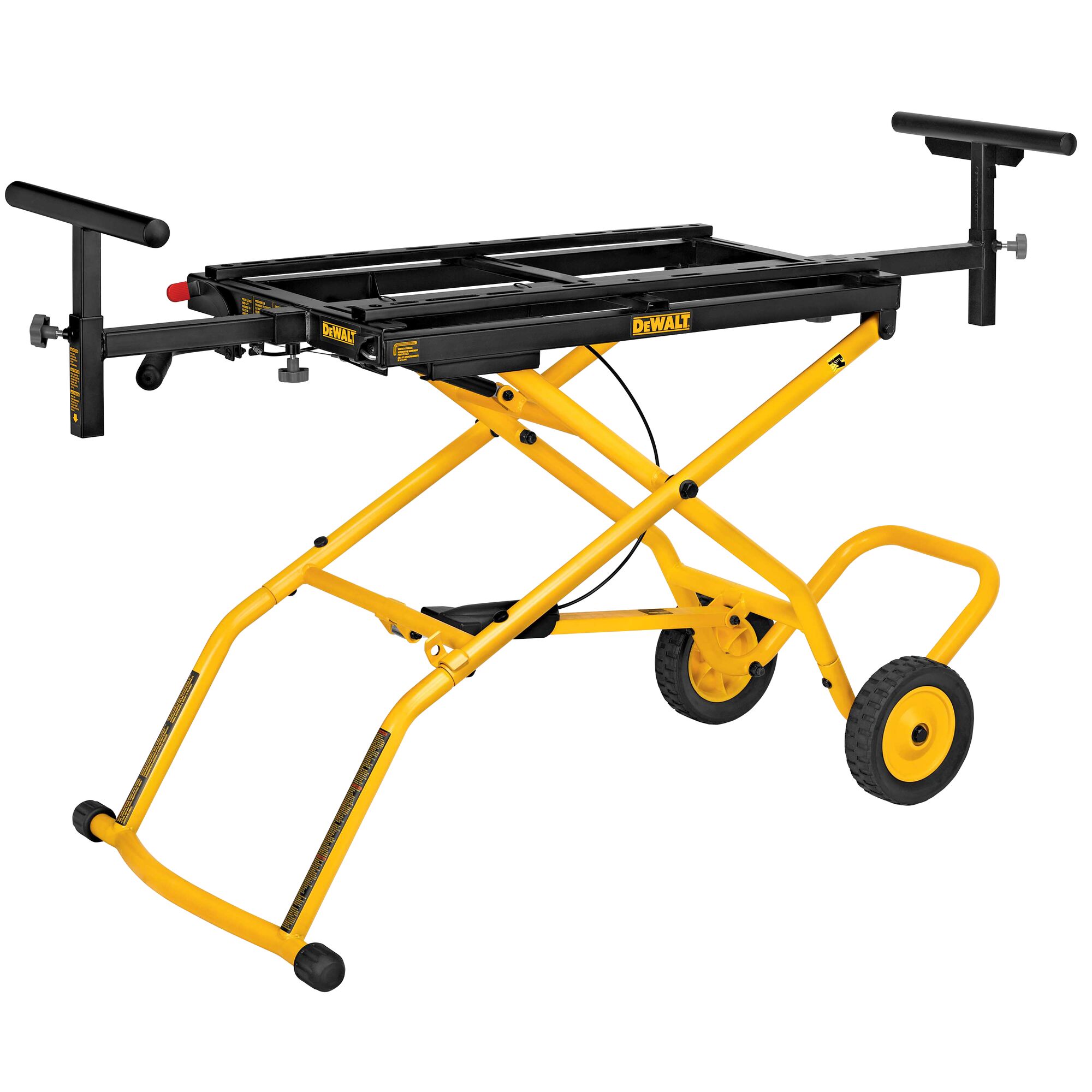
A miter saw without a proper stand is either sitting on the floor or balanced on sawhorses — neither setup is safe, accurate, or efficient. For contractors making hundreds of cuts per day across multiple jobsites, a dedicated miter saw stand directly affects productivity, cut quality, and back health. (Still choosing a saw? See our guide to miter saws for contractors, and note whether a 10- or 12-inch saw suits your cuts — the stand has to carry its weight.) This guide compares portable miter saw stands based on manufacturer specifications, focusing on what matters for professional jobsite use: setup speed, material support reach, weight capacity, and one-person transport.
What Separates a Good Stand from a Bad One
Based on manufacturer specifications and industry standards, the features that matter most on a jobsite:
- Material support reach: How far the extension arms extend to support long stock. Per manufacturer data, top stands provide 8-16 feet of total support span. Anything under 6 feet total forces a second person or additional supports for standard 8-foot lumber
- Weight capacity: The combined weight of the saw plus material. 300 lbs is the working minimum for a 12-inch slider (50-65 lbs) plus dense hardwood or composite decking
- Setup/breakdown speed: Gravity-rise designs unfold in seconds without tools. Scissor-leg designs require manual locking of individual legs. On a jobsite with multiple room-to-room moves per day, this time difference compounds
- Mounting system: Quick-release or universal bolt-on. Quick-release saves minutes per setup. Bolt-on is more secure but slower for contractors who move the saw frequently
- Transport: Total weight, wheel quality, and whether it rolls or carries. Stands over 35 lbs without wheels are a two-person job over rough terrain
Top Miter Saw Stands
DeWalt DWX726 — Best All-Around Value
| Specification | Value |
|---|---|
| Type | Rolling, scissor-leg |
| Weight Capacity | 300 lbs |
| Material Support | Up to 8’ (with extensions) |
| Stand Weight | 32 lbs |
| Height (Working) | 32” |
| Mounting | Universal bolt-on |
| Wheels | Pneumatic (2) |
| Folded Dimensions | 60” x 26” x 7” |
| Warranty | 3 years |
| Price Range | $180-$220 |
According to DeWalt’s specifications, the DWX726 uses wide pneumatic wheels and a leg-lock lever that allows one-person rolling transport across uneven terrain, including gravel, mud, and construction debris. The extension arms feature adjustable end stops and support rollers for feeding long stock. The universal mounting rail accepts most miter saw brands without adapters — per DeWalt’s documentation, the rail system accommodates saws up to 13-3/4 inches deep.
Best for: Contractors who need a reliable, affordable stand that works across multiple saw brands. The 32-lb weight and pneumatic wheels make solo transport practical. This stand has been in production long enough that replacement parts are readily available.
Bosch T4B — Best for Repeated Setup/Breakdown
| Specification | Value |
|---|---|
| Type | Gravity-rise |
| Weight Capacity | 300 lbs |
| Material Support | Up to 16’ (with extensions) |
| Stand Weight | 52 lbs |
| Height (Working) | 34.5” |
| Mounting | Quick-release (tool-free) |
| Wheels | 8” treaded (2) |
| Folded Dimensions | 63” x 27” x 11” |
| Warranty | 1 year |
| Price Range | $300-$380 |
Per Bosch’s documentation, the T4B gravity-rise mechanism allows the entire stand to unfold and lock in a single motion — tip the stand upright and the legs deploy automatically under gravity. No manual leg adjustments or pin locking required. The tool-free quick-release mounting brackets hold the saw securely without bolts and allow sub-30-second saw attachment. The 16-foot material support span is the longest in this comparison, accommodating stock up to roughly 14 feet without secondary supports.
Best for: Trim carpenters and finish contractors who set up and break down multiple times per day. The gravity-rise mechanism eliminates the most frustrating part of stand use — fumbling with leg locks and leveling on uneven floors. The premium price reflects genuine time savings.
Milwaukee 48-08-0561 — Best for Milwaukee Ecosystem
| Specification | Value |
|---|---|
| Type | Rolling, folding |
| Weight Capacity | 300 lbs |
| Material Support | Up to 8’ (with extensions) |
| Stand Weight | 28 lbs |
| Height (Working) | 36” |
| Mounting | Universal bolt-on |
| Wheels | Hard rubber (2) |
| Folded Dimensions | 59” x 25” x 8” |
| Warranty | 5 years |
| Price Range | $190-$250 |
According to Milwaukee’s specifications, the 48-08-0561 is the lightest full-size stand in this comparison at 28 lbs. The folding leg mechanism uses a single release lever for both sides. The taller 36-inch working height reduces bending for operators over 6 feet — per ergonomic guidelines, working height should place the saw table between elbow and hip height. Milwaukee’s 5-year warranty is the longest coverage in the miter saw stand category.
Best for: Contractors already invested in the Milwaukee ecosystem who value the extended warranty. The lighter weight is a meaningful advantage for solo operators loading and unloading from trucks daily.
ToughBuilt C700 — Best Budget Option
| Specification | Value |
|---|---|
| Type | Rolling, scissor-leg |
| Weight Capacity | 400 lbs |
| Material Support | Up to 8’ (with extensions) |
| Stand Weight | 33 lbs |
| Height (Working) | 34” |
| Mounting | Universal bolt-on |
| Wheels | Hard rubber (2) |
| Folded Dimensions | 62” x 26” x 8” |
| Warranty | Limited lifetime |
| Price Range | $150-$190 |
Per ToughBuilt’s product data, the C700 carries the highest weight capacity in this comparison at 400 lbs — 100 lbs above the standard 300-lb rating of competing stands. The steel construction uses reinforced leg joints designed for repeated folding and unfolding. Extension arms feature adjustable roller supports and flip-up end stops. ToughBuilt offers a limited lifetime warranty, though coverage terms vary by component.
Best for: Contractors working with heavy saws or dense material (hardwood, composite lumber, steel-stud framing) where the extra 100 lbs of capacity provides margin. The sub-$200 price point makes this the entry point for a quality jobsite stand.
Ridgid AC9946 — Best Material Support System
| Specification | Value |
|---|---|
| Type | Rolling, folding |
| Weight Capacity | 300 lbs |
| Material Support | Up to 8’ (with extensions) |
| Stand Weight | 35 lbs |
| Height (Working) | 33.5” |
| Mounting | Universal bolt-on with adapters |
| Wheels | Hard rubber (2) |
| Folded Dimensions | 61” x 27” x 9” |
| Warranty | Lifetime Service Agreement (requires registration) |
| Price Range | $180-$230 |
According to Ridgid’s specifications, the AC9946 features steel extension arms with adjustable material supports that lock at any position along the arm. The mounting system includes adapter brackets for compatibility across major saw brands. Ridgid’s Lifetime Service Agreement — available through Home Depot registration — covers free parts and service for the life of the tool, though terms require original purchase documentation.
Best for: Contractors who buy through Home Depot and value long-term warranty coverage. The adjustable material support locks provide precise stock positioning for repetitive cuts at consistent lengths.
Comparison Summary
| Model | Weight | Capacity | Max Support | Setup Type | Warranty | Price |
|---|---|---|---|---|---|---|
| DeWalt DWX726 | 32 lbs | 300 lbs | 8’ | Scissor-leg | 3 years | $180-$220 |
| Bosch T4B | 52 lbs | 300 lbs | 16’ | Gravity-rise | 1 year | $300-$380 |
| Milwaukee 48-08-0561 | 28 lbs | 300 lbs | 8’ | Folding | 5 years | $190-$250 |
| ToughBuilt C700 | 33 lbs | 400 lbs | 8’ | Scissor-leg | Limited lifetime | $150-$190 |
| Ridgid AC9946 | 35 lbs | 300 lbs | 8’ | Folding | LSA (lifetime) | $180-$230 |
Gravity-Rise vs. Scissor-Leg: The Core Decision
The two dominant stand designs serve different workflows:
Gravity-rise stands (Bosch T4B) unfold automatically when tilted upright. Per manufacturer data, setup takes under 10 seconds with no manual leg adjustments. The trade-off is weight — gravity-rise mechanisms require heavier steel construction, pushing the Bosch to 52 lbs. This design pays for itself when setup and breakdown happen multiple times daily: interior trim work, room-to-room remodel moves, multi-unit residential projects.
Scissor-leg and folding stands (DeWalt, Milwaukee, ToughBuilt, Ridgid) require manual leg deployment, typically with pins or levers. Setup takes 30-60 seconds. They weigh 28-35 lbs — meaningful savings when loading and unloading from a truck bed. These designs make sense for contractors who set up once per day at a fixed location: new construction framing, deck builds, exterior trim. For a direct head-to-head of the two most-compared stands, see Bosch T4B vs DeWalt DWX726. For pairing recommendations on saws, circular saws for contractors cover the ripping and rough-cutting side of the equation.
Neither design is universally better. The decision depends on how many times per day the stand gets moved.
Best Miter Saw Stand by Trade
Per contractor workflow patterns and jobsite mobility data, miter saw stand priorities differ significantly by trade:
Trim carpenters and finish contractors: Production trim work — door casing, base molding, crown molding, closet build-outs — involves moving the saw multiple times per day across rooms, floors, and units. For a trim carpenter completing 3-4 rooms per day, the stand gets set up and broken down 10-15 times. Every second saved per cycle adds up. The Bosch T4B gravity-rise design pays its $300-$380 premium back quickly: one-motion deployment, tool-free saw attachment, and 16-foot material support for long crown stock without secondary roller stands. The weight penalty (52 lbs) is acceptable — the Bosch rolls, so truck-to-site transport is manageable for one person.
Framers and rough carpenters: Production framing involves one fixed setup location per day — a saw station at the center of the slab where pre-cuts happen all morning before layout begins. The stand gets set up once and stays put. Gravity-rise speed is irrelevant; total cost and reliability matter. The DeWalt DWX726 or ToughBuilt C700 handle framing crew use at $150-$220 — scissor-leg setup takes 60 seconds once per day, and the wide pneumatic wheels (DeWalt) roll over framing debris, mud, and plywood scraps without problem. The ToughBuilt’s 400-lb capacity handles the heaviest LVL trim packages that framing crews sometimes cut at the saw station.
Deck builders: Deck construction involves a fixed saw station for the day, typically outdoors on an uneven site (sloped grade, gravel, wet ground). Terrain mobility is the priority — the saw needs to roll from the truck to the work area without sinking or tipping. The DeWalt DWX726 with pneumatic wheels handles outdoor terrain better than hard rubber wheel alternatives. Weight capacity matters too: composite decking boards and pressure-treated lumber are heavier per linear foot than interior trim stock.
Remodelers: Remodelers use a miter saw across multiple trade scopes — rough framing, subfloor cut-outs, cabinet installation, and finish trim — within the same job. The stand moves from floor to floor and room to room, often through doorways with a saw attached. The Milwaukee 48-08-0561 at 28 lbs is the lightest option in the comparison, meaningful when navigating stairs with the saw attached. The 36-inch working height reduces stooping for operators of average height in spaces where the floor elevation changes.
Commercial trim and millwork crews: Commercial interior finish packages — hotel lobbies, office buildouts, multifamily common areas — involve large crews where multiple saws run simultaneously, with stands rolling between layout stations as the day progresses. Universal mounting compatibility is critical: the crew may run DeWalt saws on Milwaukee stands or mix brands as the job grows. The DeWalt DWX726 universal rail, the ToughBuilt C700, and the Ridgid AC9946 all accept most saw brands without adapters.
Spring Construction Season: When Miter Saw Stand Demand Peaks
Per contractor scheduling and lumber yard delivery patterns, miter saw stand purchases and replacement concentrate in spring:
March–May new construction trim packages. New homes that framed in fall and winter reach the interior finish stage in spring — door and window casing, base molding, stair treads, closet systems. Production trim crews on new construction sites run one saw per 2-3 workers, with stands moving constantly across units. Spring is when worn-out stands get replaced and new crews buy their first stand.
April–June deck and exterior trim season. Deck framing and decking installation drives significant miter saw use for fascia, post caps, railing cuts, and stair treads. The outdoor environment — wet ground, uneven grade, UV exposure — tests stand durability. Pneumatic wheels on the DeWalt DWX726 make sense for deck crews moving across rough terrain.
Spring remodel surge (March–June). Kitchen and bath remodels peak in spring as homeowners start projects after winter. Trim and millwork installation follows demo, which concentrates finish miter saw use in April and May. Remodelers buying or replacing stands compete with new construction crews for the same SKUs — spring is when stand availability tightens at major retailers.
Frequently Asked Questions
What is the best miter saw stand for contractors?
Per manufacturer specifications, the Bosch T4B gravity-rise stand is the best option for trim carpenters and finish contractors who move the saw multiple times per day — one-motion deployment, tool-free saw attachment, 16-foot material support. For framers and deck crews who set up once per day, the DeWalt DWX726 at $180–$220 delivers comparable capacity with pneumatic wheels at significantly lower cost. The decision comes down to how many times per day the stand moves.
What is gravity-rise on a miter saw stand?
Per Bosch’s product documentation, a gravity-rise stand deploys automatically when tilted upright — the legs unfold and lock under their own weight in a single motion with no manual pin-setting. Scissor-leg and folding stands require manually deploying and locking each leg, adding 30–60 seconds per setup. The tradeoff is weight: the Bosch T4B reaches 52 lbs versus 28–35 lbs for folding alternatives. For contractors who move the saw 10+ times per day, the time savings justify the weight penalty.
Can I use any miter saw on any stand?
Most portable miter saw stands use a universal mounting rail that accepts saws from DeWalt, Milwaukee, Makita, Bosch, and other major brands without adapters. Per manufacturer documentation, the DeWalt DWX726 rail accepts saws up to 13-3/4 inches deep. The Bosch T4B uses quick-release brackets compatible with most 10-inch and 12-inch saws. Some older models require aftermarket adapter brackets. Verify your specific saw model against the stand manufacturer’s compatibility list before purchase.
How much weight capacity do I need?
Per load calculation guidelines, the stand supports saw weight plus material weight simultaneously. A 12-inch sliding compound miter saw weighs 45–65 lbs; a 16-foot length of 2x10 pressure-treated lumber weighs approximately 50 lbs — totaling well under the 300-lb capacity standard on all five stands reviewed here. The ToughBuilt C700’s 400-lb rating adds practical margin for dense hardwood or composite decking where individual boards can exceed 30 lbs per 16-foot length.
What miter saw stand works best for trim carpentry?
For trim carpentry — door casing, base molding, crown molding — the Bosch T4B is the standard per contractor workflow data. Trim carpenters move the saw 10–20 times per day. Each gravity-rise cycle takes under 30 seconds versus 60–90 seconds for scissor-leg stands. Over a full production day, that’s 10–20 minutes saved. The T4B’s 16-foot support span accommodates long crown runs without secondary roller stands. The $300–$380 price recovers through time savings within a few months of production trim work.
Who This Is NOT For
- Shop-only use. A permanent workbench or dedicated miter saw station built from 2x4s and plywood is more stable, cheaper, and customizable than any portable stand. Portable stands sacrifice rigidity for mobility — if mobility is unnecessary, skip the compromise
- Benchtop or compact miter saws under 25 lbs. Small 7-1/4” or 10-inch non-sliding saws can sit on a folding table or Workmate-style bench. A $150-$380 stand is overbuilt for a saw in that weight class
- Occasional weekend projects. If the miter saw comes out fewer than twice per month, a pair of sawhorses with a plywood top ($40 total) provides adequate support without the storage footprint of a dedicated stand
- Tight truck or van storage. Even folded, these stands occupy 5-7 cubic feet. Contractors with heavily loaded service vans may find that a wall-mounted fold-down bracket in the van is more practical than a floor-standing portable stand
What You’ll Also Need
- Miter saw blade — 10 inch, 60 tooth crosscut — The blade included with most miter saws is a general-purpose 40T that leaves rough edges on finish trim. A 60-tooth crosscut blade produces noticeably cleaner cuts on oak, pine trim, and molding without changing tools. Search: “miter saw blade 10 inch 60 tooth,” “crosscut miter saw blade fine finish.” Check price on Amazon →
- Stop block fence system — A repeatable stop block clamps to the saw stand fence and allows dozens of identical-length cuts without measuring each piece. Essential for production framing, stair stringers, and finish trim where cut consistency across large quantities of pieces matters. Search: “miter saw stop block fence,” “miter saw stop block system.” Check price on Amazon →
- Dust bag replacement — miter saw — Original dust bags degrade over time, losing their ability to capture fine particles. A replacement bag that fits standard 2-1/2 inch vacuum ports extends dust collection effectiveness without upgrading to a dedicated shop vac. Search: “miter saw dust bag replacement,” “miter saw dust collection bag universal.” Check price on Amazon →
- Roller stand — adjustable infeed/outfeed — A single roller stand positioned at the outfeed end supports long stock for solo operators, preventing boards from tipping or deflecting the saw during long cross-cuts. Adjustable height matches any saw stand working height from 30-36 inches. Search: “roller stand adjustable height infeed outfeed,” “adjustable roller stand support.” Check price on Amazon →
- Miter saw extension wings — Add-on extension wings bolt to the saw stand to increase material support length without upgrading to a longer stand. Most stand-specific extension arms extend support by 24-36 inches per side for handling 10-12 foot trim pieces. Search: “miter saw extension wing,” “miter saw stand extension arm attachment.” Check price on Amazon →
- Board support roller — bench top — A bench-mounted roller ball support handles infeed material weight at the same height as the saw table, eliminating the board-sag that causes binding and inaccurate cuts on heavy stock. Ball rollers work regardless of material orientation. Search: “board support roller bench top adjustable,” “roller ball work support stand.” Check price on Amazon →
Sources
- DeWalt DWX726 specifications (dewalt.com)
- Bosch T4B gravity-rise stand documentation (boschtools.com)
- Milwaukee 48-08-0561 specifications (milwaukeetool.com)
- ToughBuilt C700 product data (toughbuilt.com)
- Ridgid AC9946 specifications and Lifetime Service Agreement terms (ridgid.com)
- OSHA workplace ergonomics guidelines for standing work surface height