Best Hammer Drills for Concrete in 2026
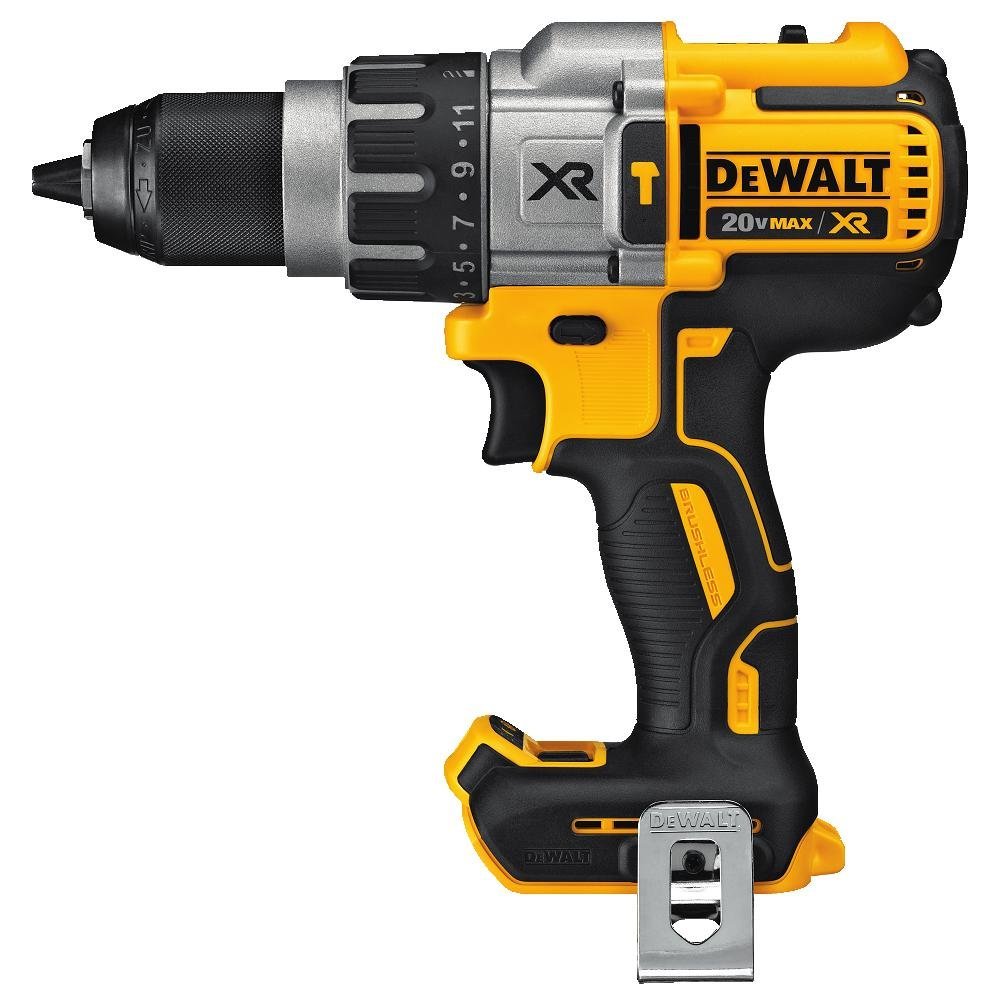
A hammer drill is a standard drill with a percussion mechanism that adds forward hammering blows while the bit rotates. That concussive action fractures concrete and masonry ahead of the cutting edge, allowing standard drill bits to penetrate materials that would stall a conventional drill. For electricians running conduit anchors, plumbers setting pipe hangers, and contractors installing ledger boards, a hammer drill handles the daily masonry tasks that come with every commercial or residential job.
This guide compares four 18V/20V cordless hammer drills based on published manufacturer specifications, focusing on blows per minute (BPM), torque output, and the practical differences between models at similar price points.
Hammer Drill vs. Rotary Hammer: Which Do You Need?
Per Bosch’s application guide and industry references, the distinction matters:
| Feature | Hammer Drill | Rotary Hammer |
|---|---|---|
| Mechanism | Chuck with percussion cam | Piston-driven SDS system |
| Bit system | Standard round/hex shank | SDS-Plus or SDS-Max |
| Max hole in concrete | ~5/8” diameter efficiently | 1”+ with dedicated bits |
| Weight | 4-6 lbs | 5-12 lbs |
| Best use | Anchors, small holes, light masonry | Core drilling, demolition, production masonry |
| Price | $100-$300 | $150-$500+ |
A hammer drill with carbide-tipped masonry bits handles anchor bolts, conduit straps, and ¼”–½” holes in concrete reliably. For 3/4” holes and above, or for production drilling in hard concrete, a dedicated rotary hammer is the more efficient tool.
Key Specs for Masonry Performance
Blows Per Minute (BPM): The hammering rate while drilling. Higher BPM produces faster penetration in hard materials. Most professional cordless hammer drills deliver 30,000–60,000 BPM at full speed.
Torque output: Measured in inch-pounds (in-lbs) or Newton-meters (Nm). Relevant for driving large fasteners and twist drilling in wood and steel — less critical for masonry mode, where BPM dominates.
Clutch settings: A multi-setting electronic or mechanical clutch lets the operator dial in torque for driving fasteners without stripping. Essential if the hammer drill doubles as a primary driver on the job.
Chuck size: ½” chucks accept larger bit shanks than ⅜” chucks. For masonry bits up to ½” diameter, either works. Above ½”, a rotary hammer is the appropriate tool regardless.
Top Hammer Drills by Specification
DeWalt DCD996B — Best Overall
| Specification | Value |
|---|---|
| Voltage | 20V MAX |
| Motor | Brushless (FLEXVOLT ADVANTAGE compatible) |
| Max Torque | 1,350 in-lbs |
| Max BPM | 38,250 |
| Speeds | 3 (0-450 / 0-1,300 / 0-2,000 RPM) |
| Chuck | ½” all-metal ratcheting |
| Clutch Settings | 15 + drill + hammer |
| Weight (bare) | 4.2 lbs |
| Warranty | 3 years |
| Price Range | $160-$200 (bare tool) |
Per DeWalt’s specifications, the DCD996B is a three-speed hammer drill with FLEXVOLT ADVANTAGE capability — when paired with a 60V MAX FLEXVOLT battery, the motor draws increased power for demanding applications. The three-speed transmission is a meaningful differentiator: Speed 2 (1,300 RPM) is optimized for self-feeding bits and hole saws, which operate too slowly on Speed 2 of most two-speed drills. The all-metal ratcheting chuck resists loosening under hammering loads better than plastic-sleeve alternatives.
Best for: Contractors who need both a high-performance drill and a capable hammer drill in one tool. The three-speed gearbox handles the widest range of tasks — from precision driving to heavy masonry work.
Limitation: BPM (38,250) is lower than Milwaukee at the same price. In side-by-side masonry comparisons, Milwaukee’s higher BPM produces faster penetration in hard concrete.
Milwaukee 2904-20 — Fastest Masonry Penetration
| Specification | Value |
|---|---|
| Voltage | 18V (M18) |
| Motor | Brushless (POWERSTATE) |
| Max Torque | 1,200 in-lbs |
| Max BPM | 41,650 |
| Speeds | 2 (0-550 / 0-2,000 RPM) |
| Chuck | ½” all-metal ratcheting |
| Clutch Settings | 15 + drill + hammer |
| Weight (bare) | 4.0 lbs |
| Warranty | 5 years |
| Price Range | $150-$190 (bare tool) |
According to Milwaukee’s specifications, the 2904-20 delivers 41,650 BPM — the highest in this comparison — which translates to faster concrete penetration when drilling anchor bolt holes and conduit hangers. Milwaukee’s REDLINK PLUS system monitors temperature and load, adjusting power delivery to prevent damage. The 5-year tool warranty is the longest in this category.
Best for: Electricians and plumbers who drill concrete repeatedly throughout the day. The high BPM is the decisive spec for masonry speed, and the 5-year warranty reflects Milwaukee’s confidence in the platform.
Limitation: Two speeds vs. DeWalt’s three. For applications requiring a mid-speed range (self-feeding bits, hole saws in steel), the two-speed gearbox forces a compromise.
Makita XPH12Z — Best for All-Day Use
| Specification | Value |
|---|---|
| Voltage | 18V (LXT) |
| Motor | Brushless |
| Max Torque | 1,090 in-lbs |
| Max BPM | 30,000 |
| Speeds | 2 (0-550 / 0-2,100 RPM) |
| Chuck | ½” all-metal single-sleeve |
| Clutch Settings | 21 + drill + hammer |
| Weight (bare) | 3.5 lbs |
| Warranty | 3 years |
| Price Range | $130-$165 (bare tool) |
Per Makita’s specifications, the XPH12Z is the lightest hammer drill in this comparison at 3.5 lbs — a 0.5-lb advantage that matters when drilling overhead anchor points for hours. Makita specifies 21 clutch settings — the most in this group — providing finer torque control for delicate fastening applications. The tradeoff is BPM: 30,000 is the lowest in this comparison, meaning slower penetration in hard concrete.
Best for: Contractors whose work involves both masonry drilling and high-volume fastening in wood and metal, where the fine clutch resolution and lighter weight have daily value. Makita LXT platform users.
Limitation: Lowest BPM (30,000) in this comparison makes it the slowest for pure masonry penetration. Not the right choice for contractors who drill concrete as a primary daily task.
Bosch GSB18V-975CB — Best Electronics Package
| Specification | Value |
|---|---|
| Voltage | 18V (CORE18V) |
| Motor | Brushless (EC) |
| Max Torque | 1,330 in-lbs |
| Max BPM | 32,000 |
| Speeds | 2 (0-550 / 0-2,100 RPM) |
| Chuck | ½” all-metal |
| Clutch Settings | 20 + drill + hammer |
| Weight (bare) | 3.5 lbs |
| Warranty | 3 years |
| Price Range | $140-$180 (bare tool) |
Per Bosch’s product documentation, the GSB18V-975CB includes KickBack Control — an inertial sensor that detects binding and shuts down the motor in milliseconds to prevent wrist injury when large-diameter bits catch. This is a genuine safety feature with measurable value for operators drilling large holes in dense materials. The Bosch 18V CORE18V ecosystem is smaller than Milwaukee or DeWalt (approximately 75+ tools) but includes competitive individual tools.
Best for: Contractors who drill large-diameter holes in hard materials where binding is a risk. The KickBack Control system is the most protective safety feature in this class.
Limitation: Smallest battery ecosystem in this comparison at 75+ tools. Contractors already committed to Milwaukee or DeWalt have little reason to add a second platform.
Comparison Table
| Model | Max Torque | Max BPM | Speeds | Weight | Warranty | Price |
|---|---|---|---|---|---|---|
| DeWalt DCD996B | 1,350 in-lbs | 38,250 | 3 | 4.2 lbs | 3 years | $160-$200 |
| Milwaukee 2904-20 | 1,200 in-lbs | 41,650 | 2 | 4.0 lbs | 5 years | $150-$190 |
| Makita XPH12Z | 1,090 in-lbs | 30,000 | 2 | 3.5 lbs | 3 years | $130-$165 |
| Bosch GSB18V-975CB | 1,330 in-lbs | 32,000 | 2 | 3.5 lbs | 3 years | $140-$180 |
Best Hammer Drill by Trade
Different trades use hammer drills differently. Here’s how the specs map to real work environments:
Electricians (conduit anchors, panel mounting, EMT straps): The Milwaukee 2904-20. Electrical rough-in involves drilling dozens of 1/4”–3/8” anchor holes in concrete and block throughout a day — conduit hangers, panel anchor bolts, junction box mounts. The 41,650 BPM is the decisive spec here: faster penetration per hole compounds across a full day. The 5-year warranty holds up across the heavy daily use common to commercial electrical work.
Plumbers (pipe hanger anchors, sleeve anchors in concrete decks): The DeWalt DCD996B or Milwaukee 2904-20. Plumbing rough-in requires drilling through concrete decks for sleeve anchors and setting pipe hanger Tapcon screws in block walls. The DeWalt’s three-speed gearbox is useful for the variety of tasks plumbers run through a single tool — masonry in hammer mode, self-feeding bits in Speed 2, standard driving in Speed 1. If speed-in-masonry is the priority, Milwaukee’s higher BPM wins.
General contractors (ledger boards, post bases, anchor bolts): The DeWalt DCD996B. Ledger board installation — setting anchor bolts into foundation walls or concrete block for deck framing — is one of the highest-volume hammer drill tasks in residential construction. DeWalt’s three-speed transmission and FLEXVOLT ADVANTAGE compatibility make the DCD996B the most versatile tool for contractors who switch between tasks throughout the day.
Remodelers (working in existing structures, cramped spaces): The Bosch GSB18V-975CB. Remodeling work often involves drilling in tight or awkward positions — behind existing framing, in finished basements, overhead into concrete ceilings. The Bosch’s KickBack Control is most valuable here: when a bit catches in unexpected aggregate or rebar, the inertial shutoff prevents the violent torque reaction that injures wrists in confined spaces where bracing is difficult.
Makita LXT platform users: The Makita XPH12Z. If the job site is already standardized on Makita 18V LXT batteries, the XPH12Z integrates without adding a second charging ecosystem. The 21-clutch setting range and 3.5 lb weight are genuine advantages for operators whose work is split between masonry drilling and high-volume fastening in wood framing.
Spring Construction Season: When Hammer Drill Demand Peaks
Hammer drill search interest follows a predictable seasonal pattern that mirrors construction activity. Demand accelerates in March and April as exterior work resumes — the same cycle that drives lumber, concrete, and fastener sales.
The tasks driving spring hammer drill demand:
Deck ledger board installation. Ledger boards require anchor bolts set into the house rim joist or foundation wall at 16” intervals. In homes built on concrete block or poured foundations, this means drilling 1/2” holes in concrete — a task that exceeds what a standard drill handles. Per ICC deck construction guidelines, ledger attachment requires through-bolts or approved structural fasteners set into concrete with specific embedment depths, making a capable hammer drill essential.
Fence post anchor drilling. Post anchors for wood and vinyl fencing require Tapcon screws or sleeve anchors set into concrete footings or paved surfaces. A 3/16” or 1/4” carbide bit in hammer mode handles this quickly; a standard drill on masonry bits works poorly and wears bits rapidly.
HVAC condensing unit pad anchors. Spring AC season installation involves anchoring condensing unit pads with concrete screws. Residential HVAC installers typically drill 8–12 anchor holes per installation.
Addition and accessory structure foundations. Shed kits, pergolas, and garage additions require anchor bolt installation in new concrete pours or existing slabs — another high-BPM application where the Milwaukee or DeWalt’s performance edge over entry-level hammer drills is most apparent.
For contractors and trades ramping up for spring volume, this is the period where a hammer drill at the capacity ceiling of what the work requires pays for itself quickly in time saved per job.
Who This Is NOT For
- Buyers drilling holes larger than 5/8” in concrete regularly. A hammer drill maxes out at approximately 5/8” in concrete with carbide bits before efficiency drops significantly. For 3/4” and larger holes — anchor bolts in foundations, sleeve anchors in structural concrete — a dedicated rotary hammer with SDS-Plus bits is the correct tool.
- Buyers who only need standard drilling and driving. If masonry work represents less than 10% of your tasks, the percussion mechanism adds weight and cost for capability you rarely use. A standard brushless drill like the Milwaukee M18 FUEL handles wood and metal drilling without the added complexity.
- Tile and stone drilling. Hammer mode will crack tile. Drilling ceramic or porcelain requires a diamond-tipped bit in a standard drill (hammer mode off) at low speed with water cooling.
What You’ll Also Need
- Bosch HC2167 Carbide-Tipped Hammer Drill Bit Set (7-piece) ($25-$40): SDS-style carbide bits cover the common anchor hole diameters (3/16” to 1/2”) — standard twist bits will not penetrate concrete regardless of BPM. Check price on Amazon →
- Tapcon 1/4” x 2-3/4” Concrete Screws (75-pack) ($20-$35): Tapcon is the industry standard for anchoring into concrete and block — paired with the correct carbide bit (included with Tapcon), these are the fastener most contractors reach for first. Check price on Amazon →
- Klein Tools 6-in-1 Screwdriver ($12-$18): A combination screwdriver rounds out the anchor-setting process — Tapcon hex heads require a nut driver that most multi-bits cover in a combination driver format. Check price on Amazon →
Sources
- DeWalt DCD996B product specifications (dewalt.com)
- Milwaukee 2904-20 M18 FUEL product documentation (milwaukeetool.com)
- Makita XPH12Z 18V LXT specifications (makitatools.com)
- Bosch GSB18V-975CB product documentation (boschtools.com)
- Bosch Power Tools — Hammer Drill vs. Rotary Hammer Application Guide
- ITW Ramset/Red Head — anchor selection and drilling guide