Best Belt Sanders in 2026
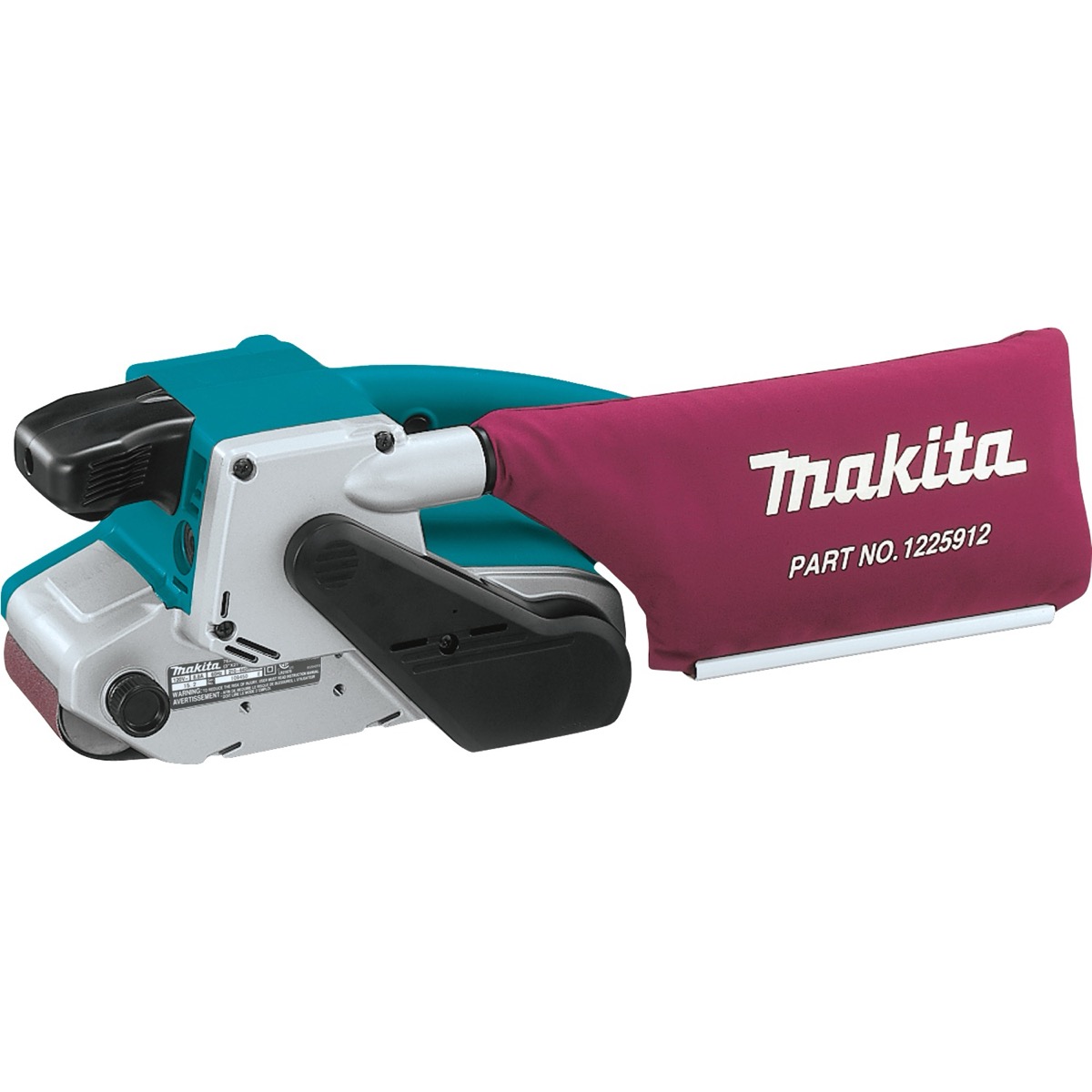
A belt sander removes material faster than any other portable sander. Where a random orbital sander finishes surfaces, a belt sander flattens them — leveling glue joints, removing mill marks from rough lumber, stripping paint and finish, and knocking down high spots before final sanding. For contractors doing floor prep, cabinet installation, and door fitting, a belt sander is the tool that makes the work that precedes finishing go faster. In a woodworking shop it pairs with a wood router for edge profiling before the final finishing passes.
This guide compares four belt sanders based on published manufacturer specifications, focusing on belt dimensions, feet per minute (FPM), tracking adjustment, and dust collection.
Belt Sander Sizes: 3x18, 3x21, 4x24
Belt sanders are categorized by the belt they use (width x length in inches). Per manufacturer application guides:
| Belt Size | Typical Use | Aggressiveness | Weight |
|---|---|---|---|
| 3x18” | Light stock removal, tight spaces | Moderate | 6-7 lbs |
| 3x21” | General purpose, most common | Moderate-High | 7-9 lbs |
| 4x24” | Heavy stock removal, wide surfaces | High | 10-13 lbs |
The 3x21” format is the professional standard for most contractors. It handles wide enough coverage to work efficiently on doors, floors, and flat panels while remaining maneuverable in tighter spots than a 4x24” machine. Belt sanders in the 4x24” format remove material faster on large surfaces but are significantly heavier and more aggressive — requiring more skill to avoid gouging.
Key Specifications
Feet per minute (FPM): Belt surface speed. Higher FPM removes material faster but also increases the risk of burning on hardwoods if the sander is paused. Variable speed allows dialing down for fine work and soft materials.
Tracking adjustment: A knob or lever that shifts the belt left or right to keep it centered on the platen. Per tool reviews and manufacturer documentation, consistent tracking adjustment prevents the belt from riding off the edge of the platen and tearing prematurely. Front-mounted adjusters are easier to operate mid-cut than side-mounted ones.
Dust collection: Belt sanders produce high volumes of coarse dust. Per 3M’s abrasives guide and OSHA woodworking standards, effective dust collection is critical for health and visibility. Bag-based systems capture a percentage; direct vacuum connection captures significantly more.
Platen material: Graphite-coated or cork platens reduce friction between the belt and platen, extending belt life and reducing heat. Steel platens are less expensive but wear belts faster.
Top Belt Sanders by Specification
Makita 9903 — Best Overall
| Specification | Value |
|---|---|
| Belt Size | 3” x 21” |
| Motor | 8.8 Amp |
| Belt Speed | 690-1,640 FPM (variable) |
| Tracking Adjustment | Front knob |
| Platen | Graphite-coated |
| Dust Collection | Bag + vacuum port |
| Weight | 9.0 lbs |
| Warranty | 1 year |
| Price Range | $120-$160 |
Per Makita’s specifications, the 9903 delivers variable belt speed from 690 to 1,640 FPM — allowing slow, controlled passes on fine materials and full-speed passes for aggressive stock removal. The graphite-coated platen reduces friction and belt heat. Makita specifies a front-mounted tracking knob, which allows belt adjustment without removing hands from the tool during operation. The 8.8-amp motor is the most powerful in the 3x21” category in this comparison.
Best for: Contractors and woodworkers who need variable speed for working across multiple material types — hardwood floors, softwood doors, MDF, and painted surfaces all benefit from speed adjustment. The graphite platen extends belt life, reducing consumable cost over time.
Limitation: At 9.0 lbs, the heaviest 3x21” sander in this comparison. For extended overhead or vertical sanding, the weight becomes a fatigue factor.
Porter-Cable 352VS — Best Mid-Range Value
| Specification | Value |
|---|---|
| Belt Size | 3” x 21” |
| Motor | 8.0 Amp |
| Belt Speed | 670-1,400 FPM (variable) |
| Tracking Adjustment | Side knob |
| Platen | Standard |
| Dust Collection | Bag + vacuum port |
| Weight | 7.9 lbs |
| Warranty | 2 years |
| Price Range | $80-$110 |
Per Porter-Cable’s product documentation, the 352VS provides variable speed from 670 to 1,400 FPM with a 2-year warranty — the longest in this comparison for the price category. The side-mounted tracking knob requires more deliberate adjustment compared to front-mounted alternatives, but the lighter 7.9-lb weight compensates with reduced fatigue. Porter-Cable’s belt sander line has a long history in the contractor market, and belts and bags are widely available as service parts.
Best for: Contractors who need a proven variable-speed belt sander without paying the Makita premium. The 2-year warranty provides more coverage than most competitors at this price.
Limitation: Lower max FPM (1,400) than the Makita (1,640) limits aggressive material removal. Side-mounted tracking adjustment is less ergonomic during operation.
WEN 6321 — Best Budget Option
| Specification | Value |
|---|---|
| Belt Size | 3” x 21” |
| Motor | 7.0 Amp |
| Belt Speed | 820-1,640 FPM (variable) |
| Tracking Adjustment | Side knob |
| Platen | Standard |
| Dust Collection | Bag |
| Weight | 7.9 lbs |
| Warranty | 2 years |
| Price Range | $60-$80 |
Per WEN’s product specifications, the 6321 offers variable speed and the same max FPM (1,640) as the Makita at nearly half the price. WEN specifies a 7.0-amp motor — less powerful than the Makita or Porter-Cable — and a bag-only dust collection system without a direct vacuum port. WEN includes two sanding belts with purchase. The 2-year warranty is competitive for the price tier.
Best for: Occasional users and budget-conscious buyers who need belt sander capability without full professional tool investment. For light duty — refinishing furniture, fitting a door, occasional floor prep — the WEN 6321 delivers adequate performance.
Limitation: No vacuum port limits dust collection to the included bag, which captures less than a direct vacuum connection. Lower amperage motor shows fatigue under sustained heavy cuts in hardwood. Not rated for professional daily use.
Bosch 1274DVS — Best for Heavy Stock Removal
| Specification | Value |
|---|---|
| Belt Size | 4” x 24” |
| Motor | 8.5 Amp |
| Belt Speed | 820-1,640 FPM (variable) |
| Tracking Adjustment | Front knob |
| Platen | Standard |
| Dust Collection | Bag + vacuum port |
| Weight | 13.3 lbs |
| Warranty | 1 year |
| Price Range | $160-$200 |
Per Bosch’s product documentation, the 1274DVS uses a 4x24” belt — the widest and longest in this comparison — covering significantly more surface area per pass than 3x21” machines. This belt size is appropriate when flattening glued-up panels, leveling subfloor transitions, or removing decades of finish from wide hardwood floors. The variable speed and front-mounted tracking knob match the Makita in ergonomics. At 13.3 lbs, the 4x24” format is a two-handed, planted-stance tool — not appropriate for delicate work.
Best for: Flooring contractors, furniture makers working with wide stock, and anyone removing material from surfaces wider than what a 3x21” belt covers efficiently. The 4x24” format cuts job time significantly on wide surfaces.
Limitation: At 13.3 lbs, this saw requires more physical effort and is not suitable for vertical or overhead use. The 4x24” format is aggressive — excessive dwell time in one spot will gouge softer wood. Requires more operator skill than a 3x21” machine.
Comparison Table
| Model | Belt Size | Max FPM | Motor | Weight | Vacuum Port | Warranty | Price |
|---|---|---|---|---|---|---|---|
| Makita 9903 | 3x21” | 1,640 | 8.8A | 9.0 lbs | Yes | 1 year | $120-$160 |
| Porter-Cable 352VS | 3x21” | 1,400 | 8.0A | 7.9 lbs | Yes | 2 years | $80-$110 |
| WEN 6321 | 3x21” | 1,640 | 7.0A | 7.9 lbs | No | 2 years | $60-$80 |
| Bosch 1274DVS | 4x24” | 1,640 | 8.5A | 13.3 lbs | Yes | 1 year | $160-$200 |
Best Belt Sander by Application
Belt sander selection depends heavily on what material is being worked and the specific stock removal task. Per manufacturer application guides and trade usage data:
Furniture making and woodworking: Furniture makers use belt sanders primarily for flattening glued-up panels, leveling tabletops after joinery, and removing millmarks from rough-sawn lumber. The critical spec is flat platen contact and low vibration, which prevents the sander from rocking and creating high spots. The Makita 9903 is the standard furniture shop choice: its variable speed allows running 60-grit at reduced speed on figured or interlocked grain without tearing fibers, and the 3×21-inch belt size is the industry standard with the widest third-party belt availability. For glued-up panels wider than the belt, the Makita runs in diagonal passes to flatten evenly before switching to a random orbital sander for scratch removal.
Knife making: Knife makers use belt sanders as the primary stock removal and beveling tool — grinding bevels from bar stock, profiling blades, and shaping handles. Per knifemaking practice, knife work requires sustained slow-speed operation on metal and metal-contaminated abrasives that standard wood-only sanders can’t handle. The Makita 9903 is widely used in knife making for its variable speed control, which allows running ceramic or zirconia metal-rated belts at the lower speeds needed to prevent workpiece overheating during bevel grinding. Running a standard wood belt on metal will clog the grit immediately — always use belts rated for metal when grinding steel. For dedicated knife making with high throughput, a purpose-built 2×72 knife grinder (not covered here) is the correct long-term tool.
Hardwood floor sanding: Drum floor sanders are the standard for floor refinishing, but 4×24-inch belt sanders handle stair treads, landings, and small entryways where a drum sander cannot maneuver. The Bosch 1274DVS at 4×24-inch is the choice for floor work: the larger belt removes finish faster on stair treads, and the variable-speed dial allows matching removal rate to finish thickness without gouging. Per floor finishing practice, run 60-grit across the grain first to remove the old finish, then 80-grit with the grain before switching to a random orbital for final passes.
Cabinet and millwork shops: Cabinet shops use belt sanders for sanding face frames, door stiles and rails, and drawer fronts to consistent thickness before finishing. The 3×21-inch format fits most bench-mounted jig setups for consistent material removal. The Porter-Cable 352VS is a common cabinet shop choice for its variable speed and price-accessible replacement belt cost — cabinet shops consume belts rapidly across multiple grits (80, 120, 150) during production finishing runs.
Construction site cleanup and stock prep: Contractors use belt sanders for removing paint and mill scale from lumber, easing sharp corners on exposed framing, and leveling uneven subfloor panels. For job site use where the sander is transported frequently and used intermittently, the WEN 6321 provides adequate stock removal at a purchase price that doesn’t represent a significant loss if the tool takes job site damage.
Metal fabrication (light stock removal): In small fab shops and home metal workshops, belt sanders remove weld spatter, ease sharp edges on cut plate, and level weld beads on flat stock. Per manufacturer specifications, use aluminum oxide or zirconia belts rated for metal and run at 50–70% of maximum speed to prevent workpiece overheating. Verify that the sander is rated for metal use before operating — some sanders have plastic components in the platen area that degrade under metal grinding heat.
Who This Is NOT For
- Final finish sanding. A belt sander leaves directional scratch patterns that show under paint and finish. Final sanding requires a random orbital sander with 120-180 grit to remove the belt sander’s scratches before applying finish. Using a belt sander for final passes will result in visible sanding marks in the finished surface.
- Contoured or curved surfaces. Belt sanders require a flat platen and work best on flat, planar surfaces. Detail sanding on curved profiles requires an oscillating multi-tool with sanding attachments, or a spindle sander.
- Drywall and plaster. Gypsum dust is extremely fine and will clog belt sander dust systems rapidly. Drywall finishing is done with pole sanders and sanding screens, not belt sanders.
- Metal with standard wood belts. Metal requires aluminum oxide or zirconia belts specifically rated for metal use, run at reduced speed. Standard wood-grit belts will clog immediately on metal. Some belt sanders are not rated for metal use at all — check the manufacturer’s application guide before use.
What You’ll Also Need
- 3M 9281 Sanding Belt Assortment (10-pack, 3x21”) ($20-$35): Belts are consumables — a fresh belt cuts dramatically faster and cleaner than a worn one, and working with dull belts causes heat buildup that burns workpieces. Stock multiple grits: 60-grit for stock removal, 80-grit for leveling, 120-grit for final belt pass. Check price on Amazon →
- Makita 195232-1 Dust Bag ($10-$18): Belt sander bags fill quickly during production work — a replacement bag lets the job continue without stopping to empty a clogged bag mid-cut. Check price on Amazon →
Sources
- Makita 9903 product specifications (makitatools.com)
- Porter-Cable 352VS product documentation (portercable.com)
- WEN 6321 belt sander specifications (wenproducts.com)
- Bosch 1274DVS product documentation (boschtools.com)
- 3M Abrasives — Belt Sander Grit Selection Guide for Wood and Metal Applications
- OSHA 1910.94 — Abrasive Blasting / Surface Preparation Standards