Best Disc Mowers for Small Farms in 2026
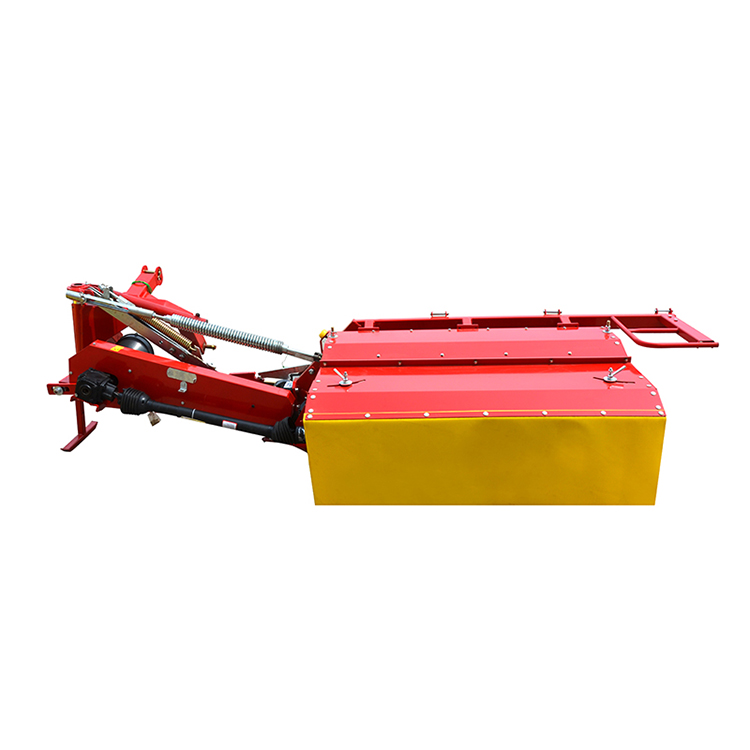
A disc mower is the first link in the hay-making chain. It determines how cleanly the crop is cut, how fast the job is done, and how much horsepower the tractor burns doing it. For small farms producing hay on 20-100 acres, the right disc mower balances cutting width against tractor horsepower requirements — running a 10-foot mower behind a 35 HP tractor creates heat and premature wear, while a 7-foot mower behind a 60 HP tractor wastes capacity.
This guide compares four disc mower configurations commonly used on small operations: plain disc mowers (cut only), disc mower-conditioners (cut and crimp or roll in one pass), and their horsepower envelopes. For tedding cut hay to accelerate drying, see our best hay tedders guide; once the crop has cured, a hay rake gathers it into windrows ahead of a round baler.
An 8–10 foot disc bar in this class is dealer and freight iron — Amazon does not stock a $4k–$14k mower. Inspect the gearbox, cutterbar, and knives on used listings before money changes hands. The consumable this machine actually uses is replacement knives (and skid shoes):
Consumable this machine actually uses — disc mower knives / skid shoes →
Disc Mower vs. Disc Mower-Conditioner
A plain disc mower cuts the crop and leaves it in a swath. Drying time depends entirely on weather and tedding frequency. A disc mower-conditioner adds a roller or flail conditioner immediately behind the cutting units — per USDA research data, conditioning can reduce dry-down time by 20-30% by fracturing the waxy stem cuticle and allowing moisture to escape faster.
Choose a plain disc mower when: Hay dries fast in your climate, tedding equipment is available, or tractor horsepower is limited (conditioners add 10-20 HP requirement).
Choose a disc mower-conditioner when: Weather windows are short, first-cut volume is high, or the operation can accept the higher acquisition cost to reduce drying risk.
Key Specifications
Cutting width: The total swath width per pass. Small farm disc mowers typically range from 7.5 to 10 feet. Wider cuts reduce passes but require more horsepower and are harder to maneuver in irregular fields.
Number of cutting discs: Each disc carries two free-swinging blades. More discs = wider cut. Standard configurations run 5-7 discs for small farm widths.
Horsepower requirement: Per manufacturer PTO ratings, disc mowers require 5-7 HP per foot of cutting width at working speed. A 7.5-foot mower requires approximately 40-50 HP at the PTO; a 10-foot mower needs 55-70 HP.
Cutting height: Adjustable via skid shoes or roller. Most small farm mowers cut between 2 and 4 inches, with lower limits constrained by field surface smoothness.
Blade type: Standard free-swinging blades hit obstacles and deflect; heavier hammers (used in some models) are more aggressive on heavy stems but cost more per replacement set.
Top Disc Mowers for Small Farms
Kuhn FC 250 GII — Best Overall
| Specification | Value |
|---|---|
| Cutting Width | 8.2 ft (2.5 m) |
| Number of Discs | 6 |
| PTO Requirement | 20-40 HP |
| Working Speed | Up to 10 mph |
| Transport Width | 9.5 ft |
| Cutting Height | 1.6-4.3 in (adjustable) |
| Weight | 628 lbs |
| Price Range | $3,800-$5,200 |
According to Kuhn’s product specifications, the FC 250 GII uses a 6-disc cutting bar with a fast-fit blade mounting system — blades are replaced without tools using a single pin. Per Kuhn’s documentation, the outer disc guard provides protection on the right-hand side for clean field edges, and the spring-loaded breakaway system lifts the cutterbar if it contacts a fixed obstacle.
The FC 250 GII is a plain disc mower — no conditioner. It is the most HP-efficient option in this comparison, making it the appropriate choice for tractors in the 25-40 HP range. Kuhn’s dealer network in North America is broad, with parts and service access in most agricultural regions.
Best for: Small to mid-size operations with 25-40 HP tractors that have a tedder in their implement lineup and want maximum acreage per hour for their tractor size.
Krone EasyMow 280CV — Best Mower-Conditioner Value
| Specification | Value |
|---|---|
| Cutting Width | 9.2 ft (2.8 m) |
| Number of Discs | 7 |
| PTO Requirement | 45-65 HP |
| Conditioner Type | Chevron rubber rollers |
| Working Speed | Up to 9 mph |
| Conditioning Width | 8.2 ft |
| Weight | 1,190 lbs |
| Price Range | $5,500-$7,500 |
Per Krone’s technical documentation, the EasyMow 280CV integrates a pair of chevron-pattern rubber conditioning rollers directly behind the cutting bar. The roller gap is adjustable via a single-point adjustment to match crop density and desired conditioning intensity. According to Krone’s specifications, the side float system allows the cutting bar to independently follow ground contours while the frame remains level, reducing scalping on uneven terrain.
The EasyMow 280CV represents a one-pass solution for operations where weather windows are limited. Per Krone’s performance data, the integrated conditioning does not reduce field speed compared to a plain mower with equivalent horsepower.
Best for: Farms in humid climates where reducing dry-down time is operationally critical, and tractors in the 50-65 HP range are available.
New Holland H7150 Discbine — Best Heavy-Duty Option
| Specification | Value |
|---|---|
| Cutting Width | 10 ft (3.0 m) |
| Number of Discs | 7 |
| PTO Requirement | 65-90 HP |
| Conditioner Type | Impeller (flail) |
| Working Speed | Up to 9 mph |
| Swath Width Control | Adjustable windrow formers |
| Weight | 2,050 lbs |
| Price Range | $10,500-$14,000 |
According to New Holland’s specifications, the H7150 Discbine uses an impeller conditioner rather than rubber rollers. Per manufacturer data, the impeller design is more aggressive on stemmy crops like alfalfa — it fractures the stem more thoroughly than roller conditioning, accelerating dry-down particularly on second and third cuttings when stem density is lower.
The 10-foot cut and 65-90 HP requirement place the H7150 above most subcompact and compact tractor capabilities. This machine is appropriate for 50 HP+ utility tractors paired with a hay operation producing significant first-cut alfalfa or heavy grass. The Discbine’s robust frame and New Holland’s dealer network make it a long-term investment for serious hay producers.
Best for: Operations running utility tractors (65+ HP) with hay production above 50 acres per season and alfalfa in the rotation.
John Deere W110 — Best for JD Ecosystem
| Specification | Value |
|---|---|
| Cutting Width | 10 ft (3.0 m) |
| Number of Discs | 7 |
| PTO Requirement | 55-75 HP |
| Conditioner Type | None (plain mower) |
| Working Speed | Up to 10 mph |
| Transport Width | 10.5 ft |
| Weight | 1,543 lbs |
| Price Range | $4,500-$6,000 |
Per John Deere’s product documentation, the W110 is a plain (non-conditioning) disc mower in a 10-foot configuration. According to Deere’s specifications, the cutting bar uses a five-piece modular design — individual sections can be replaced without removing the entire bar, reducing downtime from blade-strike damage.
The W110 is well-supported within John Deere’s dealer network and parts system. For operators already running John Deere compact utility tractors in the 55-75 HP range, the W110 offers OEM integration with ISOBUS compatibility on newer tractor models.
Best for: John Deere tractor owners in the 55-75 HP range who want OEM integration and maximum dealer support coverage.
Comparison Summary
| Model | Cut Width | HP Req. | Conditioner | Price |
|---|---|---|---|---|
| Kuhn FC 250 GII | 8.2 ft | 20-40 HP | None | $3,800-$5,200 |
| Krone EasyMow 280CV | 9.2 ft | 45-65 HP | Rubber rollers | $5,500-$7,500 |
| New Holland H7150 | 10 ft | 65-90 HP | Impeller | $10,500-$14,000 |
| John Deere W110 | 10 ft | 55-75 HP | None | $4,500-$6,000 |
Who This Is NOT For
- Operators with tractors under 20 HP. No disc mower in this class runs safely below 20 HP PTO output. Sub-20 HP tractors should use a sickle bar mower or brush hog for light mowing — not hay production
- Hobby farms cutting less than 5 acres of hay. A disc mower is capital equipment for production hay. For 5 acres or less, a rotary cutter and swather attachment, or buying custom hay harvesting, is more economical than owning a dedicated disc mower
- Rocky fields without consistent clearing. Disc mowers perform best in clean fields. Per dealer service data, blade and disc strikes from buried rocks are the primary cause of premature failures. Extensive rock presence means sickle bar equipment, which deflects more safely
- Operators without hay tedding capability. A plain disc mower in a region with short drying windows requires a tedder to make functional use of the equipment. Buying a disc mower without a tedder in high-humidity climates results in consistently poor-quality hay
What You’ll Also Need
Disc mowers are dealer-only purchases — not sold on Amazon. The following consumables and service parts are high-search items that need regular replacement and are available online:
- Disc mower replacement blades — Free-swinging blade sets wear and chip with normal use. A seasonal supply (2-4 sets depending on acreage and field conditions) keeps the cutting unit producing clean cuts without the stub-cutting that dulls from worn blades. Search: “disc mower replacement blades universal,” “disc mower blades 2-hole.” Check price on Amazon →
- Disc mower blade bolts and hardware kit — Blade bolts are single-use fasteners that must be replaced every time blades are changed. Running blade bolt replacements with every blade swap is standard service practice. Search: “disc mower blade bolt hardware kit,” “mower blade mounting bolts.” Check price on Amazon →
- PTO shear bolt assortment — Disc mowers use shear bolt overload protection on the driveline. When the cutter bar strikes an obstacle, the shear bolt sacrifices itself to protect the gearbox. A 20-pack in the toolbox prevents a single rock strike from ending the day. Search: “PTO shear bolt assortment mower,” “disc mower shear bolts.” Check price on Amazon →
- Gear oil for disc mower gearbox — Most disc mower cutting bars are filled with 80W-90 or 85W-140 gear oil. The cutting bar gearbox should be checked before each season and topped off or drained and refilled per manufacturer service intervals. Search: “80W-90 gear oil gallon,” “85W-140 gear lube tractor implement.” Check price on Amazon →
- NLGI 2 multi-purpose grease cartridges — Disc mowers have multiple grease zerks on the driveline, gearbox, and wheel assemblies. Daily greasing during the mowing season is the primary maintenance task. Search: “NLGI 2 grease cartridge lithium,” “multi-purpose grease cartridges 14 oz.” Check price on Amazon →
- Disc mower skid shoes replacement — Skid shoes wear against the ground surface and control cutting height. Worn skids cause scalping and blade-ground contact. Replacement skid sets are model-specific but many are universal bolt-on designs. Search: “disc mower skid shoes replacement,” “mower skid shoe wear plates.” Check price on Amazon →
Sources
- Kuhn FC 250 GII product specifications (kuhn.com)
- Krone EasyMow 280CV technical documentation (krone.com)
- New Holland H7150 Discbine specifications (newholland.com)
- John Deere W110 product documentation (deere.com)
- USDA Agricultural Research Service — forage quality and harvest efficiency publications