Best Tube Benders for Fabrication in 2026
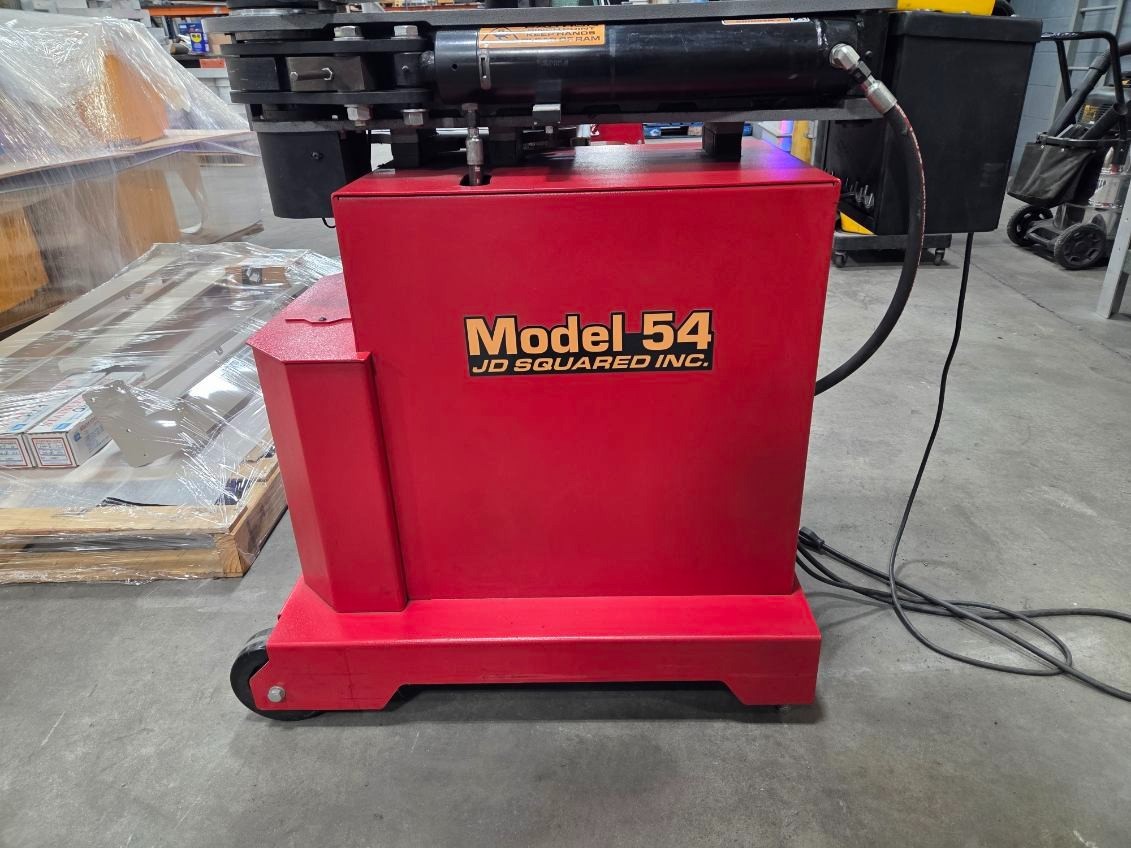
A tube bender pulls or pushes tubing around a die to produce a consistent bend radius without collapsing the tube wall or kinking the material. The critical distinction from simple pipe benders used in plumbing work is the combination of a bend die (which defines the centerline radius), a clamp die (which holds the tube against the bend die), and a pressure die (which supports the outside wall during bending). Without these three elements working together, tube walls wrinkle or collapse under compression — which in structural applications like roll cages is a failure mode, not a cosmetic issue.
This guide evaluates four tube benders across the manual and hydraulic categories based on published manufacturer specifications, focusing on die compatibility, material capacity, and bend degree range. Bending round tube is one operation among several in a metal shop — folding flat sheet into boxes and flanges is a sheet metal brake job, rolling it into cylinders and cones a slip roll job, and a bender is one line item in a broader home shop setup budget.
Round Tube vs. Square Tube vs. Pipe: What Changes
Per fabrication equipment documentation, tube benders are designed around specific cross-section shapes:
| Material | Wall Behavior | Typical Bender Type |
|---|---|---|
| Round DOM/ERW tube | Compresses on inside, stretches outside | Rotary draw bender |
| Round chromoly tube | Same as DOM, more spring-back | Rotary draw bender |
| Square/rectangular tube | Corners buckle if unsupported | Mandrel or compression bender |
| Schedule 40 pipe | Thicker wall, more forgiving | Compression or ram bender |
Roll cage and chassis fabrication uses rotary draw benders — the category this guide covers — because they produce consistent, predictable bends with minimal wall thinning. Hydraulic ram benders (the kind used for conduit and plumbing pipe) produce wrinkled, oval bends in thin-wall structural tubing and are not appropriate for fabrication work.
Key Specifications
CLR (Centerline Radius): The radius of the bend measured from the centerline of the tube. A tighter CLR produces a sharper bend. Per fabrication standards, the minimum CLR before wall thinning becomes structurally significant is typically 2× the tube OD. Roll cage dies are commonly specified at 3× or 4× OD for clearance and weld fitment reasons.
Die set compatibility: Each tube size and CLR combination requires a matched set of dies (bend die, clamp die, pressure die). Machines that accept multiple interchangeable die sets are more versatile than machines requiring proprietary replacements.
Degree of bend: Most rotary draw benders reach 0–180°, allowing up to a full U-bend in a single setup. Some models have hard stops at 90° or 120° — a limitation for compound-bend chassis work.
Material wall thickness capacity: Thicker walls require more bending force. A 1-3/4” OD chromoly tube at 0.120” wall requires significantly more force than the same OD at 0.083” wall. Confirm the machine’s rated capacity matches the wall thickness being bent.
Top Tube Benders by Specification
JD Squared Model 3 — Best Overall for Fabrication Shops
| Specification | Value |
|---|---|
| Type | Rotary draw, manual |
| Capacity | Up to 2” OD (die dependent) |
| Bend Degree | 0-180° |
| Die Compatibility | JD2 proprietary (wide range available) |
| Mount | Floor stand or bench mount |
| Material Compatibility | DOM, ERW, chromoly, stainless, aluminum |
| Weight | 55 lbs (bender only) |
| Made In | USA |
| Price Range | $550-$700 (bender only, dies separate) |
Per JD Squared’s product documentation, the Model 3 is the most widely used rotary draw tube bender in the North American motorsports fabrication market. JD2 manufactures dies in more size and CLR combinations than any competitor in this price range — from 3/4” OD at 2” CLR to 2” OD at 6” CLR, covering the full roll cage and chassis tube range. The 0–180° bend capability allows U-bends and continuous compound bends without repositioning. JD2 specifies compatibility with DOM, chromoly (including 4130 and 4140), stainless, and aluminum tubing. The bender mounts to either a floor stand or workbench, with the floor stand providing better leverage for larger tube sizes.
Best for: Roll cage fabricators, chassis builders, and motorsports shops that need a large die library, 180° bend capability, and a proven platform. The JD2 ecosystem has decades of aftermarket support and die availability. This is the correct tool for any shop building tube-frame vehicles, off-road chassis, or competition cages.
Limitation: Dies are sold separately — budget $80–$200 per die set depending on size and CLR. Manual operation requires significant physical effort for 1-3/4” chromoly at 0.120” wall; a hydraulic assist is worth considering for high-volume shops.
Baileigh RDB-050 Hydraulic Rotary Draw Bender — Best for Production Volume
| Specification | Value |
|---|---|
| Type | Rotary draw, hydraulic |
| Capacity | Up to 2” OD schedule 40 pipe |
| Bend Degree | 0-180° |
| Die Compatibility | Baileigh tooling |
| Motor | 2 HP hydraulic |
| Degree Readout | Mechanical |
| Weight | 950 lbs |
| Warranty | 1 year |
| Price Range | $4,500-$6,000 |
Per Baileigh’s documentation, the RDB-050 is a production-grade hydraulic rotary draw bender with powered bending through the full 180° range. The hydraulic drive eliminates operator fatigue on repetitive bends in heavy-wall material — relevant for shops running production chassis work. At 950 lbs, this is a permanent floor installation requiring a 220V single-phase circuit. Baileigh’s tooling system uses interchangeable die sets. For shops bending more than 20-30 tubes per day, the hydraulic cycle time and consistent bend force pay for themselves in operator capacity.
Best for: Production fabrication shops, motorsports chassis manufacturers, and contract fab operations where manual bending capacity is a throughput bottleneck. The hydraulic drive and 950-lb construction suit daily production use that would fatigue manual bender operators.
Limitation: $4,500–$6,000 and 950 lbs is a capital equipment purchase justified only by production volume. The Baileigh tooling system is less widely available secondhand than JD2 dies.
Pro-Tools 105 HD — Best Mid-Range Manual Bender
| Specification | Value |
|---|---|
| Type | Rotary draw, manual |
| Capacity | Up to 2-1/4” OD |
| Bend Degree | 0-180° |
| Die Compatibility | Pro-Tools, JD2 compatible with adapters |
| Mount | Floor mount |
| Weight | 85 lbs |
| Made In | USA |
| Warranty | Lifetime |
| Price Range | $900-$1,200 (bender only) |
Per Pro-Tools’ product documentation, the 105 HD handles tube up to 2-1/4” OD — slightly larger than the JD2 Model 3 — and is made in the USA with a lifetime warranty. Pro-Tools specifies that the 105 HD is compatible with JD2 dies via adapters, which matters because JD2 has the largest aftermarket die availability. The heavier 85-lb frame provides more rigidity than the JD2 for large-diameter bends. The lifetime warranty is a meaningful differentiator for a professional shop tool.
Best for: Fabricators who want a more rigid manual bender than the JD2 at the same die compatibility, with the added security of a lifetime warranty. Shops that occasionally bend 2” and larger tube will appreciate the larger capacity.
Limitation: $900–$1,200 is a significant premium over the JD2 for manual operation. JD2 die adapter compatibility must be verified for specific die sizes.
VEVOR Hydraulic Pipe Bender — Best Budget Hydraulic Option
| Specification | Value |
|---|---|
| Type | Ram/hydraulic (not rotary draw) |
| Capacity | 1/2” to 2” pipe (schedule 40) |
| Die Set | 7 dies included (1/2” through 2”) |
| Hydraulic Force | 12 ton |
| Bend Angle | Up to 180° |
| Weight | 55 lbs |
| Price Range | $100-$180 |
Per VEVOR’s product specifications, this is a hydraulic ram-type bender — a fundamentally different mechanism from rotary draw benders. The ram style pushes the pipe over a saddle die rather than drawing it around a bend die with clamp and pressure dies. Per fabrication references, this produces acceptable bends in schedule 40 pipe (HVAC, conduit, plumbing) but will wrinkle or collapse thin-wall structural tubing. For shops bending standard schedule 40 iron pipe for shop fixtures, handrails, and brackets — not for structural chromoly or DOM roll cage work — this covers the application at a fraction of the cost. Shops whose work is mostly pipe rather than structural tube should compare the dedicated pipe bender options.
Best for: Shops that need to bend schedule 40 pipe (conduit, gas pipe, handrails) and do not require the wall support of a rotary draw bender. HVAC shops and general maintenance facilities doing occasional pipe work.
Limitation: Not a rotary draw bender — will wrinkle thin-wall structural tube. Not appropriate for roll cage, chassis, or any structural application using DOM or chromoly tubing.
Comparison Table
| Model | Type | Max OD | Bend Degree | Drive | Made in USA | Price |
|---|---|---|---|---|---|---|
| JD Squared Model 3 | Rotary draw | 2” | 0-180° | Manual | Yes | $550-$700 |
| Baileigh RDB-050 | Rotary draw | 2” pipe | 0-180° | Hydraulic | Yes | $4,500-$6,000 |
| Pro-Tools 105 HD | Rotary draw | 2-1/4” | 0-180° | Manual | Yes | $900-$1,200 |
| VEVOR Hydraulic | Ram | 2” pipe | 0-180° | Hydraulic | No | $100-$180 |
Who This Is NOT For
- Buyers who primarily work with square or rectangular tube. Rotary draw benders require a round cross-section for the die geometry to work. Square tube needs a different tooling approach — a mandrel bender with square dies or a press brake with a radius punch. Attempting to bend square tube in a round-tube rotary draw bender collapses the corners.
- Shops that occasionally need a single bend in light conduit. A manual conduit bender (Greenlee or similar) at $50–$100 handles EMT and rigid conduit for electrical work far more practically than a fabrication bender. A rotary draw bender is overkill for a single conduit installation.
- Buyers expecting tight-radius bends without a mandrel. Bends tighter than 2× OD CLR require a mandrel (a plug inside the tube during bending) to prevent wall collapse. None of the manual benders here include mandrel tooling as standard — it must be added separately. Without a mandrel, attempting a 1.5× OD bend in thin-wall tube will kink.
- One-off bends that could be done by a local fab shop. A single custom roll hoop or exhaust bend can typically be done at a local fabrication shop for $20–$50 per bend. The investment in a $600 bender plus dies only makes sense when bend volume justifies the capital.
Parts You’ll Need
These are the consumables, dies, and accessories that tube bender owners search for most — whether buying from a local fab shop or through Amazon.
- JD2 die sets by tube size — the most common search terms are “JD2 1-5/8 die set,” “JD2 1-3/4 die set 4.5 CLR,” and “JD2 2 inch tube bender die.” Dies must match both OD and wall thickness range. Budget $80–$200 per die set. Check price on Amazon →
- Tube bender degree wheel / digital angle gauge — a digital protractor or angle finder mounted to the tube arm allows repeatable, precise bend angles without counting handle travel. Search: “digital angle gauge tube bender.” Check price on Amazon →
- DOM round tubing 1-5/8 x .120 wall — the most common roll cage tube spec, typically purchased in 20-foot lengths. Search: “1-5/8 DOM tubing 120 wall” or “1.625 DOM steel tube.” Check price on Amazon →
- 4130 chromoly tube 1-3/4 .120 wall — common for competition chassis; lighter than DOM at equivalent strength. Search: “4130 chromoly tubing 1-3/4 .120.” Check price on Amazon →
- Bending lubricant / tube bender wax — a wax or paste lubricant on the die surfaces reduces galling on stainless and aluminum tube and extends die life. Search: “tube bender lubricant wax.” Check price on Amazon →
- Tube notcher for coped joints — where bent tubes meet at a junction, a tube notcher (hole-saw type or milling type) cuts the saddle profile for a tight weld fit. Search: “tube notcher for roll cage,” “tube notcher 1-5/8 inch.” Check price on Amazon →
Sources
- JD Squared Model 3 tube bender product specifications (jd2.com)
- Baileigh RDB-050 rotary draw bender product documentation (baileighindustrial.com)
- Pro-Tools 105 HD bender product specifications (pro-tools.com)
- VEVOR hydraulic pipe bender product documentation (vevor.com)
- Machinery’s Handbook, 30th Edition — Tube and Pipe Bending, Spring-Back Calculations
- AWS D1.1 Structural Welding Code — referenced for chromoly and DOM tubing structural context