Best Sandblasters for Home Shops in 2026
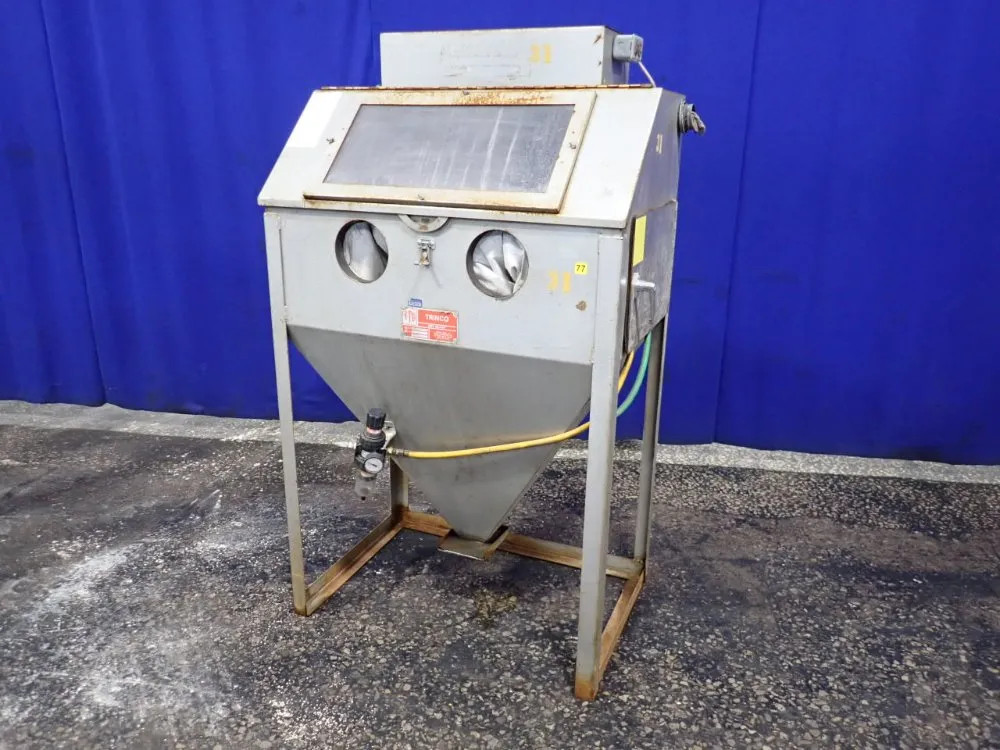
A sandblaster uses compressed air to propel abrasive media against a workpiece at high velocity, stripping rust, paint, mill scale, and surface contamination faster and more completely than grinding or wire brushing. The same mechanism in different enclosures serves different applications: a blast cabinet encloses the work area for media recovery and visibility; a siphon or pressure pot blaster works on large outdoor workpieces that can’t fit in a cabinet; a portable gravity-feed blaster handles spot work on assembled parts.
For home shops doing auto restoration, weld prep, powder coat prep, and equipment refurbishment, the cabinet blaster is the practical choice — it recycles media, contains the dust, and provides viewing windows for controlled work. This guide compares four blasters based on published specifications, focusing on cabinet size, CFM requirements, and media handling.
Siphon Feed vs. Pressure Pot: The Key Performance Difference
Per blasting equipment documentation, siphon-feed and pressure-feed blasters differ fundamentally in delivery efficiency:
| Type | How It Works | Cutting Speed | CFM Requirement | Cost |
|---|---|---|---|---|
| Siphon feed | Venturi effect draws media from hopper | Moderate | 5-10 CFM | Lower |
| Pressure pot | Media pre-pressurized, blasted out | 2-4× faster | 10-20+ CFM | Higher |
Per TP Tools’ application documentation, a pressure-pot system at 90 PSI removes rust 3–4 times faster than a siphon-feed system at the same pressure, because media exits at full line pressure rather than being drawn by venturi suction. For a home shop doing occasional restoration work, siphon cabinets are adequate. For shops doing production rust removal or powder coat prep on multiple parts per day, a pressure pot (direct pressure) cabinet pays for itself in time savings.
CFM requirement is the most common source of buyer dissatisfaction. Per OSHA 1910.94 and compressor manufacturer documentation, most cabinet blasters require a sustained 10–15 CFM at 90 PSI. A typical home shop compressor rated at 4–6 CFM cannot sustain this flow rate — the compressor catches up, you wait, then blast again. The best shop air compressors for cabinet blasting are those rated at 10+ CFM at 90 PSI. Because cabinet blasting is a sustained draw rather than intermittent bursts, a rotary screw compressor holds pressure better than a piston unit for production-volume work. This is the most important spec to verify before purchasing a blaster.
Key Specifications
Work area (width × height × depth): Determines what fits inside the cabinet. A standard automotive wheel requires approximately 14” × 14” minimum. Engine blocks and heads require 20”+ cabinet width.
Media capacity: Larger hoppers reduce the frequency of refilling. Per TP Tools’ documentation, a 50-lb hopper holds approximately 30 minutes of continuous blasting at standard nozzle settings.
Nozzle size: Larger nozzles require more CFM but remove material faster. Standard nozzles are 1/4” to 3/8” bore. Ceramic nozzles last longer than boron carbide but have a shorter life than tungsten carbide. Per blasting equipment references, nozzle wear directly increases CFM requirements as the bore erodes — a worn nozzle requires more air to maintain the same media velocity.
Media compatibility: Different abrasive media produce different surface finishes and require different containment. Aluminum oxide and silicon carbide are aggressive and recyclable. Glass beads produce a smooth satin finish. Crushed walnut shell and plastic media are for delicate surfaces. Media bridging in the hopper is a common failure mode with fine or irregular media.
Top Sandblasters by Specification
TP Tools 6560 Economy Blast Cabinet — Best Overall
| Specification | Value |
|---|---|
| Type | Siphon feed cabinet |
| Cabinet Dimensions | 36”W × 24”H × 18”D |
| Work Area | 28”W × 18”H |
| Media Hopper | 50 lbs |
| CFM Requirement | 8-10 CFM at 80-100 PSI |
| Nozzle | Ceramic, 3/16” bore |
| Lighting | Fluorescent |
| Gloves | Included |
| Weight | 110 lbs |
| Made In | USA |
| Price Range | $350-$500 |
Per TP Tools’ specifications, the 6560 is a siphon-feed cabinet with a 28” work width — large enough for most automotive wheels, control arms, and small engine components. TP Tools is a specialty blasting equipment manufacturer; their cabinets use heavier-gauge steel than Harbor Freight alternatives. The ceramic nozzle is a step up from plastic nozzles included with entry cabinets. The fluorescent lighting is standard for visibility during blasting.
Best for: Home shops doing automotive restoration, powder coat prep, and rust removal on components up to 28” wide. TP Tools’ heavier cabinet construction and US-based support make this a better long-term investment than imported alternatives at a similar price.
Limitation: Siphon feed — slower than pressure-pot cabinets. Requires 8–10 CFM compressor for continuous operation. TP Tools is not widely stocked at local retailers; typically mail-order only.
Eastwood Econoline 5-CFM Blast Cabinet — Best for Small Compressors
| Specification | Value |
|---|---|
| Type | Siphon feed cabinet |
| Cabinet Dimensions | 30”W × 24”H × 16”D |
| Work Area | 14”W × 16”H |
| Media Hopper | 20 lbs |
| CFM Requirement | 5-6 CFM at 60-90 PSI |
| Nozzle | Ceramic |
| Lighting | LED |
| Weight | 64 lbs |
| Price Range | $250-$350 |
Per Eastwood’s product documentation, the Econoline is designed around a 5–6 CFM air requirement — achievable with a typical 20-gallon upright compressor found in home garages. The tradeoff is a 14” work width that limits workpiece size. For shops blasting small parts — fasteners, brackets, carburetors, small suspension pieces — the smaller work area is not a limitation. The LED lighting is a practical improvement over fluorescent in this price range.
Best for: Home restorers with a small compressor (less than 8 CFM) who need to blast small parts. Eastwood specializes in automotive restoration tooling and provides specific application guidance for their cabinets.
Limitation: 14” work width is too small for most automotive wheels and larger components. 20-lb hopper requires frequent refilling. Not appropriate for production volume work.
TCP Global Pressure Blast Cabinet — Best for Faster Material Removal
| Specification | Value |
|---|---|
| Type | Pressure pot cabinet |
| Cabinet Dimensions | 40”W × 24”H × 20”D |
| Work Area | 20”W × 18”H |
| Pot Capacity | 50 lbs |
| CFM Requirement | 14-18 CFM at 90 PSI |
| Nozzle | Ceramic, replaceable |
| Lighting | Fluorescent |
| Weight | 165 lbs |
| Price Range | $600-$900 |
Per TCP Global’s product documentation, this is a direct-pressure (pressure-pot) cabinet — the media is pressurized before delivery, producing 2–4× faster material removal than a siphon design at the same air pressure. The 20” work width accommodates full-size automotive wheels. The higher CFM requirement (14–18 CFM) means this cabinet requires a 5 HP or larger compressor; a typical 60-gallon upright compressor at 12–15 CFM barely meets the minimum. For shops with adequate air supply doing regular production prep work, the pressure-pot design pays for itself in time savings over siphon alternatives.
Best for: Shops with a compressor rated at 15+ CFM doing production rust removal, powder coat prep on multiple parts, and auto restoration where blast speed matters. The pressure-pot delivery is the correct upgrade path from siphon cabinets when air supply is adequate.
Limitation: Requires 14–18 CFM — incompatible with most home garage compressors. 165 lbs requires a permanent floor installation.
Central Pneumatic 40 lb. Pressure Feed Blaster — Best Portable Option
| Specification | Value |
|---|---|
| Type | Portable pressure pot (outdoor) |
| Pot Capacity | 40 lbs |
| CFM Requirement | 10-12 CFM at 90 PSI |
| Hose Length | 10 ft |
| Nozzle Options | Multiple (sold separately) |
| Weight | 33 lbs (empty) |
| Price Range | $80-$130 |
Per Harbor Freight’s product specifications, the Central Pneumatic pressure pot blaster is a portable unit designed for outdoor work on large assemblies — vehicle frames, implements, structural steel — that cannot fit in any cabinet. As a pressure-pot unit, it delivers faster media velocity than siphon-feed alternatives. The portable format is the only practical choice for in-situ rust removal on attached components. Note that outdoor blasting requires appropriate downwind positioning, eye protection, and respiratory equipment — the open format produces airborne dust that a cabinet would contain.
Best for: Shops needing to blast large workpieces, vehicle frames, agricultural implements, and outdoor structures where cabinet work is impractical. The portable pressure pot is the only tool for large-scale field blasting.
Limitation: No media recovery — media is used once and cleaned up afterward. Open blasting requires full respiratory protection and appropriate work area setup. Not suitable for indoor use without industrial ventilation.
Comparison Table
| Model | Type | Work Width | CFM Required | Media Capacity | Weight | Price |
|---|---|---|---|---|---|---|
| TP Tools 6560 | Siphon cabinet | 28” | 8-10 CFM | 50 lbs | 110 lbs | $350-$500 |
| Eastwood Econoline | Siphon cabinet | 14” | 5-6 CFM | 20 lbs | 64 lbs | $250-$350 |
| TCP Global Pressure | Pressure cabinet | 20” | 14-18 CFM | 50 lbs | 165 lbs | $600-$900 |
| Central Pneumatic | Portable pressure | N/A (outdoor) | 10-12 CFM | 40 lbs | 33 lbs | $80-$130 |
Who This Is NOT For
- Shops with an undersized compressor. A 4–6 CFM compressor cannot sustain cabinet blasting at any useful rate. Before purchasing a cabinet, verify the compressor’s SCFM at 90 PSI rating — not the peak tank pressure, which is irrelevant. If the compressor doesn’t meet the CFM spec, buy a bigger compressor before buying a cabinet. A larger used shop air compressor is often the most cost-effective way to reach the required CFM.
- Shops expecting to blast hardened steel or carbide. Sandblasting removes scale and rust from steel but cannot cut into hardened surfaces effectively. Glass beads can peen hardened surfaces; aluminum oxide can strip coatings; neither removes significant material from tool steel or carbide.
- Shops near residential areas without dust containment. Even cabinet blasters vent fine dust through the exhaust filter. Per OSHA 1910.94, adequate ventilation and exhaust filtration are required for indoor blasting. The neighbors will notice if the shop exhaust is not properly filtered.
- Buyers using silica sand as media. Per OSHA’s silica dust regulations (29 CFR 1910.1053, effective 2018), silica sand is not a permissible blasting medium in commercial applications due to respirable crystalline silica exposure risk. Aluminum oxide, glass beads, and steel shot are the correct alternatives.
Parts You’ll Need
These are the consumables and replacement parts that blaster owners search for most — required regardless of where the cabinet itself was purchased.
- Aluminum oxide blasting media 50 lb bag, 60 or 80 grit — the most commonly searched media for rust removal and general prep. 60 grit cuts fast; 80 grit produces a finer profile. Search: “aluminum oxide blasting media 50 lb,” “aluminum oxide abrasive 80 grit sandblasting.” Check price on Amazon →
- Glass bead blasting media 50 lb bag, #8 or #10 — produces a smooth satin finish on aluminum, steel, and stainless without aggressive material removal. Search: “glass bead blasting media 50 lb,” “glass beads sandblasting media #10.” Check price on Amazon →
- Blast cabinet gloves replacement — cabinet gloves are the first consumable to wear through. Search: “blast cabinet gloves replacement” or “sandblast cabinet glove sleeves.” Size and port diameter must match the specific cabinet. Check price on Amazon →
- Ceramic blast nozzle replacements — 3/16” and 1/4” bore — ceramic nozzles last 20–40 hours of blasting before bore erosion increases CFM requirements and decreases velocity. Stock extras. Search: “ceramic sandblast nozzle 3/16,” “replacement blast nozzle ceramic.” Check price on Amazon →
- Blast cabinet window lens replacement — polycarbonate lens sheets protect the cabinet window from pitting. Replacement lens kits are cabinet-specific but often adapt across brands. Search: “blast cabinet window lens replacement,” “sandblast cabinet window protector.” Check price on Amazon →
- Blast cabinet dust collector filter bags — the exhaust filter captures fine media dust. A clogged filter reduces visibility and allows media to escape. Search: “blast cabinet dust collector filter,” “sandblast cabinet exhaust filter replacement.” Check price on Amazon →
- Crushed walnut shell media 25 lb — for blasting delicate surfaces: aluminum castings, chrome parts, fiberglass — where aluminum oxide would cause surface damage. Search: “walnut shell blasting media,” “crushed walnut shell abrasive.” Check price on Amazon →
Sources
- TP Tools 6560 Economy Blast Cabinet product specifications (tptools.com)
- Eastwood Econoline Blast Cabinet product documentation (eastwood.com)
- TCP Global pressure blast cabinet product documentation (tcpglobal.com)
- Central Pneumatic 40 lb. Pressure Feed Blaster product documentation (harborfreight.com)
- OSHA 29 CFR 1910.94 — Ventilation: Abrasive Blasting
- OSHA 29 CFR 1910.1053 — Occupational Exposure to Respirable Crystalline Silica
- ACGIH Industrial Ventilation Manual — Blast Cleaning Operations