Best Metal 3D Printers for Small Shops and Prototyping in 2026
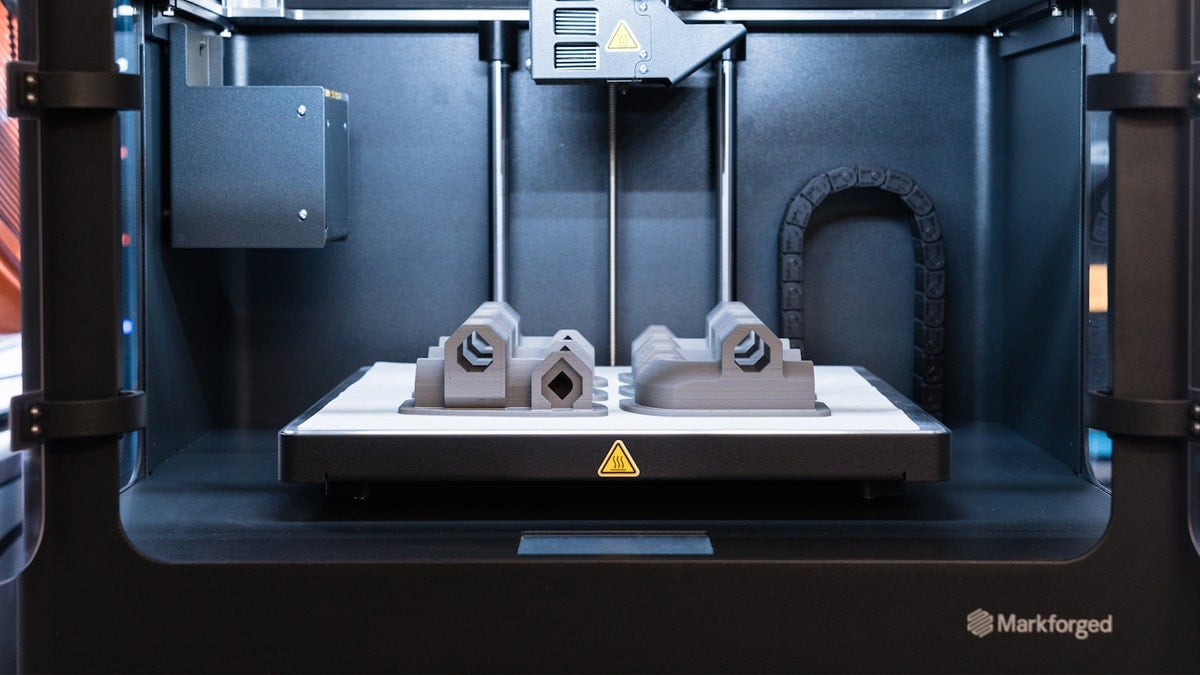
Metal 3D printing has shifted from a technology that required $500,000 or more in capital equipment to one where sub-$100,000 systems can produce functional metal parts in a small shop environment. But “accessible” is doing a lot of heavy lifting in that sentence. The underlying print technology, compatible materials, post-processing workflow, and total cost of ownership vary dramatically between systems at this price point. A shop that buys the wrong machine — or underestimates ancillary costs — can end up with an expensive paperweight. This guide breaks down the specifications, processes, and real costs so prototype shops, job shops, and R&D labs can make an informed capital decision.
Metal 3D Printing Technologies Compared
Not all metal 3D printing is created equal. The process determines part quality, speed, material options, and how much additional equipment is needed beyond the printer itself.
| Technology | Process | Relative Cost | Part Quality | Post-Processing | Key Players |
|---|---|---|---|---|---|
| Bound Metal Deposition (BMD/ADAM) | Extrude metal-bound filament → wash → sinter | Medium ($80K-$130K) | Good (96-99% density) | Wash station + sintering furnace required | Markforged, Desktop Metal |
| Metal FFF | Standard FFF with metal-filled filament → debind → sinter | Low ($40K-$60K) | Moderate (95-97% density) | Debinding + sintering furnace required | Raise3D |
| Powder Bed Fusion (PBF/SLM) | Laser selectively melts metal powder layer by layer | High ($120K-$200K) | Highest (99%+ density) | Support removal, stress relief, heat treatment | Xact Metal |
| Binder Jetting | Binder deposited on metal powder → cure → sinter | High ($150K-$200K) | Good (97-99% density) | Depowdering + sintering furnace | Desktop Metal |
The critical distinction: BMD, Metal FFF, and binder jetting all require a sintering furnace as a separate piece of equipment. Per manufacturer documentation, these furnaces add $30,000 to $80,000 to the total system cost. Powder bed fusion skips the sintering step entirely — the laser fully melts the metal during printing — but introduces powder handling complexity and safety requirements.
Key Specs for Shop Buyers
Before comparing individual machines, these are the specifications that matter most for a shop-level purchase decision.
Build Volume — Ranges from 150x150x150mm on entry-level systems to 250x330x330mm on production-oriented machines. Most small shop applications (fixtures, tooling, prototype brackets) fit within 200mm cubed, but larger volumes reduce the number of print runs needed for multi-part assemblies.
Compatible Metals — The most commonly supported alloys at this price tier include 17-4 PH stainless steel, 316L stainless steel, A2 and H13 tool steel, and copper. Titanium (Ti-6Al-4V) and Inconel support is limited to powder bed systems and select BMD platforms. According to manufacturer specs, material libraries continue to expand, but availability varies by region and may require qualification runs.
Part Density — Expressed as a percentage of wrought material density. BMD systems typically achieve 96-99.7% density per manufacturer data sheets. Powder bed fusion reaches 99%+ density. For structural applications, density below 97% may require design derating.
Surface Finish — Powder bed fusion produces the finest surface finish (Ra 5-15 μm as-printed). BMD and metal FFF parts typically require secondary machining or media blasting for functional surfaces, with as-sintered roughness of Ra 15-30 μm according to published specifications.
Post-Processing Requirements — This is where total cost diverges from sticker price. BMD and FFF systems require a wash/debinding station and a sintering furnace. The sintering furnace alone draws significant power (typically 208-480V, 30-60A circuits), requires inert gas supply (argon or nitrogen), and occupies 30-50 square feet of floor space including safety clearances.
Facility Requirements — Metal powder handling (for PBF and binder jetting) requires proper ventilation, PPE, and in some jurisdictions, fire suppression rated for combustible metal dust. Even bound filament systems need adequate ventilation during the wash/debinding phase due to solvent off-gassing.
Top Picks Based on Specifications
Markforged Metal X — Most Established Ecosystem
| Spec | Detail |
|---|---|
| Process | ADAM (Atomic Diffusion Additive Manufacturing) |
| Build Volume | 250 x 220 x 200 mm |
| Materials | 17-4 PH, 316L, H13 Tool Steel, A2 Tool Steel, Copper, Inconel 625 |
| Part Density | Up to 99.7% (per Markforged data sheets) |
| System Components | Metal X printer + Wash-1 + Sinter-2 |
| Price Range | $99,500-$130,000 (full system) |
View specifications on manufacturer site
The Metal X uses Markforged’s proprietary ADAM process, which extrudes a metal rod encased in a plastic binder. According to Markforged’s published specifications, the system achieves part densities up to 99.7% after sintering. The broadest material library at this price point — including Inconel 625 and copper — makes it the most versatile option for shops handling diverse project types. The three-step workflow (print, wash, sinter) adds process time but each step is largely automated. The Sinter-2 furnace is included in most full-system quotes, which simplifies procurement compared to sourcing a third-party furnace. The Eiger software platform provides cloud-based slicing and fleet management, which matters for shops running multiple machines. The primary limitation is print speed — ADAM is not fast compared to binder jetting — and the proprietary material format locks buyers into Markforged’s supply chain.
Desktop Metal Studio System 2 — Simplified BMD Workflow
| Spec | Detail |
|---|---|
| Process | Bound Metal Deposition |
| Build Volume | 300 x 200 x 200 mm |
| Materials | 17-4 PH, 316L, 4140, H13 Tool Steel, Copper |
| Part Density | Up to 99.8% (per Desktop Metal specs) |
| System Components | Studio printer + Sintering furnace (Live Sinter software) |
| Price Range | $80,000-$120,000 (full system) |
View specifications on manufacturer site
The Studio System 2 eliminated the separate wash/debinding station from its predecessor, reducing the workflow to two steps: print and sinter. Per Desktop Metal’s product documentation, the system uses a proprietary bound metal rod that does not require solvent debinding — the binder burns off during the sintering cycle. This simplification reduces floor space requirements and removes solvent handling from the equation. The Live Sinter software compensates for shrinkage and distortion during sintering, which according to published case studies reduces trial-and-error iteration. Build volume is slightly larger than the Metal X in the X-axis. The trade-off is a slightly smaller material library and a less mature service network compared to Markforged.
Xact Metal XM200C — True Laser Powder Bed Quality
| Spec | Detail |
|---|---|
| Process | Laser Powder Bed Fusion (LPBF) |
| Build Volume | 150 x 150 x 150 mm |
| Materials | 316L, 17-4 PH, Ti-6Al-4V, Inconel 718, Aluminum AlSi10Mg |
| Part Density | 99%+ (fully fused, no sintering required) |
| Laser | Single 300W fiber laser |
| Price Range | $120,000-$150,000 |
View specifications on manufacturer site
The XM200C is the only true laser powder bed fusion system on this list, which means parts come off the build plate at full density with no sintering step. According to Xact Metal’s specifications, their proprietary gantry-based laser positioning system reduces costs compared to traditional galvanometer-based scanning while maintaining accuracy. The result: powder bed part quality at a fraction of the price of industrial SLM machines from EOS or SLM Solutions. The XM200C supports titanium and Inconel 718 — metals that are difficult or impossible on bound metal systems at this price tier. The trade-off is build volume (150mm cubed is restrictive for larger parts), powder handling requirements (PPE, inert atmosphere, sieving equipment), and a steeper learning curve for parameter development. Shops that need the highest mechanical properties and have experience with metal powder should evaluate this system seriously.
Raise3D MetalFuse — Lowest Capital Entry Point
| Spec | Detail |
|---|---|
| Process | Metal FFF (Filament Fused Fabrication) |
| Build Volume | 300 x 300 x 300 mm |
| Materials | 316L, 17-4 PH, H13 Tool Steel |
| Part Density | 95-97% (per Raise3D specifications) |
| System Components | MetalFuse printer + debinding station + sintering furnace |
| Price Range | $40,000-$60,000 (printer only; furnace additional) |
View specifications on manufacturer site
The MetalFuse represents the lowest entry point for shops exploring metal additive manufacturing. According to Raise3D’s published data, the system uses metal-filled filament on a modified FFF platform, producing green parts that are then debound and sintered. The build volume is the largest on this list at 300mm cubed. However, per manufacturer specifications, part density tops out at 95-97% — below the threshold for many structural applications. The printer price is attractive, but the system still requires a debinding station and sintering furnace, which can add $40,000-$70,000 to the total investment. This system makes sense for shops printing fixtures, jigs, and non-structural prototypes where full wrought-equivalent density is not required.
Desktop Metal Shop System — Small Batch Production
| Spec | Detail |
|---|---|
| Process | Single Pass Jetting (Binder Jetting) |
| Build Volume | 350 x 222 x 200 mm |
| Materials | 17-4 PH, 316L, 4140 |
| Part Density | 97-99% (per Desktop Metal specs) |
| System Components | Shop printer + powder station + sintering furnace |
| Price Range | $150,000-$200,000 (full system) |
View specifications on manufacturer site
The Shop System targets shops that need to produce tens to hundreds of identical metal parts — small batch production rather than one-off prototyping. According to Desktop Metal’s specifications, Single Pass Jetting deposits binder across the entire build area in a single pass, making it significantly faster than laser or extrusion-based methods. Build volume and nesting capability allow multiple parts per run. The trade-off is system cost (the highest on this list), powder handling complexity, and a narrower material selection compared to powder bed fusion. For shops currently outsourcing small batch metal parts at $50-$100+ per piece, the volume economics can justify the capital investment.
The Hidden Costs
The printer price is never the total cost. According to industry analyses and manufacturer documentation, total cost of ownership for a metal 3D printing system runs 2-3x the printer’s sticker price when accounting for:
- Sintering furnace: $30,000-$80,000 for BMD, FFF, and binder jetting systems. Required unless using powder bed fusion.
- Wash/debinding stations: $10,000-$25,000 for systems that require solvent debinding.
- Metal powder or feedstock: $100-$400/kg depending on alloy. Proprietary bound rods and filaments carry a premium over commodity powder.
- Inert gas supply: Argon or nitrogen for sintering and powder bed systems. Ongoing consumable cost of $500-$2,000/month depending on usage.
- Facility upgrades: Ventilation, electrical (many sintering furnaces need 480V 3-phase), compressed air, fire suppression for powder handling areas.
- Operator training: 40-80 hours of training for safe operation per manufacturer recommendations. Metal powder safety training is non-optional.
- Maintenance contracts: Typically 10-15% of system price annually.
A shop budgeting $100,000 for a metal 3D printer should realistically plan for $200,000-$300,000 in total first-year costs including installation, ancillary equipment, and initial feedstock.
Consider Buying Used
For metal 3D printers in the $40,000–$200,000 range, the used market is small but real — driven by venture-funded shops that closed, R&D labs sunsetting programs, and early adopters upgrading platforms. Per industry broker data, used Markforged Metal X and Desktop Metal Studio systems with low print hours typically trade at 35-55% of new pricing — a much steeper depreciation than mechanical shop equipment, reflecting electronics obsolescence risk, proprietary feedstock dependency, and the high probability of spec changes between system generations. Sintering furnaces hold value better than printers (50-70% of new) since the underlying technology evolves more slowly. Be cautious: a printer locked out of manufacturer cloud software or running deprecated firmware can become unusable regardless of mechanical condition.
Before purchasing used: confirm cloud account access and software license transferability with the OEM in writing before payment (Markforged Eiger and Desktop Metal Live Sinter both require active accounts), verify print bed flatness and build plate condition — sintered build plates wear and replacement plates may be backordered or discontinued, request consistent test prints to confirm extruder/laser calibration and electronics consistency, check available replacement parts inventory at the OEM for that specific generation (parts discontinuation is common after 5-7 years), and inspect the sintering furnace’s heating elements, gas supply seals, and inert atmosphere integrity. Common failure modes include extruder head clogs from cured filament, build chamber thermal sensor drift, and proprietary feedstock supply chain risk if the OEM has shifted product lines.
Find used metal 3D printers on eBay →
Who This Is NOT For
Hobbyists and makers — Even the least expensive system on this list requires $40,000+ for the printer alone, plus a sintering furnace. For one-off metal parts, outsourcing to a metal 3D printing service bureau (Xometry, Protolabs, Shapeways) at $50-$500 per part is dramatically more cost-effective unless volume justifies capital equipment.
Shops outsourcing less than $500/month in metal parts — The breakeven math does not work. At $6,000/year in outsourced metal parts, a $100,000+ system would take over 15 years to pay back on part cost savings alone. Service bureaus exist for exactly this use case.
Facilities without proper ventilation or electrical infrastructure — Metal powder is combustible. Sintering furnaces require high-amperage circuits. Solvent debinding produces fumes. Retrofitting a facility to meet safety requirements can add $10,000-$50,000 before the first part is printed.
Shops expecting CNC-replacement quality out of the box — Metal 3D printing produces near-net-shape parts. Critical surfaces, tight tolerances (below ±0.1mm), and threaded features still require secondary machining — often on a benchtop milling machine for smaller parts. These systems complement a CNC mill, not replace one.
Anyone unfamiliar with metallurgy basics — Sintering profiles, shrinkage compensation, support strategy, and post-processing heat treatment all require metallurgical knowledge. Without it, expect a long and expensive learning curve.
Making the Decision
For most small shops entering metal additive manufacturing, the decision comes down to part requirements and budget reality. Shops that need the highest part quality and can handle powder should look at the Xact Metal XM200C. Shops that want the broadest material options with a proven ecosystem should evaluate the Markforged Metal X. Shops testing the waters with non-structural parts might start with the Raise3D MetalFuse, understanding its density limitations.
Whatever the choice, get quotes for the complete system — printer, furnace, wash station, installation, training, and first-year consumables — before signing. The sticker price is never the real price.
For shops also evaluating complementary digital fabrication equipment, see the guide to laser engravers for metal marking and cutting.
What You’ll Also Need
Buyers of metal 3D printers typically need the following accessories to get started. Per manufacturer setup guides, these are not optional for productive use:
- 3M Versaflo TR-300 PAPR Respirator System ($400-$600): A powered air-purifying respirator is required when handling metal powders — fine metal dust is a combustible inhalation hazard that standard dust masks cannot address. Check price on Amazon →
- Dremel 4300 Rotary Tool Kit ($80-$120): A rotary tool with cutting and grinding attachments handles support removal, surface finishing, and minor post-processing on sintered metal parts. Check price on Amazon →
- Mitutoyo 500-196-30 Digital Caliper ($140-$175 genuine): A 6-inch digital caliper with 0.0005” resolution verifies critical dimensions on printed parts before and after sintering shrinkage. Note: counterfeit 500-196-30 units flood Amazon marketplace listings — often priced well below $100 with a subtly misspelled brand name. Buy from an authorized dealer or a listing sold by Amazon to guarantee a genuine unit. Check price on Amazon →
- Nitrile Gloves (industrial grade, 100-count) ($15-$25): Chemical-resistant gloves are required during metal powder handling, solvent washing, and debinding operations per manufacturer safety protocols. Check price on Amazon →
Sources
- Markforged Metal X product data sheets and material specifications — markforged.com
- Desktop Metal Studio System 2 and Shop System product documentation — desktopmetal.com
- Xact Metal XM200C specifications and technical data — xactmetal.com
- Raise3D MetalFuse product specifications — raise3d.com
- Manufacturer-published material data sheets for 17-4 PH, 316L, H13, and Ti-6Al-4V alloys