Best Cold Saws for Metal Cutting in 2026
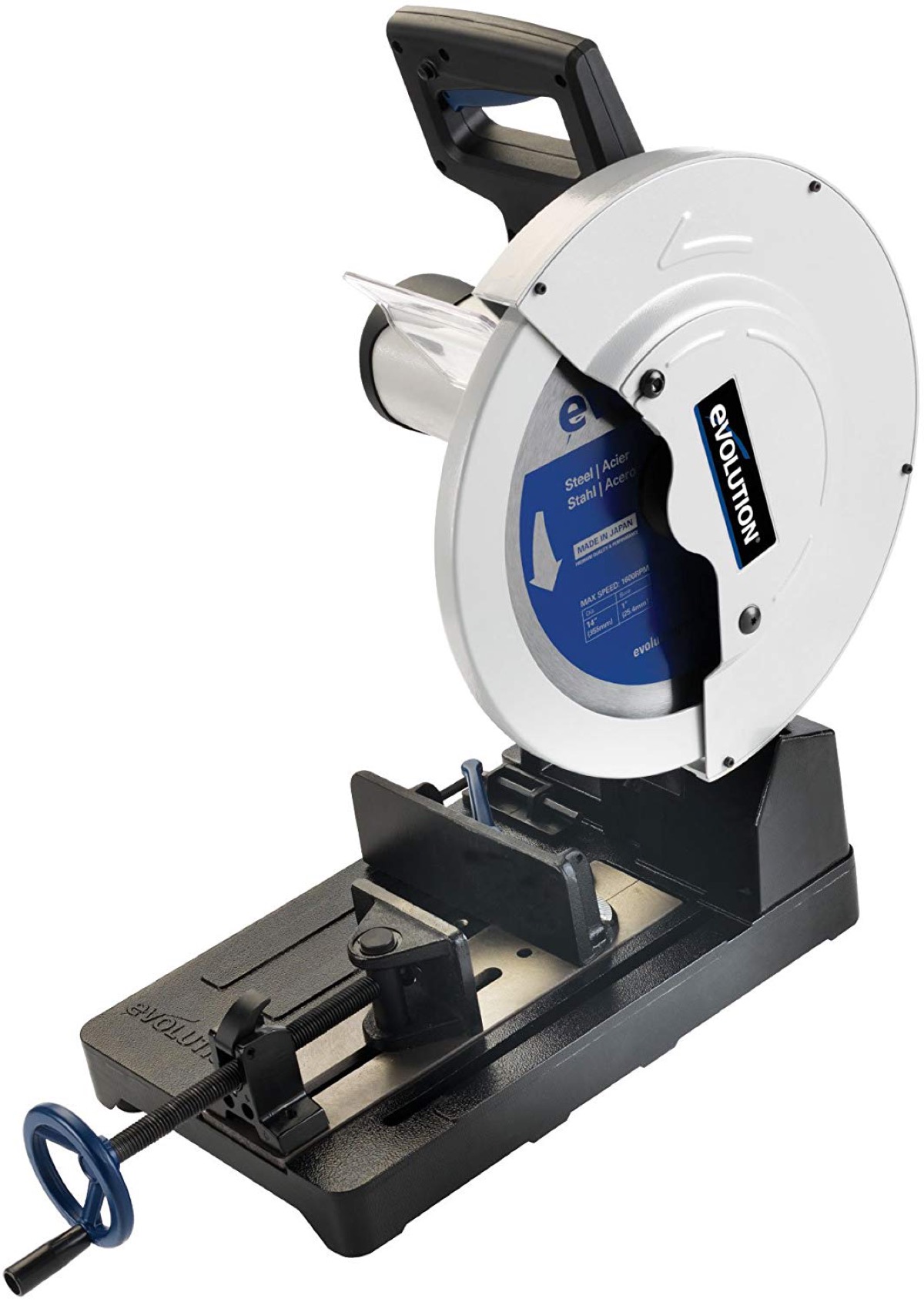
A cold saw cuts metal with a slow-spinning toothed blade that transfers heat into the chip rather than the workpiece, producing cuts that are cool to the touch, burr-free, and dimensionally accurate. The contrast with an abrasive chop saw — which throws sparks, leaves a rough kerf, and requires deburring — is significant enough that shops doing production metal cutting almost universally prefer cold saws despite the higher cost. This guide evaluates four cold saws from $400 to $900 based on published manufacturer specifications, focusing on blade RPM, motor amperage, cutting capacity, and kerf quality.
All specs are sourced from manufacturer product documentation and publicly available data sheets. For where a cutting saw fits in a full shop build and budget, see the home shop setup cost guide.
Cold Saw vs. Abrasive Chop Saw: The Key Differences
Per cutting tool manufacturer documentation and fabrication industry references:
| Factor | Cold Saw | Abrasive Chop Saw |
|---|---|---|
| Blade type | Toothed HSS or carbide-tipped | Abrasive grinding disc |
| Blade RPM | 15-90 RPM (very slow) | 3,000-4,000 RPM |
| Heat generated | Minimal (in chip) | High (in workpiece) |
| Workpiece temperature | Room temperature after cut | Hot — cannot handle immediately |
| Cut quality | Burr-free, square, accurate | Rough, requires deburring |
| Sparks | None | Heavy spark shower |
| Noise | Moderate | Very high |
| Blade cost | $50-$200 (reusable, resharpened) | $5-$15 (consumable) |
| Material | Ferrous metals, pipe, structural | Ferrous metals, masonry, tile |
Per DoAll’s cutting application guide, cold saws are preferred for structural steel, pipe, and tubing in fabrication environments where cut quality affects fit-up and weld prep. Abrasive chop saws remain appropriate for rough demolition cutting and one-off cuts where quality is secondary.
Cold Saw Blade Speed: Why 15-90 RPM Is Correct
The defining characteristic of a cold saw is its slow blade speed — typically 15-90 RPM depending on material. Per DoAll’s blade speed guidelines, the correct blade speed varies by material:
| Material | Recommended Blade RPM |
|---|---|
| Mild steel (solid) | 25-45 RPM |
| Stainless steel | 15-25 RPM |
| Aluminum | 60-90 RPM |
| Copper/brass | 45-75 RPM |
| Cast iron | 20-35 RPM |
Saws with variable speed or multiple speed ranges handle a broader material range. Single-speed saws optimized for mild steel are less versatile but often more affordable.
Top Picks Based on Specifications
Evolution EVOSAW380 — Best Value Cold Saw
| Spec | Value |
|---|---|
| Blade Size | 14-3/4 inch (380mm) |
| Blade Speed | 1,500 RPM (friction/semi-cold) |
| Motor | 15 Amp, 110V |
| Cutting Capacity (round) | 5-1/2 inch |
| Cutting Capacity (rectangular) | 5-1/2” x 4-3/4” |
| Miter Range | 45° left, 45° right |
| Weight | 42 lbs |
| Warranty | 3 years |
| Price Range | $400-$550 |
A critical clarification: the Evolution EVOSAW380 is technically a friction saw, not a true cold saw. Per Evolution’s product documentation, the blade operates at 1,500 RPM — far above the 15-90 RPM range of true cold saws — using a specialized blade that cuts through friction heat. Cut quality is significantly better than an abrasive chop saw (less spark, usable cuts) but does not match true cold saw output in terms of burr-free edges and cool workpieces.
That said, for buyers who want better-than-abrasive-chop-saw results at a cold-saw price point, the Evolution EVOSAW380 represents the accessible entry point. Per Evolution’s specifications, the 15A motor handles structural steel, pipe, and rebar effectively.
Best for: Fabricators who cut mild steel, angle iron, and pipe regularly and want cleaner cuts than an abrasive chop saw without the cost of a true cold saw. Acceptable for shops where cut quality is important but perfect burr-free edges are not required.
Limitation: This is not a true cold saw. Workpieces are warm after cutting (not room temperature). Edges require light deburring for critical fit-up applications. Stainless steel and aluminum are not appropriate materials for this machine.
JET CS-315 — Best Entry True Cold Saw
| Spec | Value |
|---|---|
| Blade Size | 12-3/8 inch (315mm) |
| Blade Speed | 30 / 60 RPM (two-speed) |
| Motor | 2 HP, 110V |
| Cutting Capacity (round) | 4-1/4 inch |
| Cutting Capacity (rectangular) | 4-1/4” x 3-3/4” |
| Miter Range | 45° left, 45° right |
| Weight | 95 lbs |
| Warranty | 2 years (JET standard) |
| Price Range | $700-$950 |
Per JET’s product documentation, the CS-315 is a true cold saw operating at 30 and 60 RPM — within the correct range for cutting mild steel and aluminum respectively. Per JET’s specifications, the coolant system (required for true cold saw operation) is built in, circulating cutting fluid to the blade during cuts.
JET specifies that the CS-315 blade produces cuts that are cool to the touch and require no deburring for most applications — the defining attribute of a true cold saw. The 2 HP motor provides adequate power for the 315mm blade on structural shapes up to the specified capacity.
Best for: Fabrication shops that regularly cut mild steel and want true cold saw output — burr-free, cool edges that go directly from saw to welder without additional prep. The two-speed capability handles aluminum at 60 RPM and steel at 30 RPM.
Limitation: At 95 lbs and $700-$950, this is a significant investment. The 110V power requirement limits motor size compared to 220V industrial cold saws. Blade replacement cost is $80-$150 per blade (though blades are resharpened, not discarded).
Fein KHZ 404 — Compact Cordless Cold Saw
| Spec | Value |
|---|---|
| Blade Size | 6-5/8 inch |
| Blade Speed | Variable to 65 RPM |
| Power | 18V cordless (FEIN AMPShare / Bosch ProCORE compatible) |
| Cutting Capacity (round) | 2-1/8 inch |
| Cutting Capacity (rectangular) | 2-5/8” x 1-5/8” |
| Weight | 8.8 lbs (tool only) |
| Warranty | 2 years |
| Price Range | $500-$700 (tool only) |
Per Fein’s product documentation, the KHZ 404 is a cordless cold saw operating on the FEIN/Bosch 18V battery platform. True cold saw operation with a toothed blade produces burr-free cuts in a cordless format — a category that did not exist five years ago. Per Fein’s specifications, the variable-speed trigger and electronic speed control maintain correct blade RPM under load.
The capacity is smaller than corded alternatives (2-1/8 inch round vs 4+ inch on corded saws), but for cutting conduit, tubing, small structural shapes, and bolts, the cordless format provides genuinely useful flexibility for on-site or field work.
Best for: Electricians, plumbers, and field fabricators who need cold saw cut quality in a cordless format for on-site work. The burr-free cut is particularly valuable for conduit and pipe fitting where threads must engage cleanly.
Limitation: Small cutting capacity limits usefulness for structural steel work. Battery cost adds significantly to the total investment for buyers not already on the Fein/Bosch 18V platform.
Full Comparison Table
| Spec | Evolution EVOSAW380 | JET CS-315 | Fein KHZ 404 |
|---|---|---|---|
| Type | Friction saw | True cold saw | True cold saw |
| Blade Size | 14-3/4” | 12-3/8” | 6-5/8” |
| Blade RPM | 1,500 | 30/60 | Variable to 65 |
| Round Capacity | 5-1/2” | 4-1/4” | 2-1/8” |
| Power | 15A / 110V | 2HP / 110V | 18V cordless |
| Cut Quality | Better than abrasive | Burr-free | Burr-free |
| Weight | 42 lbs | 95 lbs | 8.8 lbs |
| Warranty | 3 years | 2 years | 2 years |
| Price | $400-$550 | $700-$950 | $500-$700 |
Who This Is NOT For
- Woodworkers. Cold saws are purpose-built for metal. Wood requires a completely different blade type, feed rate, and chip evacuation. Using a cold saw on wood will not work and may damage the blade.
- Buyers primarily cutting aluminum. Aluminum requires higher blade speeds (60-90 RPM) and specific blade geometries. Not all cold saws on this list are optimized for aluminum. For shops that primarily cut aluminum, a dedicated aluminum-optimized cold saw (or horizontal bandsaw) is more appropriate.
- Buyers on abrasive chop saw budgets. True cold saws start at $700 and require $80-$150 blade replacements. If the budget is $200-$300, an abrasive chop saw or the Evolution friction saw is the realistic option.
- Shops cutting above 5-inch round. All saws listed here top out at approximately 5-inch round capacity. Large structural shapes require industrial cold saws at $2,000+ with 380-500mm blades.
For shops that also need to cut stock to length and want a gravity-fed automated option, see the best horizontal bandsaws guide for a complementary tool. Bandsaw blades are a separate category from cold saw TCT blades — the best bandsaw blades for metal guide covers bi-metal and carbide options with TPI selection.
What You’ll Also Need
Buyers of cold saws typically need the following accessories to get started. Per manufacturer setup guides, these are not optional for productive use:
- Kinkelder HSS Cold Saw Blade (315mm, 250-tooth) ($80-$150): Replacement cold saw blades are a consumable — the factory blade will eventually dull and require resharpening or replacement, and having a spare prevents downtime. Check price on Amazon →
- Rustlick WS-11 Water-Soluble Cutting Fluid (1 gal) ($25-$45): Cutting fluid is required for true cold saw operation — it lubricates the blade-to-metal interface and transfers heat into the chip. Check price on Amazon →
- HTC HSG-400 Heavy Duty Material Support Stand ($40-$60): A support stand holds long stock at the correct height for feeding into the saw — unsupported material binds in the blade and causes poor cuts. Check price on Amazon →
Consider Buying Used
For cold saws in the $400-$950 range, used equipment from reputable sellers can save 30-50% over new pricing. Per industry resale data, true cold saws are built for production environments and hold their value well — the motor, gearbox, and blade clamp are robust components designed for years of daily use. Check current listings:
When buying used, verify: the motor runs smoothly at rated RPM without excessive noise, the blade clamp holds securely without wobble, the vise locks square and does not shift under cutting force, and the coolant system (if equipped) pumps and drains properly. For any used cold saw, budget $80-$150 for a freshly sharpened or new blade.
Sources
- Evolution EVOSAW380 product documentation (evolutionpowertools.com)
- JET CS-315 product specifications and operator’s manual (jettools.com)
- Fein KHZ 404 product documentation (fein.com)
- DoAll Sawing Products — Cold Saw Blade Speed and Application Guide
- Lenox Tools — Metal Cutting Blade Selection Guide
- Machinery’s Handbook (31st Ed.) — Sawing chapter