Best Rotary Hammers for Contractors in 2026
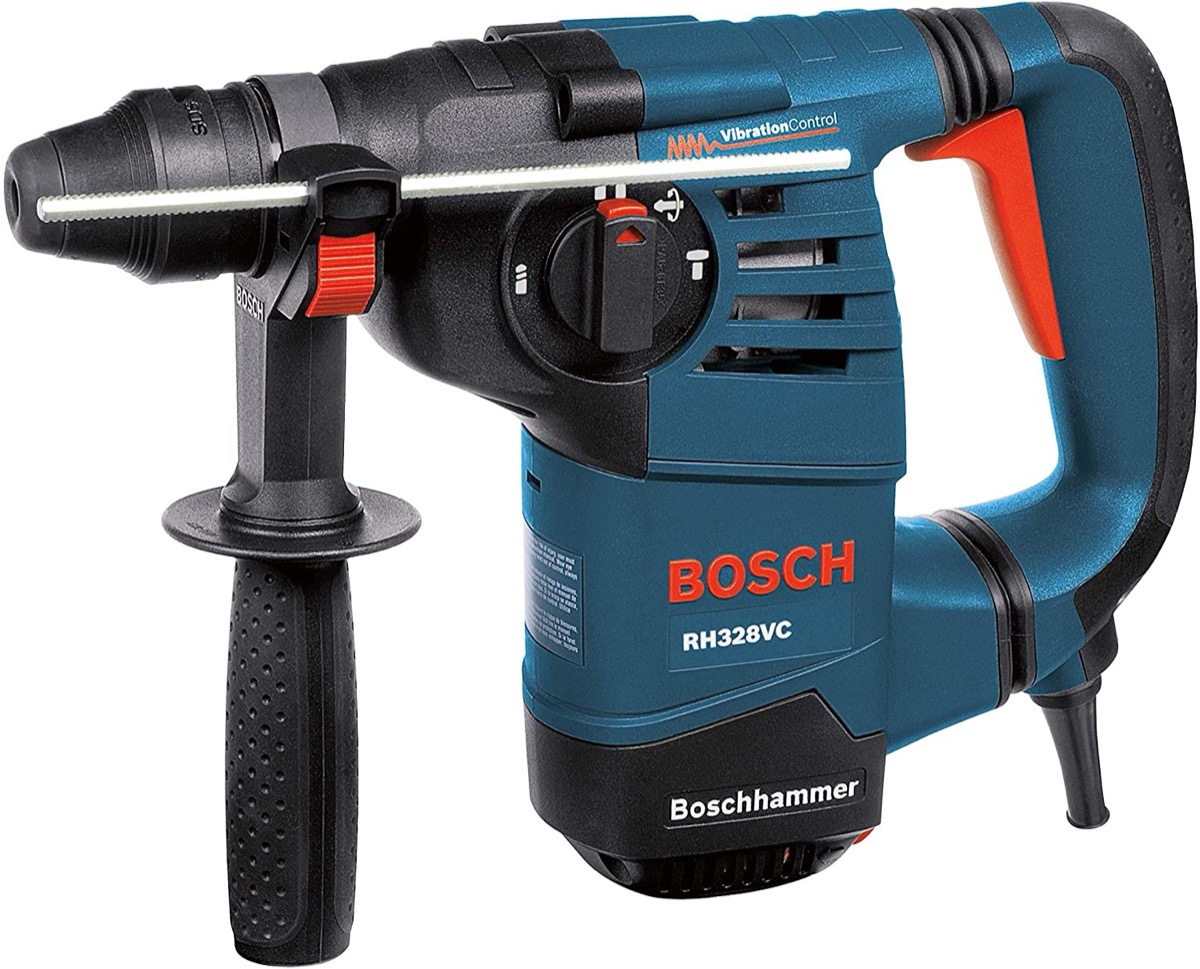
A rotary hammer uses a pneumatic piston mechanism — not the cam-driven percussion of a hammer drill — to deliver impact energy directly to the bit on every stroke. Per Bosch’s application guide, this mechanism delivers 5-10x more impact energy per blow than a hammer drill of equivalent size, enabling clean drilling in concrete, block, and stone that would stall or damage a conventional hammer drill within seconds.
This guide evaluates four rotary hammers based on published manufacturer specifications, focusing on impact energy (foot-pounds), drilling capacity in concrete, SDS-Plus vs. SDS-Max system, and the practical differences between corded and cordless models.
SDS-Plus vs. SDS-Max: Which System Do You Need?
Per Bosch’s SDS application guide and manufacturer documentation, the two SDS variants serve different production levels:
| Feature | SDS-Plus | SDS-Max |
|---|---|---|
| Shank diameter | 10mm | 18mm |
| Max efficient hole in concrete | ~1” (1-1/2” possible) | 2”+ |
| Impact energy range | 0.8–3.0 ft-lbs | 3.5–12+ ft-lbs |
| Weight | 5–8 lbs | 8–16 lbs |
| Best use | Anchor holes, conduit, 3/8”–1” holes | Core drilling, demolition, sleeve anchors 1”+ |
| Typical user | Electrician, plumber, light concrete work | Foundation contractor, heavy demo, core drilling |
For the majority of contractors — electricians running conduit, plumbers setting pipe hangers, general contractors drilling anchor bolts — SDS-Plus handles the full range of daily masonry tasks. SDS-Max is a heavier investment in weight and cost, justified only when drilling consistently above 1” diameter.
Key Specifications
Impact energy (ft-lbs): The energy delivered per piston stroke. Per manufacturer application guides, 1.5–2.0 ft-lbs is adequate for 3/4” and smaller holes in concrete; larger holes and harder concrete require 2.5+ ft-lbs. Impact energy is the spec that most directly predicts drilling speed.
Modes: Most professional rotary hammers offer three modes:
- Rotary hammer mode: Rotation + percussion for drilling concrete
- Hammer-only mode: Percussion only for chiseling and demolition
- Drill-only mode: Rotation only for drilling wood and metal with standard bits (via chuck adapter)
Anti-vibration: Sustained rotary hammer use causes hand-arm vibration (HAV) — a cumulative occupational health risk. Per OSHA HAV guidelines, anti-vibration mechanisms in the handle reduce exposure and allow longer continuous use before fatigue.
Top Rotary Hammers by Specification
Bosch RH328VC — Best Overall Corded SDS-Plus
| Specification | Value |
|---|---|
| System | SDS-Plus |
| Motor | 8.0 Amp |
| Impact Energy | 2.0 ft-lbs |
| Max Concrete Capacity | 1-1/8” |
| Max Bit Diameter (with core bit) | 3-1/2” |
| Modes | 3 (rotary hammer / hammer / drill) |
| Anti-vibration | Vibration Control |
| Weight | 7.7 lbs |
| Warranty | 1 year |
| Price Range | $150-$200 |
Per Bosch’s specifications, the RH328VC delivers 2.0 ft-lbs of impact energy — sufficient for the full range of SDS-Plus applications including 1-1/8” core bit work in concrete. Bosch’s Vibration Control mechanism uses counterweights in the handle housing to reduce transmitted vibration per Bosch’s published measurements. The SDS-Plus chuck accepts the widest range of bits in the masonry market, and the three-mode operation with a dedicated hammer-only mode enables light chiseling and tile removal with flat chisels.
Best for: Electricians, plumbers, and general contractors who need reliable, high-energy drilling in a corded format. The 2.0 ft-lb impact energy handles the full SDS-Plus range, and the corded design eliminates battery management on long drilling jobs.
Limitation: Corded — requires power access. At 7.7 lbs, it is heavier than cordless competitors at the same impact energy.
DeWalt DCH273B — Best Cordless SDS-Plus
| Specification | Value |
|---|---|
| System | SDS-Plus |
| Voltage | 20V MAX |
| Impact Energy | 2.1 ft-lbs |
| Max Concrete Capacity | 1” |
| Modes | 3 (rotary hammer / hammer / drill) |
| Anti-vibration | Active Vibration Control (AVC) |
| Weight (bare) | 6.1 lbs |
| Battery Compatibility | 300+ 20V MAX tools |
| Warranty | 3 years |
| Price Range | $160-$210 (bare tool) |
Per DeWalt’s specifications, the DCH273B delivers 2.1 ft-lbs of impact energy from an 18V platform — matching corded SDS-Plus performance. DeWalt specifies Active Vibration Control (AVC) with a separate internally suspended handle mechanism. The 6.1-lb bare weight is lighter than the corded Bosch. For contractors already on the 20V MAX platform, the cordless format eliminates the cord that becomes a real obstacle when drilling ceiling anchors and overhead runs.
Best for: Contractors on the DeWalt 20V MAX platform doing overhead and height work — running conduit anchors, HVAC hanger rods, and ceiling-mounted supports where cord management is genuinely hazardous.
Limitation: Battery not included. For extended drilling sessions (50+ holes), bring extra battery packs — the 2.1 ft-lb energy demand depletes standard packs faster than a drill.
Milwaukee 2912-20 — Best Cordless with Anti-Vibration
| Specification | Value |
|---|---|
| System | SDS-Plus |
| Voltage | 18V (M18) |
| Impact Energy | 2.0 ft-lbs |
| Max Concrete Capacity | 1” |
| Modes | 3 (rotary hammer / hammer / drill) |
| Anti-vibration | ANTI-VIBRATION Technology |
| Weight (bare) | 5.7 lbs |
| Battery Compatibility | 200+ M18 tools |
| Warranty | 5 years |
| Price Range | $200-$260 (bare tool) |
According to Milwaukee’s specifications, the 2912-20 is the lightest rotary hammer in this comparison at 5.7 lbs bare and carries Milwaukee’s 5-year warranty — the longest by a significant margin. Milwaukee specifies an active anti-vibration system that operates independently of the SDS chuck mechanism. For contractors drilling in the same overhead position for hours, the weight and vibration reduction are meaningful daily differentiators.
Best for: Milwaukee M18 platform users who do sustained overhead drilling. The 5-year warranty, lightest weight in the class, and M18 compatibility make this the strongest package for tradespeople committed to the Milwaukee ecosystem.
Limitation: Higher price than the DeWalt for similar impact energy. Battery not included.
Makita HR2631FT — Best for All-Around Versatility
| Specification | Value |
|---|---|
| System | SDS-Plus |
| Motor | 7.0 Amp |
| Impact Energy | 2.0 ft-lbs |
| Max Concrete Capacity | 1-1/16” |
| Modes | 3 (rotary hammer / hammer / drill) |
| Anti-vibration | AVT (Anti-Vibration Technology) |
| Weight | 5.5 lbs |
| Includes | Depth gauge, side handle, carry case |
| Warranty | 1 year |
| Price Range | $180-$230 |
Per Makita’s specifications, the HR2631FT is the lightest corded rotary hammer in this comparison at 5.5 lbs and includes a depth gauge, side handle, and carry case — the most complete out-of-box package. Makita’s AVT system uses counterweights within the body to reduce vibration. The 7.0-amp motor delivers 2.0 ft-lbs of impact energy, matching the Bosch at lighter weight.
Best for: Contractors who want a full-featured corded SDS-Plus rotary hammer with the complete accessory package included. The 5.5-lb weight makes it the easiest corded rotary hammer to use overhead for extended periods.
Limitation: 7.0-amp motor is less powerful than the Bosch 8.0-amp for sustained heavy drilling. 1-year warranty is the shortest in this comparison.
Comparison Table
| Model | System | Energy | Max Concrete | Weight | Cordless | Warranty | Price |
|---|---|---|---|---|---|---|---|
| Bosch RH328VC | SDS-Plus | 2.0 ft-lbs | 1-1/8” | 7.7 lbs | No | 1 year | $150-$200 |
| DeWalt DCH273B | SDS-Plus | 2.1 ft-lbs | 1” | 6.1 lbs | Yes (20V) | 3 years | $160-$210 |
| Milwaukee 2912-20 | SDS-Plus | 2.0 ft-lbs | 1” | 5.7 lbs | Yes (M18) | 5 years | $200-$260 |
| Makita HR2631FT | SDS-Plus | 2.0 ft-lbs | 1-1/16” | 5.5 lbs | No | 1 year | $180-$230 |
Who This Is NOT For
- Light masonry work (anchor bolts, conduit straps under 1/2” diameter). A standard hammer drill handles 3/8”–1/2” masonry holes at lower cost and weight. A rotary hammer is the correct upgrade when the hammer drill’s speed or energy is insufficient for the material or diameter required.
- Buyers who primarily drill wood and metal. Rotary hammers are purpose-built for masonry. For general drilling and driving in wood and metal, a standard brushless drill delivers better torque control and clutch resolution. Using a rotary hammer in drill-only mode works but is heavier and less ergonomic than a dedicated drill.
- Production core drilling above 2” diameter. A 2”-diameter core drill in concrete requires SDS-Max or a dedicated diamond core drill rig. SDS-Plus rotary hammers are rated for 1-1/2” cores at most, and pushing to that size stresses the mechanism and bit connection.
- Overhead use without the correct side handle position. Drilling overhead without the side handle in the correct position transfers rotational force to the wrist if the bit binds. Per OSHA safety guidance, the side handle is required equipment for rotary hammer use, not optional.
What You’ll Also Need
- Bosch HC2167 7-Piece SDS-Plus Hammer Bit Set ($25-$40): SDS-Plus carbide bits in 3/16” through 3/4” diameters cover the standard anchor and fastener range — standard drill bits will shatter in an SDS-Plus chuck under impact. Check price on Amazon →
- DeWalt DWHT47373 Flat Chisel SDS-Plus ($15-$25): An SDS-Plus flat chisel turns the rotary hammer into a demolition tool for tile removal, mortar scraping, and light chipping — hammer-only mode is where the rotary hammer’s impact energy advantage over a hammer drill becomes most apparent. Check price on Amazon →
- Bosch HS1922 SDS-Plus Pointed Chisel ($12-$20): A pointed chisel is used for breaking up tile grout lines, splitting block, and channeling mortar — a set of flat and pointed chisels covers the majority of light demolition tasks. Check price on Amazon →
Sources
- Bosch RH328VC product specifications (boschtools.com)
- DeWalt DCH273B 20V MAX product documentation (dewalt.com)
- Milwaukee 2912-20 M18 product specifications (milwaukeetool.com)
- Makita HR2631FT product documentation (makitatools.com)
- Bosch Power Tools — SDS-Plus vs. SDS-Max Application Guide
- OSHA 29 CFR 1926 Subpart I — Hand and Power Tools
- ANSI B11.TR3-2000 — Risk Assessment and Risk Reduction Techniques