Best Finish Nailers for Contractors in 2026
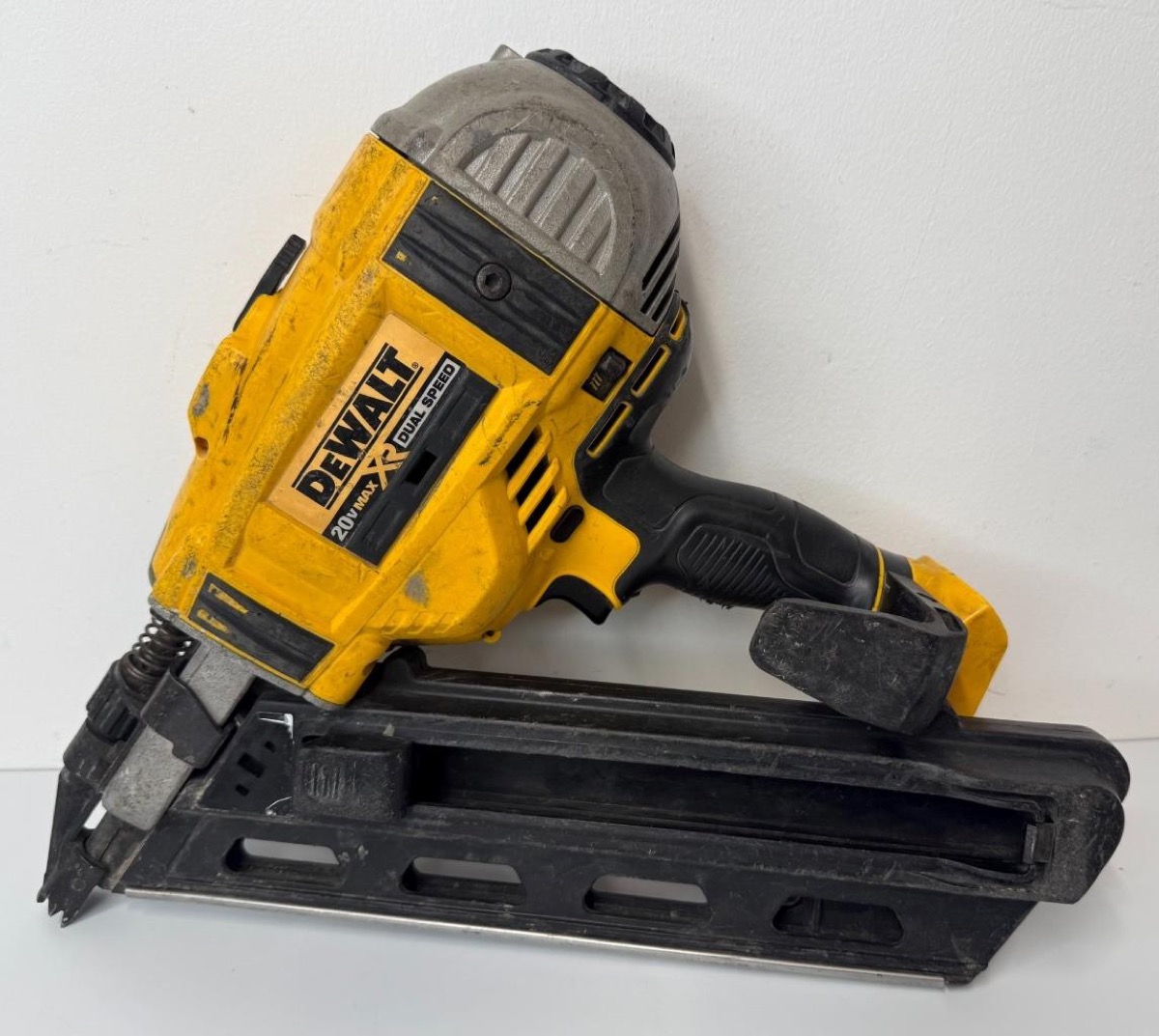
Finish nailers drive 16-gauge nails into door casing, base molding, crown molding, stair treads, and cabinet face frames. The transition from pneumatic to cordless finish nailers happened faster than nearly any other nailer category — the precision and power requirements are lower than framing, so battery-powered tools close the performance gap without the compressor and hose.
This guide compares four cordless 16-gauge finish nailers based on published manufacturer specifications, focusing on nail capacity, depth adjustment, magazine angle, and the battery platform considerations that determine long-term cost of ownership.
16-Gauge vs. 15-Gauge vs. 18-Gauge: Choosing the Right Nailer
Per manufacturer documentation and industry trade classifications:
| Gauge | Nail Diameter | Typical Length | Applications |
|---|---|---|---|
| 15-gauge | 0.072” | 1-1/4” to 2-1/2” | Heavy trim, door jambs, thick stock |
| 16-gauge | 0.064” | 1” to 2-1/2” | General finish trim, base, casing, crown |
| 18-gauge | 0.048” | 5/8” to 2-1/8” | Cabinet trim, thin molding, light applications |
16-gauge is the most versatile finish nailer gauge. Per industry standards, 16-gauge nails hold better than 18-gauge in dense trim stock, while leaving smaller holes than 15-gauge — which matters when the nail holes will be filled and painted visible on finish surfaces. Most trim contractors standardize on 16-gauge as their primary finish nailer.
Key Specifications
Magazine angle: 20-22° angled magazines (the most common) allow the nailer to reach into tight corners — inside corner base installation, coped crown molding — that a straight magazine cannot access. Per manufacturer documentation, angled magazines also improve balance and reduce fatigue on overhead crown work.
Depth adjustment: Tool-free depth wheels allow setting the nail countersink depth without an Allen wrench. Per user data, consistent countersink depth is more critical in finish work than framing — over-driven nails in painted molding require extra putty and sanding. Tool-free adjustment lets the operator tune depth at the workpiece, not at the bench.
Dry-fire lockout: Fires a blank if the magazine empties, which can damage the workpiece surface. Dry-fire lockout stops firing when the last nail is loaded, preventing surface damage on finish surfaces.
Top Finish Nailers by Specification
DeWalt DCN660B — Best Overall Cordless Finish Nailer
| Specification | Value |
|---|---|
| Gauge | 16-gauge |
| Nail Length | 1” to 2-1/2” |
| Magazine Angle | 20° |
| Magazine Capacity | 110 nails |
| Motor | Brushless |
| Depth Adjustment | Tool-free wheel |
| Dry-Fire Lockout | Yes |
| Sequential/Bump Fire | Sequential only |
| Battery | 20V MAX (not included) |
| Weight | 7.9 lbs (bare) |
| Warranty | 3 years |
| Price Range | $200-$240 (bare) |
Per DeWalt’s specifications, the DCN660B uses a brushless motor with dual sequential and bump-fire mode — though DeWalt production-spec this model as sequential only on the standard DCN660 line. The 20° angled magazine handles inside corners without repositioning. DeWalt specifies that the tool-free depth wheel provides repeatable depth settings across different wood species and moisture content, which matters when moving between interior pine trim and primed MDF molding on the same job.
Best for: Trim carpenters and remodelers already in the DeWalt 20V MAX ecosystem. The DCN660B drives nails at a rate per DeWalt’s spec that matches pneumatic tools in production trim work. The brushless motor extends battery runtime and resists the moisture and dust of occupied home remodels.
Limitation: Sequential fire only — no bump mode for fast repetitive nailing applications where spacing isn’t critical. Heavier than 18-gauge alternatives.
Milwaukee 2748-20 M18 FUEL — Best for Heavy Production Trim
| Specification | Value |
|---|---|
| Gauge | 16-gauge |
| Nail Length | 1” to 2-1/2” |
| Magazine Angle | 20° |
| Magazine Capacity | 100 nails |
| Motor | M18 FUEL brushless |
| Depth Adjustment | Tool-free |
| Dry-Fire Lockout | Yes |
| Sequential/Bump Fire | Both modes |
| Battery | M18 (not included) |
| Weight | 7.9 lbs (bare) |
| Warranty | 5 years |
| Price Range | $220-$260 (bare) |
Per Milwaukee’s specifications, the 2748-20 operates in both sequential (precision placement) and contact (bump) fire modes. Per Milwaukee’s documentation, the M18 FUEL brushless motor drives nails consistently from first to last in the magazine without velocity drop, which per user feedback is a failure mode on older brushed cordless nailers — the last several nails in the magazine often fire shallow as battery voltage drops.
Best for: Finish carpenters on commercial trim packages, door and window installation crews, and M18 platform users who need dual fire modes. The 5-year warranty and consistent nail-drive performance across the magazine make this the production trim carpenter’s tool.
Limitation: Requires M18 batteries — an investment for contractors not already on the Milwaukee platform. No performance differentiation from the DeWalt for standard residential trim work.
Makita XNF01Z — Best for Compact Access
| Specification | Value |
|---|---|
| Gauge | 16-gauge |
| Nail Length | 1” to 2-1/2” |
| Magazine Angle | 20° |
| Magazine Capacity | 110 nails |
| Motor | Brushless |
| Depth Adjustment | Tool-free |
| Dry-Fire Lockout | Yes |
| Sequential/Bump Fire | Sequential only |
| Battery | 18V LXT (not included) |
| Weight | 7.4 lbs (bare) |
| Warranty | 3 years |
| Price Range | $180-$220 (bare) |
Per Makita’s specifications, the XNF01Z is the lightest tool in this comparison at 7.4 lbs and uses the 18V LXT platform — the largest battery ecosystem in the tool industry by SKU count. Per Makita’s documentation, the tool uses a spring-loaded nose piece that provides consistent nail depth even when operator pressure varies, which per Makita’s published data reduces the need for nail-by-nail depth adjustments compared to tools without the spring-loaded mechanism.
Best for: HVAC trim crews and remodelers who work in confined spaces — under cabinets, inside closets, behind appliances. The 7.4 lb weight and compact profile reduce fatigue on overhead work. Natural choice for LXT platform users.
Limitation: Sequential fire only. LXT battery platform is not interchangeable with 20V MAX or M18 tools.
Paslode 905600 — Best Cordless for Pneumatic Users Transitioning
| Specification | Value |
|---|---|
| Gauge | 16-gauge |
| Nail Length | 1” to 2-1/2” |
| Drive System | Fuel cell + battery |
| Magazine Angle | 20° |
| Magazine Capacity | 100 nails |
| Fire Modes | Sequential and contact |
| Dry-Fire Lockout | Yes |
| Weight | 7.5 lbs |
| Fuel Cell Life | ~1,200 nails/cell |
| Warranty | 1 year |
| Price Range | $300-$350 |
Per Paslode’s specifications, the 905600 uses a combustion (fuel cell) drive system rather than a battery-powered motor — a gas-actuated piston fires the nail. Per Paslode’s documentation, this system provides more consistent drive force across a wide temperature range (to 14°F/-10°C) compared to battery-only tools, which per published cold-weather performance data can lose drive force below freezing. The trade-off is operating cost: fuel cells run approximately $12-$15 per cell (1,200 nails), adding ~$1 per 100 nails to operating cost versus battery-powered tools.
Best for: Contractors working in cold weather (exterior trim, unheated structures) or those who prefer the feel of combustion drive for trim work. The Paslode legacy in finish nailing is substantial — many finish carpenters standardized on Paslode pneumatic tools and the brand experience carries over.
Limitation: Fuel cell operating cost adds up over a high-volume trim season. Fuel cells must be kept from freezing (ironic for a cold-weather advantage). Engine requires periodic cleaning with Paslode-specific service kits.
Comparison Table
| Model | Gauge | Nail Length | Fire Modes | Weight | Battery | Warranty | Price |
|---|---|---|---|---|---|---|---|
| DeWalt DCN660B | 16-ga | 1”-2-1/2” | Sequential | 7.9 lbs | 20V MAX | 3 years | $200-$240 |
| Milwaukee 2748-20 | 16-ga | 1”-2-1/2” | Seq + Bump | 7.9 lbs | M18 | 5 years | $220-$260 |
| Makita XNF01Z | 16-ga | 1”-2-1/2” | Sequential | 7.4 lbs | 18V LXT | 3 years | $180-$220 |
| Paslode 905600 | 16-ga | 1”-2-1/2” | Seq + Bump | 7.5 lbs | Fuel cell | 1 year | $300-$350 |
Best Finish Nailer by Trade
Trim carpenters and millwork installers: Production trim carpentry — door casing, window aprons, crown molding, built-in cabinetry — demands consistent nail depth across different wood species (pine, poplar, MDF, oak) and continuous operation through a full day’s install. The Milwaukee 2748-20 with its M18 FUEL brushless motor and dual fire modes handles both precision placement (sequential) on visible casing work and faster contact firing on hidden nailer plates. The 5-year warranty covers the tool through the high-cycle production use that residential trim carpenters put on a nailer in a single season.
Remodelers and GCs: Remodelers use finish nailers intermittently across a job — trim after paint, flooring transitions, cabinet installation. Battery runtime and tool weight matter more than peak throughput. The DeWalt DCN660B handles this use pattern cleanly: the 20V MAX platform powers other tools on the job, and the sequential-only operation reduces accidental bump fires on a worksite with multiple trades working in the space.
HVAC trim and service work: HVAC trim installation — register covers, transition pieces, cabinet access panels — involves nailing in small spaces where a full-size nailer won’t fit. The Makita XNF01Z at 7.4 lbs and with LXT’s broad platform coverage is the compact choice for trades that need a finish nailer on the truck for occasional trim work without a dedicated trim carpenter.
Exterior and cold-weather trim: Exterior trim installation on unheated houses in early spring (a peak deck and framing season for exterior casing and trim packages) exposes cordless battery-powered tools to temperatures where lithium-ion batteries lose capacity rapidly. The Paslode 905600 combustion system maintains consistent drive force below freezing — the combustion gas is insensitive to temperature in the way lithium-ion is not.
Spring Construction Season: Finish Nailer Demand
Per contractor scheduling patterns and building permit data, finish nailer demand concentrates in two spring windows:
April–June interior trim packages. New home construction that framed in winter reaches the finish trim stage in spring — door and window casing, base molding, crown molding, closet build-outs. A single production home requires several hundred finish nails per room, making finish nailer throughput and nail consistency primary priorities.
March–May exterior trim installation. Exterior window and door trim, fascia, and soffit installation follows spring framing activity. Cold-weather performance matters in March and April in northern markets, which is why Paslode’s combustion system remains relevant despite the higher operating cost.
Kitchen and bath remodels (March–June). Spring remodel season drives kitchen cabinet installation, bathroom vanity work, and trim package installations — all heavy finish nailer applications. The consistent countersink depth of a quality finish nailer reduces putty and sanding time significantly compared to an inconsistent tool that drives nails at varying depths across different wood densities.
Who This Is NOT For
- Framing crews. A finish nailer drives 16-gauge nails — structurally inadequate for framing connections. See best cordless framing nailers for structural framing applications.
- Fine furniture makers and cabinet shops. A 16-gauge nailer leaves a visible hole that requires filling and finishing. For face frame assembly on painted cabinets, 16-gauge is standard. For exposed hardwood joints on fine furniture, a pocket screw system or brad nailer with wood filler is more appropriate.
- Anyone without the battery platform already. If you’re not already in the DeWalt, Milwaukee, or Makita ecosystem, a quality pneumatic 16-gauge finish nailer ($80-$120) plus a portable compressor is a lower total cost entry point than buying into a battery platform for a single tool.
- Roofing crews. A finish nailer is not suitable for roofing nails. Coil-fed roofing nailers drive specialized ring-shank nails at production speed that finish nailers cannot replicate.
What You’ll Also Need
- 3M Pro Strength Spackling ($8-$12): Nail hole filler that dries fast and sands cleanly without shrinking — required for any painted trim work. The nail hole is always visible without it. Check price on Amazon →
- Paslode 16-Gauge Angled Nails ($25-$35 per 2,500-box): 16-gauge, 2” or 2-1/2” angled nails are the standard finish nail for most cordless tools. Galvanized for exterior applications. Check price on Amazon →
- Stabila 96-2 48” Level ($80-$100): Plumb and level door casing and base transitions require a quality level — a 2-foot torpedo level isn’t long enough for door jamb plumb checks. Check price on Amazon →
Sources
- DeWalt DCN660B product specifications and documentation (dewalt.com)
- Milwaukee 2748-20 M18 FUEL finish nailer product documentation (milwaukeetool.com)
- Makita XNF01Z 18V LXT product specifications (makitatools.com)
- Paslode 905600 cordless finish nailer documentation (paslode.com)
- OSHA 29 CFR 1926.307 — Mechanical power-transmission apparatus safety standards
- National Association of Home Builders (NAHB) — residential construction scheduling data